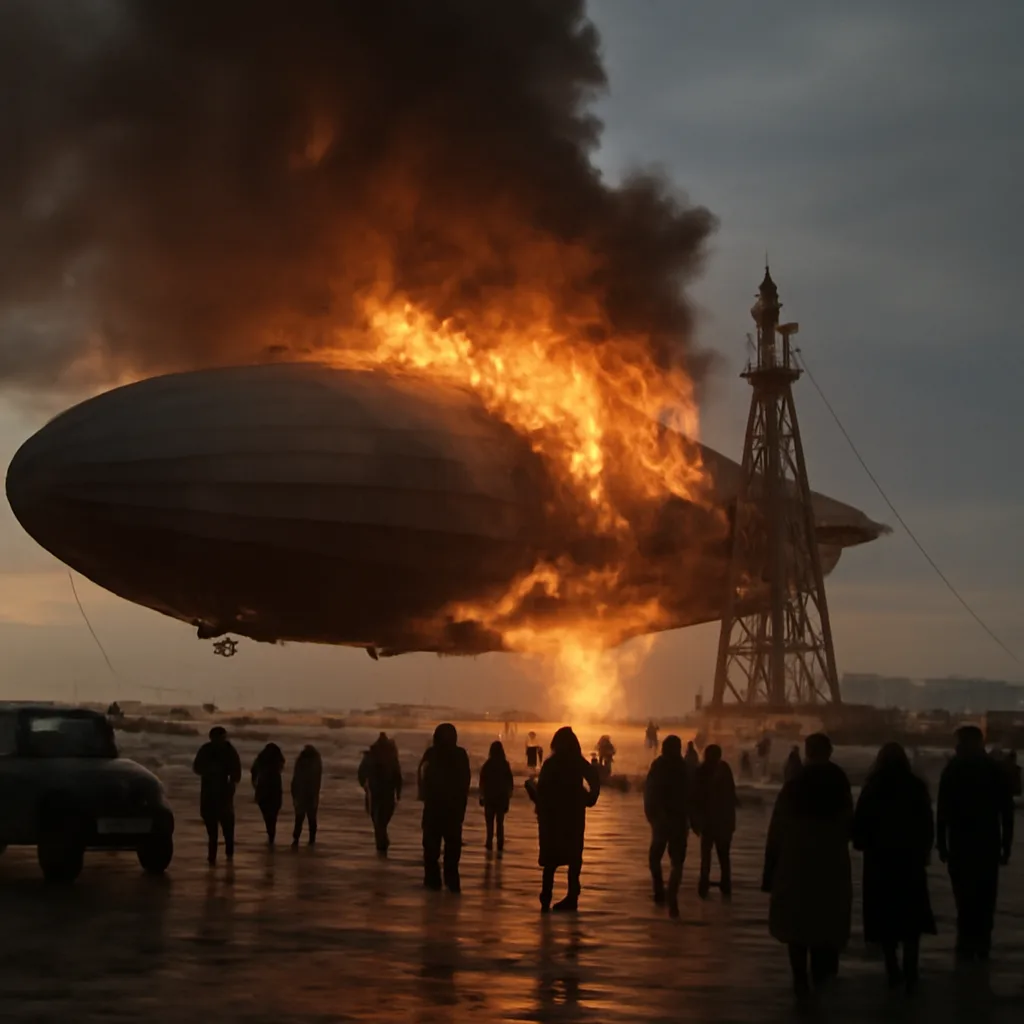
On the evening of May 6, 1937, the LZ 129 Hindenburg, a German-built hydrogen-filled passenger zeppelin, attempted to land at the United States Naval Air Station Lakehurst in Manchester Township, New Jersey, after a transatlantic crossing from Frankfurt. As the airship rounded for its mooring, witnesses and newsreel cameras observed a sudden ignition near the tail section. The fire spread rapidly along the fabric-covered frame, and within about 34 seconds the ship was largely consumed and collapsed to the ground. The Hindenburg was the largest rigid airship ever built and one of the symbols of modern luxury air travel in the 1930s. It carried passengers and crew as well as mail and freight; on this flight it had 36 passengers and 61 crew members aboard. Of the 97 people on the airship, 35 were killed; one worker on the ground also died, bringing the officially recognized death toll to 36. Numerous others were injured. Rescue efforts by ground personnel and surviving crew and passengers helped save many lives in the minutes after the crash. The cause of the disaster has been debated since 1937. Investigations at the time concluded that a probable cause was an electrostatic discharge that ignited leaking hydrogen, possibly from structural damage sustained while maneuvering in a thunderstorm or from a tear caused during mooring. Some contemporaneous and later hypotheses have suggested alternative ignition sources such as flammable skin coating, sabotage, or engine-related sparks. No definitive consensus has been reached that explains all observed facts, and scholarly and technical analyses over decades have continued to weigh the evidence for competing theories. The Hindenburg disaster had immediate and lasting effects. The dramatic newsreel footage and radio reports—most famously the on-site radio commentary—brought the catastrophe to a wide international audience and effectively ended public confidence in passenger-carrying hydrogen airships. Commercial use of rigid airships declined sharply thereafter, and the disaster is often cited as a pivotal event in the history of aviation safety and public perception. Beyond its technical and commercial consequences, the disaster shaped media coverage and public memory of aviation accidents. Film and photographic records from Lakehurst were widely distributed and remain primary visual sources for researchers and the public. Memorials and historical markers now commemorate those who died. The Hindenburg remains a subject of historical study because it intersects technology, politics, media, and culture in the interwar period. While the basic facts of the event—the date, location, casualties, and rapid destruction—are well established, certain technical details about ignition and structural failure remain matters of expert analysis and debate rather than settled fact. Sources for this summary include contemporary news reports, official investigation documents from 1937, and subsequent historical and technical analyses by aviation historians. Readers seeking detailed technical discussion should consult primary investigation reports and peer-reviewed studies that model the fire dynamics and structural sequence of failure.