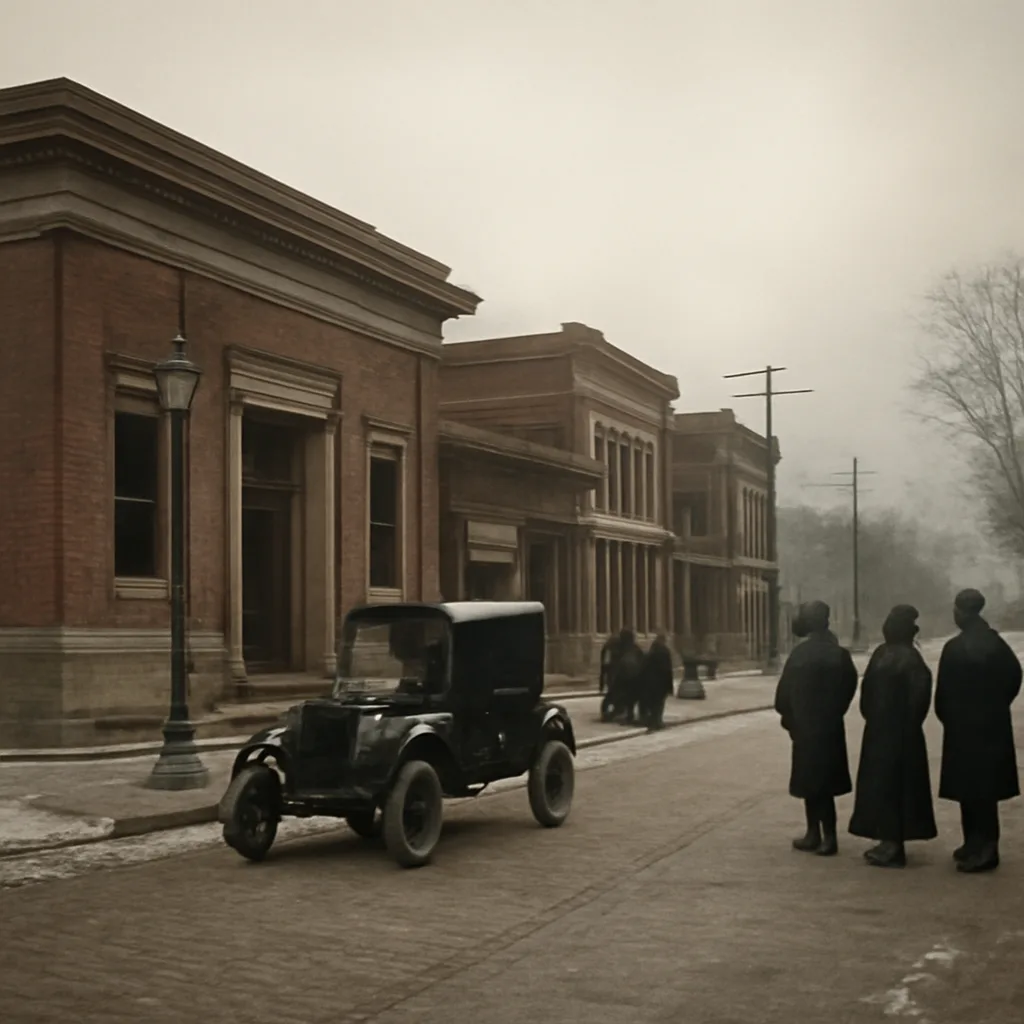
On February 18, 1909, newspapers reported an incident often cited as the first recorded bank robbery in the United States to involve an automobile. Accounts from the period describe thieves using a motor car to arrive at and depart from a bank, a notable departure from earlier robberies that relied on horses, bicycles, or on-foot escapes. The event drew public attention not only for the loss involved but for its implication that modern transportation technologies could be repurposed to facilitate rapid crime and evasion. Contemporary sources vary in details—newspaper reports and later summaries place the event in early 1909 and emphasize the novelty of an automobile getaway. Historians note that record-keeping and reporting standards of the era mean that earlier, less-documented incidents involving motor vehicles might have occurred; however, February 18, 1909, has been repeatedly referenced in secondary sources as an early, if not the earliest, clearly documented case. The use of the automobile in this robbery reflected broader social and technological shifts. By 1909 automobiles were still relatively rare but increasingly visible in American towns and cities. Their greater speed and range compared with horse-drawn conveyances offered criminals a new tactical advantage. Law enforcement agencies at the time were only beginning to adapt—many police forces lacked vehicles or radio communication, so pursuing a motorized suspect posed logistical challenges. Newspapers of the day framed the incident as both sensational and cautionary: sensational because the automobile was associated with modernity and speed, and cautionary because it suggested that existing legal and policing frameworks were lagging behind technological change. The episode contributed to later debates about police motorization, traffic regulation, and the need for interjurisdictional cooperation when suspects used cars to cross municipal or county lines quickly. Scholars studying crime history emphasize caution when labeling any single event as the unequivocal "first." Reporting inconsistencies, regional press coverage, and gaps in archival records mean that earlier, undocumented or poorly reported automobile-assisted robberies might exist. Nonetheless, the February 18, 1909 incident remains important in narratives about how new technologies altered criminal behavior and policing strategies in the early 20th century. Legacy: The robbery is referenced in histories of crime and policing as an early turning point illustrating how innovations intended for private transport could reshape public safety. It highlights an era when society grappled with the advantages and risks of rapid technological change, and it foreshadows the extensive retooling of law enforcement practices—vehicle patrols, motorized pursuit tactics, and revised investigative methods—that would unfold in subsequent decades. Sources and documentation for this summary include period newspaper coverage and later historical studies of early automobile-related crime and police adaptation. Because primary reports from 1909 sometimes conflict or lack comprehensive detail, historians present the February 18 date as part of the best-supported timeline rather than an absolute, uncontested first occurrence.