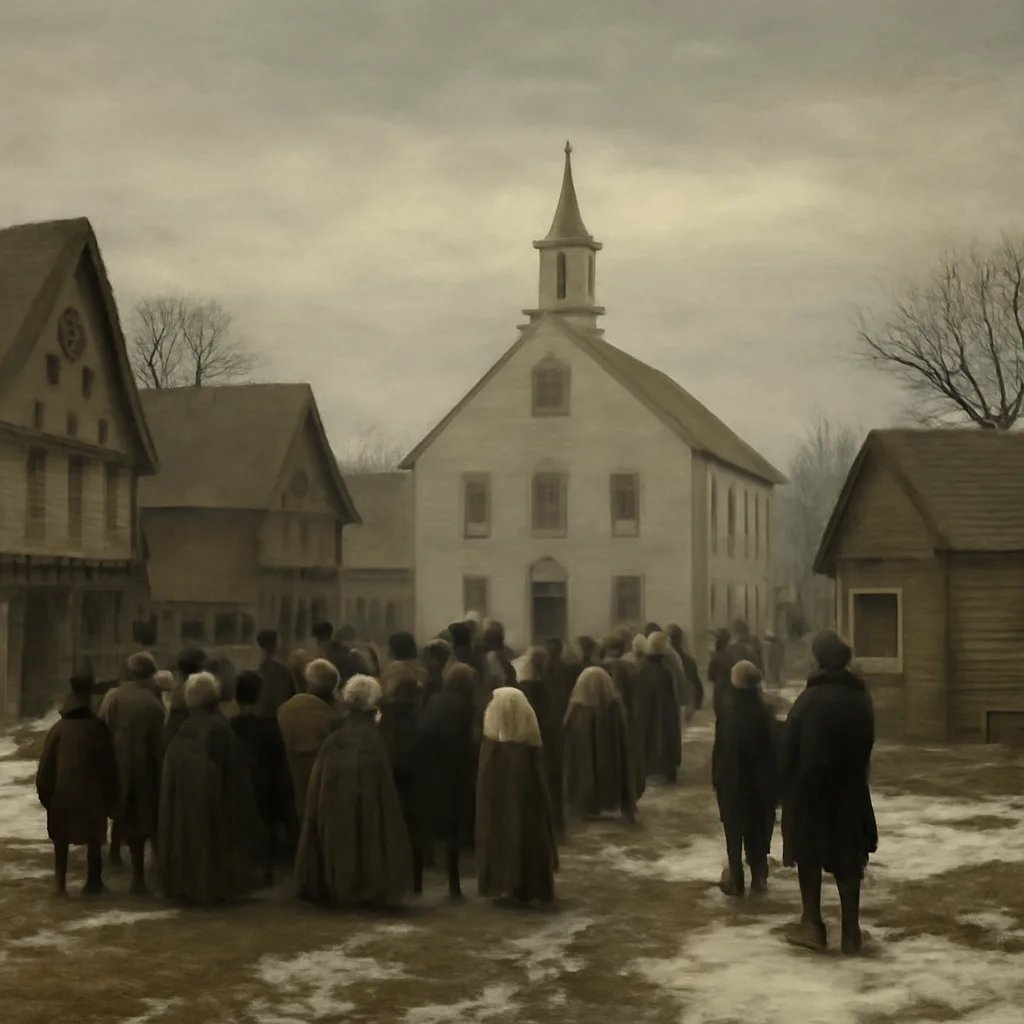
In early 1692, a wave of accusations of witchcraft in Salem Village and surrounding Essex County, Massachusetts, widened into a legal and social crisis. Beginning with unusual behaviors among several young women in late winter, local ministers and magistrates convened examinations that produced formal indictments. By March, the number of those tried and condemned had increased, and the threat of execution loomed larger for accused individuals. Court proceedings in 1692 relied heavily on spectral evidence (testimony that the accused’s spirit or specter appeared to the afflicted), the testimony of the afflicted, and confessions extracted under pressure. The legal framework was a mix of English common law and local colonial practice; magistrates such as Jonathan Corwin and John Hathorne conducted preliminary hearings, and the Court of Oyer and Terminer, established in May by the provincial governor William Phips, later heard many cases. Although formal executions began in June, March represents the period during which indictments and commitments to jail increased markedly, as authorities sought to identify and contain what they characterized as a diabolical conspiracy. Living conditions in the colonial jails were harsh, contributing to the distress of those detained. Many accused were poor, elderly, or socially marginal, including women who did not conform to community expectations. Accusations also touched established families and neighbors, creating fractures in towns where long-standing disputes could surface as charges of witchcraft. The legal emphasis on spectral evidence and the persuasive power of the afflicted’s displays made convictions more likely than would be expected by later legal standards. Contemporary reactions varied. Some ministers and officials, alarmed by the apparent spread of affliction, supported vigorous prosecutions. Others expressed caution; figures such as Increase Mather later argued against the admissibility of spectral evidence, writing that it was dangerous to condemn on such testimony alone. Over time, skepticism grew among colonial leaders and in England. The growing number of convictions and the prospect of executing multiple defendants contributed to a reassessment of the courts’ methods. The human toll was significant. Between June and September 1692, nineteen people were executed in Massachusetts for witchcraft, and at least five others died in jail. Those executed included both men and women from Salem and neighboring towns. The legal and communal aftermath continued for years: by 1693 and later, some prisoners were released, convictions were questioned, and the colony grappled with compensation and public apologies for wrongful prosecutions. In subsequent decades, Salem’s witch trials became a focal point for discussions about due process, the dangers of mass hysteria, and the role of religious belief in law. Historians continue to study the trials’ causes and mechanisms. Explanations offered include local socioeconomic tensions, personal vendettas, fears of Native American attacks in the frontier context, ergot poisoning theories, and the influence of religious and gender norms. No single explanation fully accounts for the complexity of events; rather, scholars view the panic as the result of overlapping legal, cultural, and environmental factors. March 1692 stands as a critical moment when accusations hardened into legal actions that set the stage for the executions that followed. The trials left a lasting legacy in American legal and cultural history, serving as a cautionary example of how fear and flawed evidentiary standards can produce tragic outcomes.