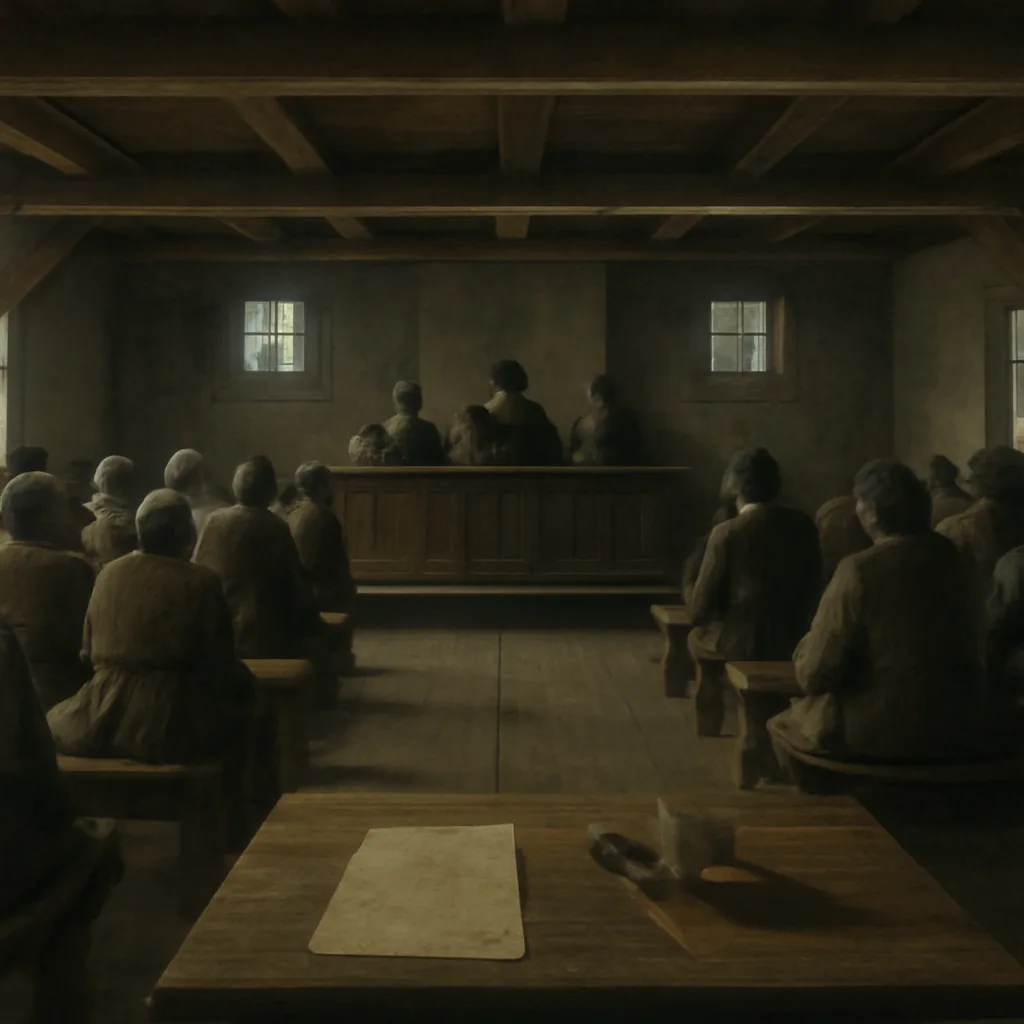
In the spring of 1692, the Massachusetts Bay Colony experienced one of its most notorious crises: the Salem witch trials. The panic began in late winter and accelerated through March as local magistrates and a special court reviewed accusations of witchcraft. On March 19, court business included the formal ordering of executions for persons already condemned, transactions that contemporaries recorded as death warrants or writs enforcing the court’s sentences. The most widely remembered executions in Salem occurred on September 22, 1692 (although some earlier related legal actions and executions took place in June and July in surrounding counties); primary sources and later scholarship sometimes differ on exact dates and the sequence of legal documents, which accounts for variations in modern references to a March 19 signature date. Legal and procedural context The Salem events unfolded after a flurry of accusations beginning in February 1692, aimed initially at a small group of women and men in Salem Village and nearby towns. Local magistrates—including Jonathan Corwin and John Hathorne—examined afflicted complainants and suspects, issuing warrants for arrests. A special court of Oyer and Terminer ("to hear and determine") was convened in May by the colonial government to handle the growing caseload. Trials relied heavily on testimonial evidence, including the so-called spectral evidence (witnesses’ claims of seeing specters or visions), and used interrogations and confessions among the methods for establishing guilt. March 19 in the record References to March 19 in connection with "death warrants" reflect routine court paperwork and the administrative steps that recorded sentences and ordered their execution. By mid-March, several accused persons were already imprisoned and had been examined; judges and clerks were drafting documents to implement judicial decisions. Because recordkeeping in 1692 was decentralized and many original documents have been lost, later historians reconstruct exact timelines from surviving court books, town records, personal diaries, and correspondence. This results in some disagreement among sources over which specific documents bear signatures on particular dates. What is clear is that March 1692 represented a period of intensifying legal action that would culminate in executions, reprieves, and, later, public remorse and calls for restitution. Consequences and aftermath The trials led to the execution of 19 people in 1692–1693 (14 women and five men) and the death in prison of at least one man; others were jailed, fined, or had property confiscated. The legal machinery—including warrants, indictments, and execution orders—was central to how communal fears became state-sanctioned punishments. By 1693 and the following years, colonial authorities and clergy increasingly questioned the validity of the trials and the admissibility of spectral evidence; some judges publicly expressed regret, and the colony eventually provided monetary restitution to families of the convicted. Historical certainty and disputes Historians agree on the broad outlines—the presence of signed legal orders and executions—but specifics such as which documents were signed on a particular day can be disputed because of gaps in surviving original records and reliance on later transcriptions. When a modern source cites "death warrants signed on March 19," it may be referring to surviving entries in court or county records that recorded the sentences or administrative steps on that date, rather than a single, centrally preserved document. Researchers rely on the Massachusetts State Archives, town clerks’ records, and contemporary accounts for verification; where records are absent or ambiguous, historians note uncertainty. Why it matters The paperwork and signatures associated with sentences in 1692 are more than bureaucratic details: they show how legal forms and institutions translated communal fear into irreversible punishment. The Salem witch trials remain a cautionary episode about due process, evidentiary standards, and how social pressures can shape legal outcomes.