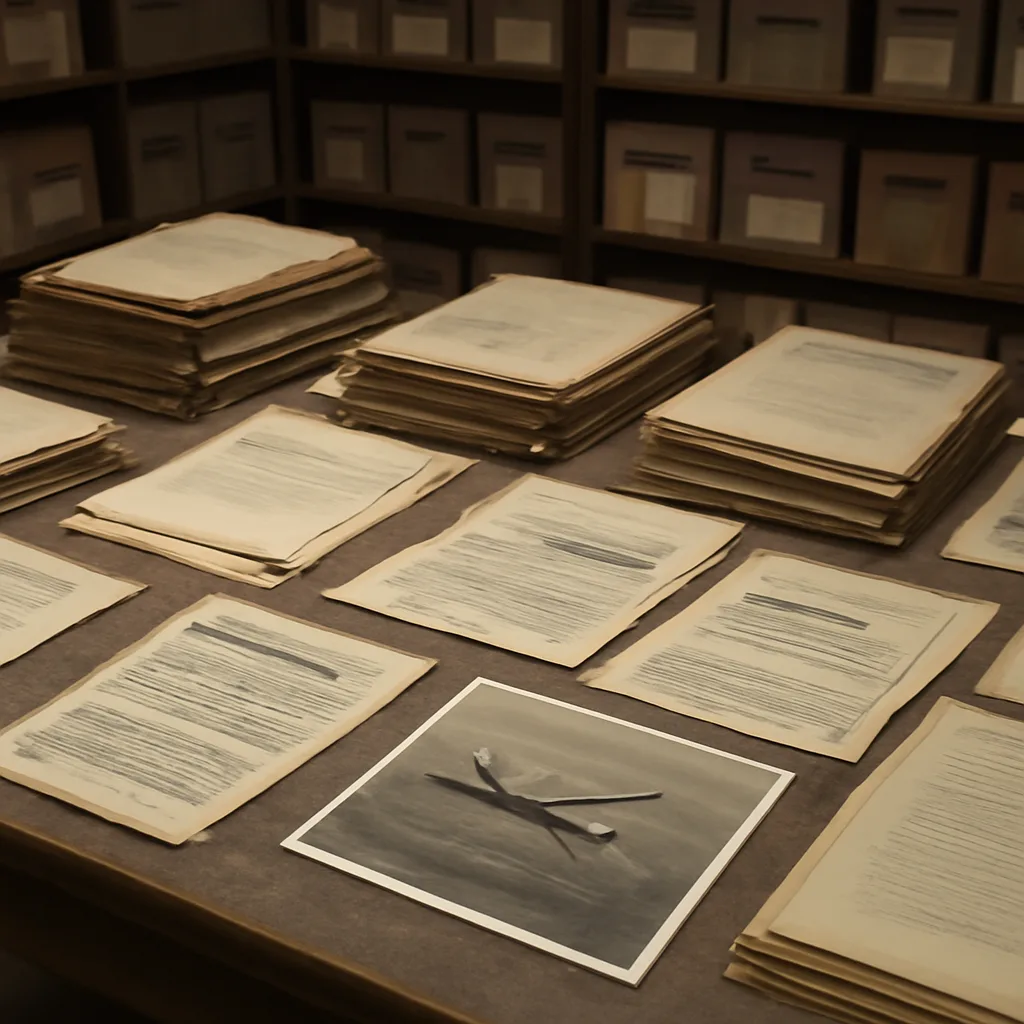
On January 17, the Central Intelligence Agency made available a collection of declassified records related to unidentified flying objects (UFOs), covering material generated from the 1940s through the 1990s. The release consolidates reports, internal analyses, and select image files that had previously been available only in fragments across agency reading rooms, archived releases, and prior Freedom of Information Act (FOIA) disclosures. Context The United States government began formally collecting reports of unexplained aerial phenomena during and after World War II, as public sightings and military encounters increased. Through the Cold War decades the CIA, along with other agencies and military services, tracked, evaluated and sometimes debunked sightings that raised concerns about foreign technology, air safety or intelligence vulnerabilities. Many records from the period reflect routine investigative work, analytic memoranda, and efforts to coordinate with other agencies rather than definitive evidence of nonconventional craft. What was released The newly posted material includes internal CIA memoranda, analytical studies, correspondence with other government entities, and some imagery tied to historic investigations. The collection spans early postwar reports—when the term “flying saucer” entered public discourse—through Cold War-era analytic products and later retrospective reviews. The CIA described the release as part of ongoing transparency efforts and efforts to centralize documents that had been dispersed across prior releases and archival holdings. Scope and limitations The released files are a mixture of contemporaneous notes, transcriptions, and declassified exhibits. They document how CIA analysts assessed reported sightings, including considerations of sensor errors, misidentified aircraft, natural phenomena, and the potential for foreign adversary activity. The agency has redacted certain passages and withheld material where classification or privacy concerns remain, so the archive is not a complete record of every report or investigation. Some more recent records and internal deliberations may remain under separate review or classified under other statutes. What the documents show — and don’t show Readers should not expect definitive proof of extraterrestrial visitation in these papers. Much of the material indicates investigative caution, competing hypotheses, and routine skepticism. At the same time, the files illustrate persistent interest within intelligence and defense communities in unexplained aerial observations where conventional explanations were not immediately available. The documents provide insight into interagency information-sharing, analytic methods of the era, and how national-security priorities shaped attention to anomalous sightings. Reactions and significance Archivists, historians and researchers of Cold War intelligence have welcomed the consolidation of these documents because it eases access and contextualizes earlier releases. Journalists and independent investigators are likely to comb the files for previously overlooked details or historical patterns of reporting. Officials have framed the release as part of transparency efforts; outside commentators note that declassification of historical records helps public understanding of how government agencies handled uncertain phenomena. How to access and next steps The CIA has posted the collection on its official website and indicated the material is intended for public research. Interested parties should consult the agency’s declassification portal and archives for the complete set and for guidance on how documents were redacted. Scholars and FOIA requesters may continue to pursue additional, related records that remain under review or housed in other agencies’ archives. Historical value Even with redactions and gaps, the release contributes to the documented history of how U.S. intelligence agencies tracked unexplained aerial phenomena across decades marked by rapid aviation advances and geopolitical rivalry. The papers are principally of historical and procedural interest: they illuminate investigative practices, interagency dynamics, and the balance agencies struck between skepticism and national-security concern when confronted with unexplained reports.