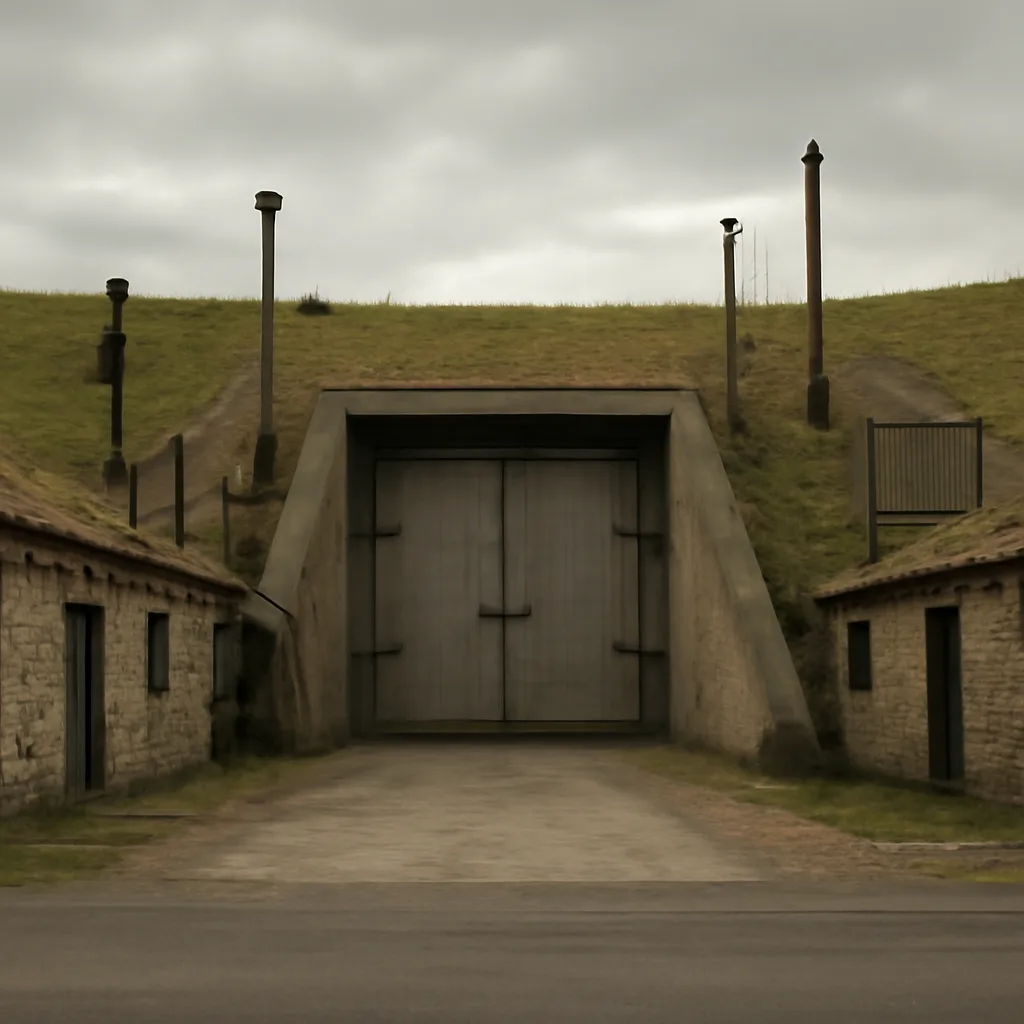
On January 9, 1991, Pentagon officials publicly acknowledged the existence of extensive underground military facilities in the United States—some constructed during World War II and significantly expanded in the early Cold War era. The announcement addressed long-running speculation about subterranean complexes used for command, storage, and research purposes, and it clarified the historical scope and purpose of those sites rather than validating more sensational claims about contemporary “secret cities.” Background Cold War planning and wartime exigencies led the U.S. military and related agencies to develop a range of hardened and underground sites. These included bomb‑proof command centers, munitions storage caverns, and protected research and communications facilities. Notable, well‑documented examples from the period include the Cheyenne Mountain Complex (planned and begun in the 1950s) and converted limestone or salt caverns used for ordnance and fuel storage. Many such sites were part of routine military infrastructure planning to preserve continuity of command and logistics under threat. What the 1991 Statement Said The Pentagon’s 1991 disclosure did not announce a previously unknown program of living “underground cities.” Instead, officials confirmed the historical existence of underground and hardened facilities across various military branches and civilian agencies, and they provided limited details to correct public misconceptions. The statement emphasized that these installations served narrowly defined defensive, logistical, or administrative functions rather than housing large civilian populations or operating as self‑contained urban centers. Why the Topic Attracted Rumors Secrecy surrounding national defense, combined with the physical secrecy of subterranean works and Cold War emergency planning, fostered a climate ripe for rumor. Reports in the press and claims in popular culture sometimes conflated multiple kinds of facilities—shelters, command centers, munitions depots—and extrapolated from partial facts to assert the existence of vast underground cities. Declassification efforts and official confirmations of individual sites over time helped distinguish verifiable installations from speculation. Documented Examples and Limits Historical records, declassified documents, and scholarly studies identify specific underground facilities built for concrete, documented purposes: command-and-control bunkers, missile silos, storage caverns, and continuity-of-government centers. These are corroborated by architectural plans, procurement records, and authorized photographs in government archives. Conversely, definitive evidence for extensive, populous subterranean cities maintained in secret well into the late 20th century is lacking in the public record. Where claims exceed archival documentation, researchers caution against assuming that rumor equates to fact. Implications and Subsequent Coverage The Pentagon’s acknowledgment in 1991 prompted renewed public and journalistic interest in Cold War infrastructure and declassification of additional records. Historians and analysts used the clarification to refine public understanding of emergency planning and to separate documented military engineering projects from mythmaking. The case also illustrated how official silence or necessary operational secrecy can fuel conspiracy narratives. Conclusion The January 1991 Pentagon confirmation validated the historical existence of multiple underground military facilities—many dating to World War II and the Cold War—but did not substantiate claims of vast secret underground cities as self‑contained urban centers. Researchers rely on declassified records and archival sources to map the real scope and functions of these installations, while noting the persistent gap between documented infrastructure and more elaborate popular rumors.