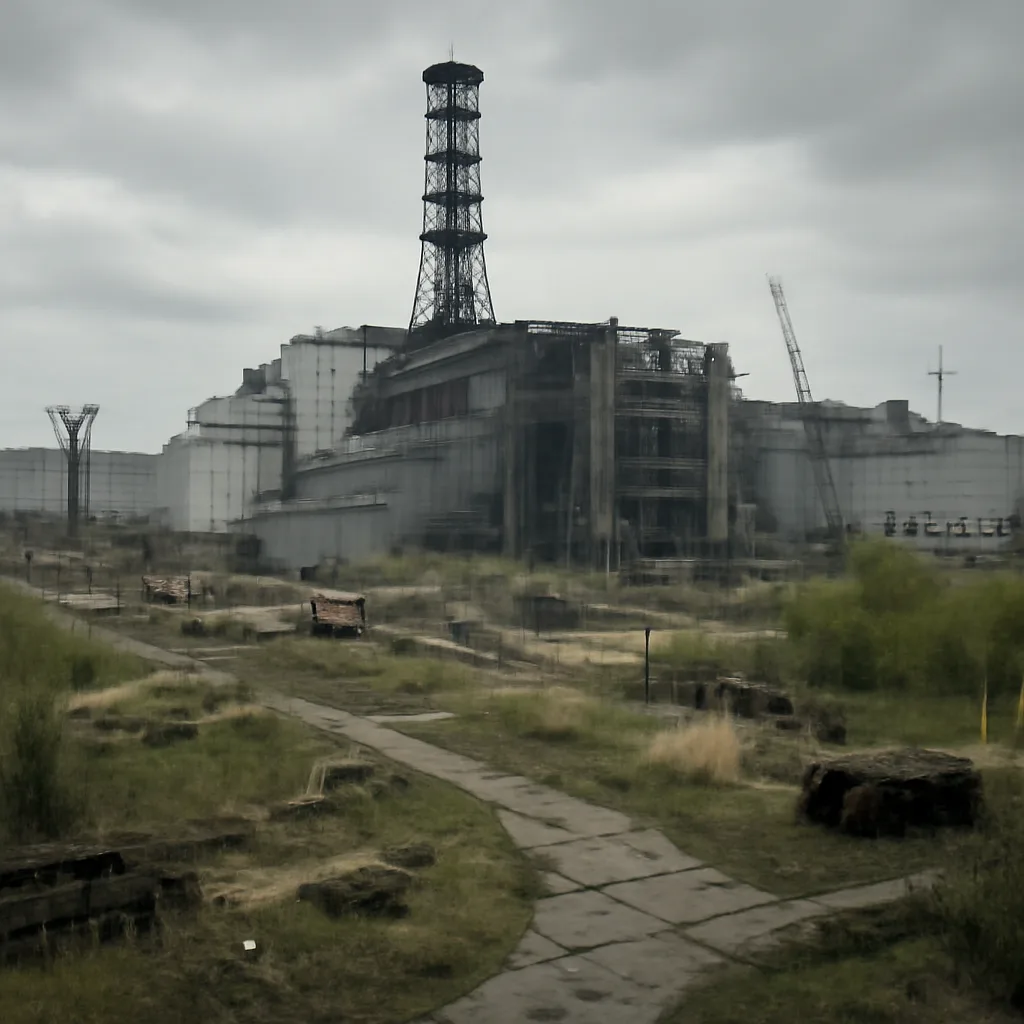
On April 26, 1986, at 01:23 local time, reactor No. 4 at the Chernobyl Nuclear Power Plant, located near the city of Pripyat in the Ukrainian SSR, experienced a steam explosion and subsequent fires during a late-night safety test. The explosion damaged the reactor and its containment structures, exposing the core and releasing a significant plume of radioactive material. Operators and emergency responders at the site and nearby residents were exposed to high doses of ionizing radiation. The test that preceded the accident involved assessing the reactor’s behavior during a power reduction and the ability of its turbines to supply power to circulation pumps in the event of a station blackout. A combination of flawed test procedures, design defects in the RBMK-1000 reactor (including a positive void coefficient and control rod design issues), and operator actions that contravened safety protocols contributed to the reactor’s instability. Investigations by Soviet and international experts later identified these technical and human factors as primary causes. Firefighters and plant staff were the first to respond, many unaware of the radiation levels they faced. Initial firefighting efforts focused on extinguishing graphite and building fires and preventing further damage to adjacent reactors. In the days following the explosion, Soviet authorities ordered the evacuation of Pripyat, a nearby city built to house plant workers, but the evacuation began about 36 hours after the accident, by which time many residents had already been exposed. Over subsequent weeks and months, larger-scale evacuations expanded to include surrounding towns and districts, creating an exclusion zone that remains in place around the plant. The Soviet government initially withheld full details of the accident and its severity; the international community became aware of the radiation release when elevated readings were detected at a Swedish nuclear plant and reported on April 28. The Soviet leadership then acknowledged an accident and gradually released information. A multinational effort followed to contain the disaster: helicopters dropped materials to smother the burning reactor and limit further emissions, and thousands of workers—often called "liquidators"—were mobilized to decontaminate the site, construct a concrete-and-steel sarcophagus over the damaged reactor, and relocate contaminated soil and buildings. These operations exposed many workers to harmful radiation doses. Immediate and long-term impacts of the disaster were wide-ranging. Two plant workers died on the night of the accident or within hours, and 28 emergency responders and staff died within weeks from acute radiation syndrome, according to official counts. Longer-term health effects, including increased incidence of thyroid cancer among those exposed as children, particularly in Belarus, Ukraine, and parts of Russia, have been documented by multiple studies; the exact number of excess cancer cases and deaths attributable to Chernobyl remains the subject of ongoing research and debate among epidemiologists. Large areas of Belarus, Ukraine, and Russia experienced heavy radioactive contamination, prompting agricultural restrictions and long-term displacement of tens of thousands of people. Environmentally, the accident deposited radionuclides such as iodine-131, cesium-137, and strontium-90 across wide areas; some isotopes decayed relatively quickly, while others persisted and required long-term management. The damaged reactor was initially enclosed in the hastily built sarcophagus; decades later, an ambitious engineering project—the New Safe Confinement, completed and slid into place in 2016—was designed to contain the remains of reactor No. 4 and facilitate eventual dismantling and waste removal. Chernobyl had profound political and social repercussions. The disaster exposed shortcomings in Soviet industrial safety, emergency response, and information transparency, and it is widely cited as one factor that intensified public scrutiny and reform pressures in the late Soviet period. The site and the surrounding exclusion zone remain focal points for research, remediation, and public memory. Many technical reports, national commissions, and peer-reviewed studies have examined Chernobyl’s causes and consequences; some details—particularly long-term health and environmental totals—are still refined as new research and analyses are published.