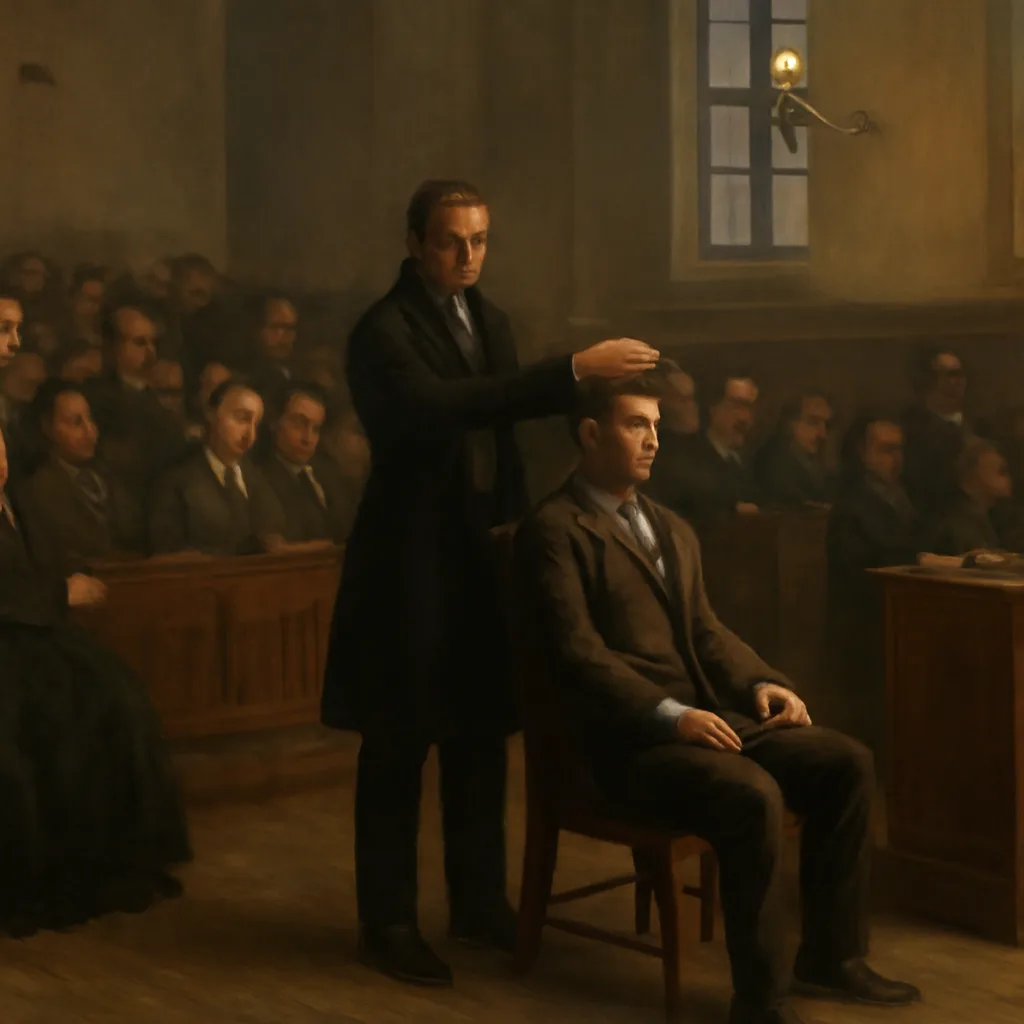
On 12 February 1846 a public demonstration of mesmerism — often called animal magnetism or, later, hypnosis — took place that attracted public and professional attention. Mesmerism originated in the 1770s with Franz Anton Mesmer’s claims about a universal magnetic fluid; by the mid-19th century the practice had evolved into public performances, therapeutic experiments, and contested scientific inquiry across Europe and North America. Context Mesmer’s ideas prompted medical and governmental investigations as early as the 1780s, producing skeptical official reports but also a lasting popular fascination. During the first half of the 19th century, practitioners and showmen used theatrical demonstrations to exhibit trance phenomena, altered responsiveness, and suggestion. These events occurred alongside more sober clinical experiments by physicians who sought to understand whether trance states could aid treatment of pain, hysteria, or other conditions. The 12 February 1846 demonstration Contemporary press and eyewitness accounts indicate that the demonstration on 12 February 1846 was intended for a mixed audience of laypeople and professionals. It presented mesmerist techniques: eye fixation, passes of the hands, and verbal suggestion to induce a trance-like state in volunteers. Demonstrators reported observable effects such as muscular relaxation, analgesia, heightened suggestibility, or dramatic emotional displays. Reactions ranged from enthusiasm among supporters to derision from skeptics who attributed effects to suggestion, theatricality, or the placebo effect. Reception and significance The event reinforced two concurrent trends. For the public and popular press, mesmerist demonstrations remained compelling spectacles that blurred lines between entertainment and quasi-therapeutic practice. For parts of the medical community, demonstrations like the February 1846 event stimulated debate about whether hypnotic phenomena warranted clinical study. While some physicians dismissed mesmerism as superstition, others documented cases where suggestion appeared to modify symptoms, setting the stage for later scientific investigations into suggestion, psychological treatment, and the development of modern hypnotherapy. Limitations and disputed points Records from the period vary in detail and reliability. Press reports often amplified dramatic elements; practitioners sometimes exaggerated therapeutic claims. There was no single, universally recognized “first public demonstration” of mesmerism in 1846—mesmerist exhibitions had been performed for decades—and specific features of the 12 February event (such as the exact location, names of all participants, or precise clinical outcomes) are not consistently documented across surviving sources. Historians therefore treat such demonstrations as representative episodes in a broader cultural and scientific history rather than as singular turning points. Legacy Demonstrations like that of 12 February 1846 contributed to the gradual transformation of mesmerism into disciplines more recognizable to modern readers: experimental psychology, clinical hypnosis, and psychotherapy. By exposing audiences to the apparent effects of focused attention and suggestion, these events helped stimulate both popular interest and scientific scrutiny, influencing later figures—such as James Braid, Hippolyte Bernheim, and Jean-Martin Charcot—who reframed trance phenomena in physiological and psychological terms. For readers This account situates the 12 February 1846 demonstration within a longer, contested history of mesmerism and early hypnosis. When consulting primary sources from the period, expect variation in terminology and interpretation: contemporaries used terms like “mesmerism,” “animal magnetism,” and, later, “hypnotism” in overlapping and sometimes contradictory ways.