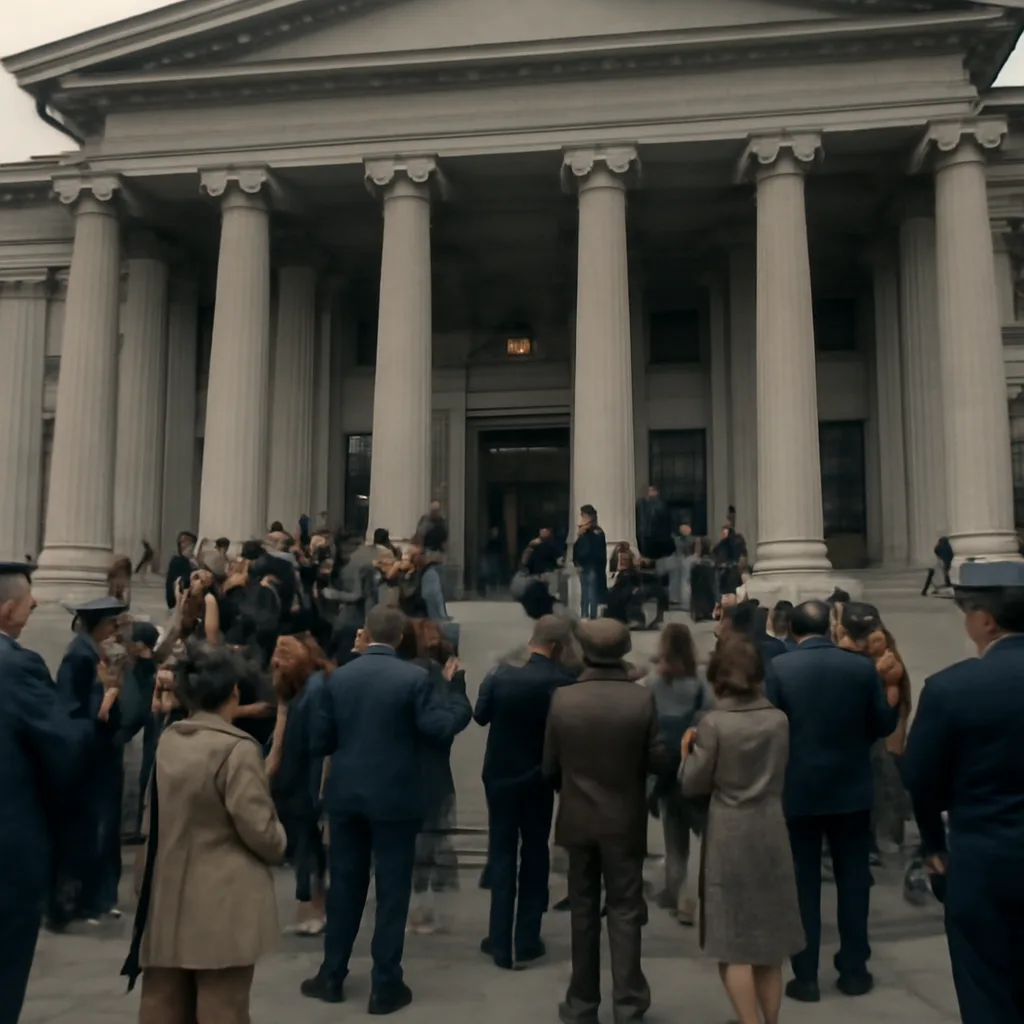
On October 19, 1971, a California court sentenced Charles Manson and several members of what prosecutors called the "Manson Family" to death for their roles in the August 1969 murders of actress Sharon Tate and four others at Tate's Los Angeles home, and the separate killings of Leno and Rosemary LaBianca the following night. The verdict and sentences capped a high-profile trial that had drawn national attention for its graphic facts, the defendants' courtroom behavior, and the prosecution's portrayal of a cultlike group acting under Manson's direction. Background In late August 1969, actress Sharon Tate—then eight months pregnant—and four others were murdered at Tate's residence. The next night Leno and Rosemary LaBianca were killed in their home. Investigators eventually tied the crimes to a loose collective centered around Charles Manson, a former convict who had gathered followers in California. Prosecutors argued Manson directed the killings to spark a race war he termed "Helter Skelter," a claim central to the state's case though its interpretation and Manson's exact motives have been debated. The Trial Manson and several followers—most prominently Susan Atkins, Patricia Krenwinkel and Charles "Tex" Watson—faced multiple counts, including first-degree murder and conspiracy. The trial began in mid-1970 and featured extensive testimony from former group members, physical evidence linking defendants to the scenes, and a prosecution narrative that Manson orchestrated the attacks. Defense teams mounted various arguments over time, sometimes disputing Manson's direct involvement in the killings and at other points raising questions about the admissibility of certain testimony and evidence. The defendants' courtroom conduct, including Manson's own outbursts and the group’s behavior, intensified media coverage and public fascination. Verdict and Sentencing In 1971 juries found Manson and several of his followers guilty of murder and conspiracy. On October 19, 1971, the court imposed death sentences on Manson and the convicted followers. The punishment reflected California law at the time and the gravity of the crimes as determined by the juries and judge. Aftermath and Later Developments California briefly abolished capital punishment in 1972 following the U.S. Supreme Court's decision in Furman v. Georgia, which led to automatic commutation of death sentences to life imprisonment for many inmates; in 1972–73, Manson's sentence was commuted to life with the possibility of parole. California later reinstated the death penalty by statute, but Manson and his co-defendants remained serving life terms. Over subsequent decades, Manson and several co-defendants sought parole or filed appeals; parole was repeatedly denied. Manson died in prison in 2017. Historical significance The Manson trials exposed the intersection of violent crime, countercultural movements, and media spectacle in late-1960s and early-1970s America. The case influenced public perceptions of cult leadership, criminal responsibility, and media coverage of high-profile trials. While prosecutors' portrayal of Manson as the mastermind shaped the legal outcome, aspects of motive and internal group dynamics have remained subjects of study and debate among historians, journalists and legal scholars. Sources and accuracy This summary is based on established reporting and court records from the 1970s and later historical accounts. Where interpretations—such as the precise motive labeled "Helter Skelter"—have been disputed or debated, that uncertainty is noted rather than presented as settled fact.