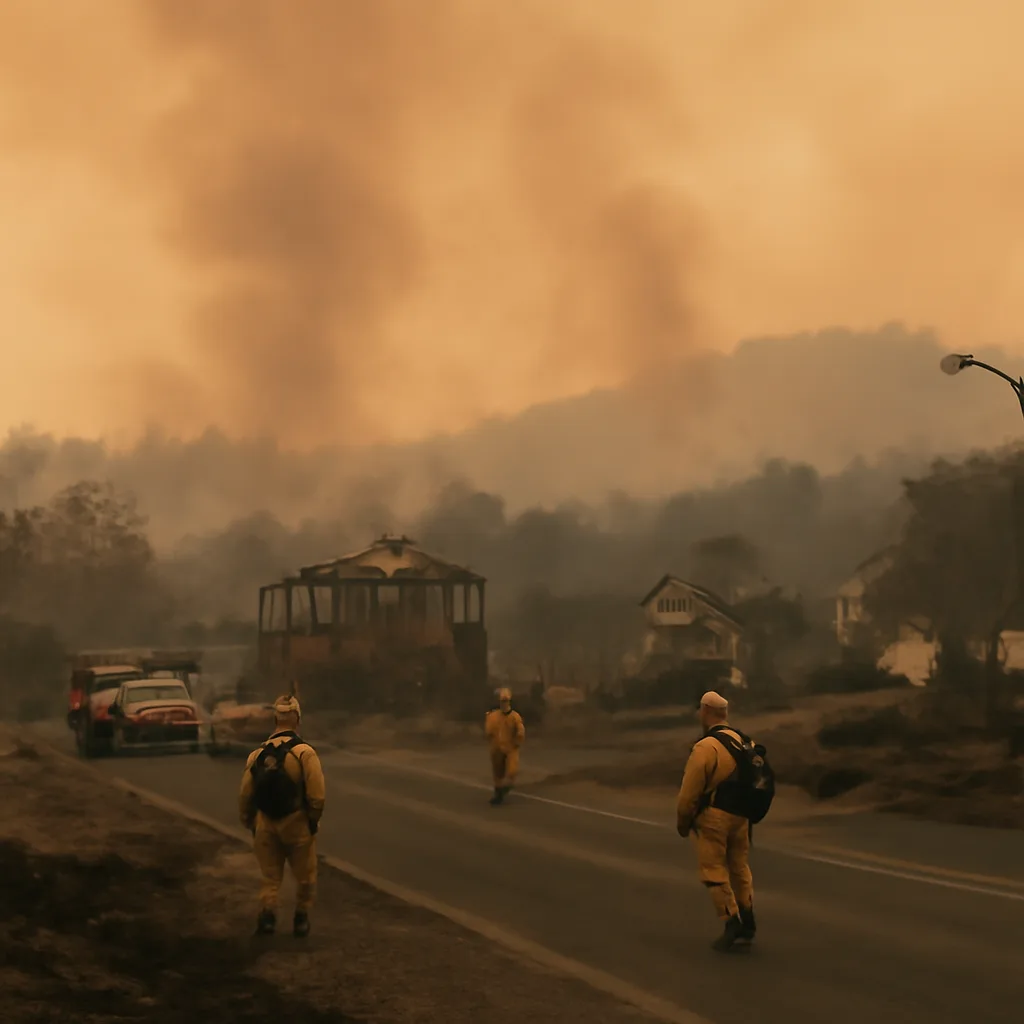
In late July 2018, California faced a severe wildfire outbreak that prompted state and local authorities to declare emergencies, mobilize firefighting resources, and order large-scale evacuations. Multiple large fires burned across Northern and Central California amid prolonged dry weather, high temperatures and gusty winds, straining local firefighting capacity and causing significant property losses. Major incidents - Carr Fire: Ignited on July 23, 2018, near Redding in Shasta County, the Carr Fire grew rapidly in the following days. Fueled by hot, dry conditions and strong winds, it destroyed thousands of structures and caused multiple fatalities. The blaze became one of the most destructive in California history by acreage burned and structures lost. - Mendocino Complex: Comprised primarily of the River and Ranch fires in Mendocino, Lake and Colusa counties, the Mendocino Complex became the largest recorded wildfire complex in modern California history by acreage during the 2018 season. It started in mid-July and continued to expand through the month. - Other fires: Several other significant fires were active across the state in late July 2018, including incidents in Butte, Sonoma and Napa counties, contributing to heavy smoke, widespread evacuations and strained resources. State response California’s governor declared a state of emergency for affected counties to expedite response efforts and unlock state resources. The declaration enabled deployment of additional firefighting personnel and equipment, coordination with federal agencies, and streamlined access to emergency funding and recovery assistance for impacted communities. Impacts The fires caused civilian evacuations, closures of roads and parks, and degraded air quality across wide regions. Residential neighborhoods, commercial properties and rural structures were destroyed in some of the hardest-hit areas. Emergency shelters were opened for displaced residents, and hospitals and first responders worked under difficult conditions to care for the injured and maintain public safety. National and local agencies, including CAL FIRE, county sheriffs’ offices and mutual aid partners from other states, worked together on containment efforts. Investigations into causes varied by incident; at least one major fire’s ignition involved a vehicle-related mechanical issue, while other blazes were the subject of distinct inquiries. Firefighters faced complex terrain, shifting weather and the challenge of protecting both communities and critical infrastructure. Aftermath and longer-term effects Containment of individual fires took days to weeks, with full suppression and recovery continuing into the following months. The scale of the July 2018 fires reinforced concerns about wildfire risk in California, emphasizing the roles of climate-driven drought and heat, historical land management practices, and the interface between expanding development and fire-prone landscapes. The season prompted renewed discussion of prevention measures, community preparedness, and investments in firefighting capacity. Notes on dates and scope The headline reference to July 2018 reflects the period when multiple major wildfires were active and state emergency declarations were issued. Specific timelines, acreage figures and casualty counts varied by incident and were updated over time by official agencies.