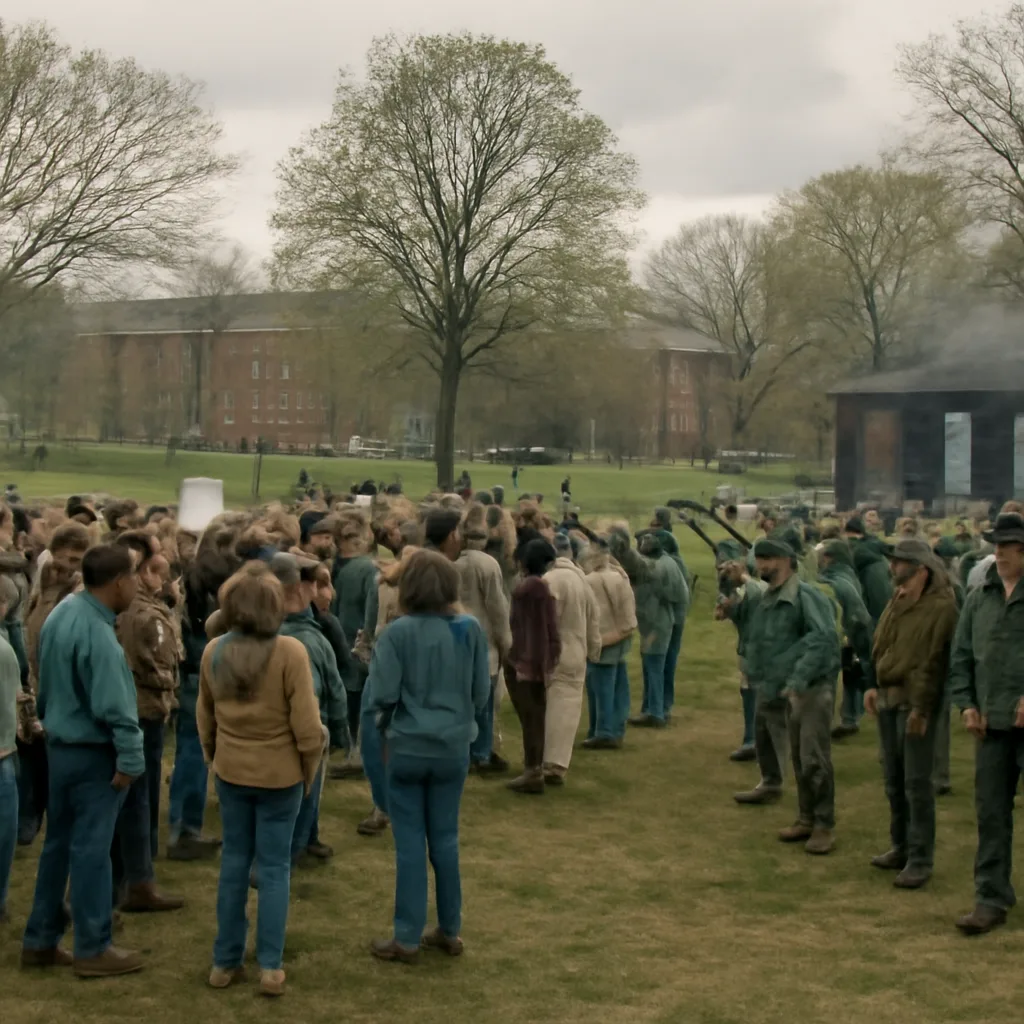
On the afternoon of May 4, 1970, Ohio National Guard soldiers opened fire on demonstrators at Kent State University in Kent, Ohio, killing four students and wounding nine others. The protest followed President Richard Nixon’s announcement on April 30 that U.S. forces had expanded operations into Cambodia, a development that intensified nationwide student demonstrations against the Vietnam War. Background and escalation In the days before May 4, unrest at Kent State escalated. On May 1–2, demonstrations and a large campus strike took place. On May 2, after several incidents including the burning of the campus ROTC (Reserve Officers’ Training Corps) building, Kent’s mayor asked Ohio Governor James A. Rhodes to send the National Guard to restore order. Guardsmen arrived on campus on May 2 and remained through May 3. Tensions between students and troops rose as demonstrations continued and university activities were disrupted. May 4 events On the morning of May 4, students gathered for a scheduled antiwar rally. A large crowd assembled on and around the Commons and nearby areas. As the afternoon progressed, skirmishes and confrontations occurred between some demonstrators and Guardsmen. A contingent of Guardsmen advanced across open ground toward the crowd; accounts differ on precisely what precipitated the shooting. At 12:24 p.m., Guardsmen fired a volley of shots over a period of approximately 13 seconds. Four students—Allison Krause, Jeffrey Miller, Sandra Scheuer and William Schroeder—were killed. Nine other students were wounded, one critically. Immediate response and investigations News of the shootings reverberated quickly across the nation. The incident provoked widespread outrage, large protests on other campuses, and a national student strike that closed hundreds of colleges and universities. President Nixon and Governor Rhodes faced intense criticism; Rhodes famously told reporters shortly before the shootings that demonstrators should be shot, a remark that heightened scrutiny. Multiple investigations followed. A U.S. Commission chaired by Secretary of State William P. Rogers conducted a federal inquiry and issued a report concluding that the shootings were avoidable but stopping short of assigning criminal culpability. A later 1979 federal trial found that the Guardsmen had fired without orders and that their actions were unreasonable; however, in 1979 a civil suit brought by victims’ families against the state was settled in 1979 for $675,000 without an admission of liability. Legacy and contested narratives The Kent State shootings became a defining moment in the domestic response to the Vietnam War. They intensified antiwar sentiment, influenced public opinion, and inspired protest songs, poems, and artworks—most famously Neil Young’s song "Ohio." Debate has persisted over whether Guardsmen faced adequate training and command control, whether they perceived a lethal threat, and how local and state officials managed the situation. Eyewitness accounts and subsequent forensic and legal analyses produced differing interpretations of the sequence of events and whether individual riflemen fired intentionally at specific students. Commemoration Kent State has memorialized the victims and preserved the site known as the May 4th Landscape, which includes a memorial plaza and markers. Annual commemorations draw students, families, and visitors who reflect on the shootings’ impact on civil protest, campus security, and government accountability. Historical significance Beyond its immediate human toll, the Kent State shootings highlighted tensions between civil liberties and public order during a polarizing era. The event prompted changes in university policing, influenced public discourse on protest rights, and remains a focal point for studies of government response to domestic unrest during the Vietnam War era.