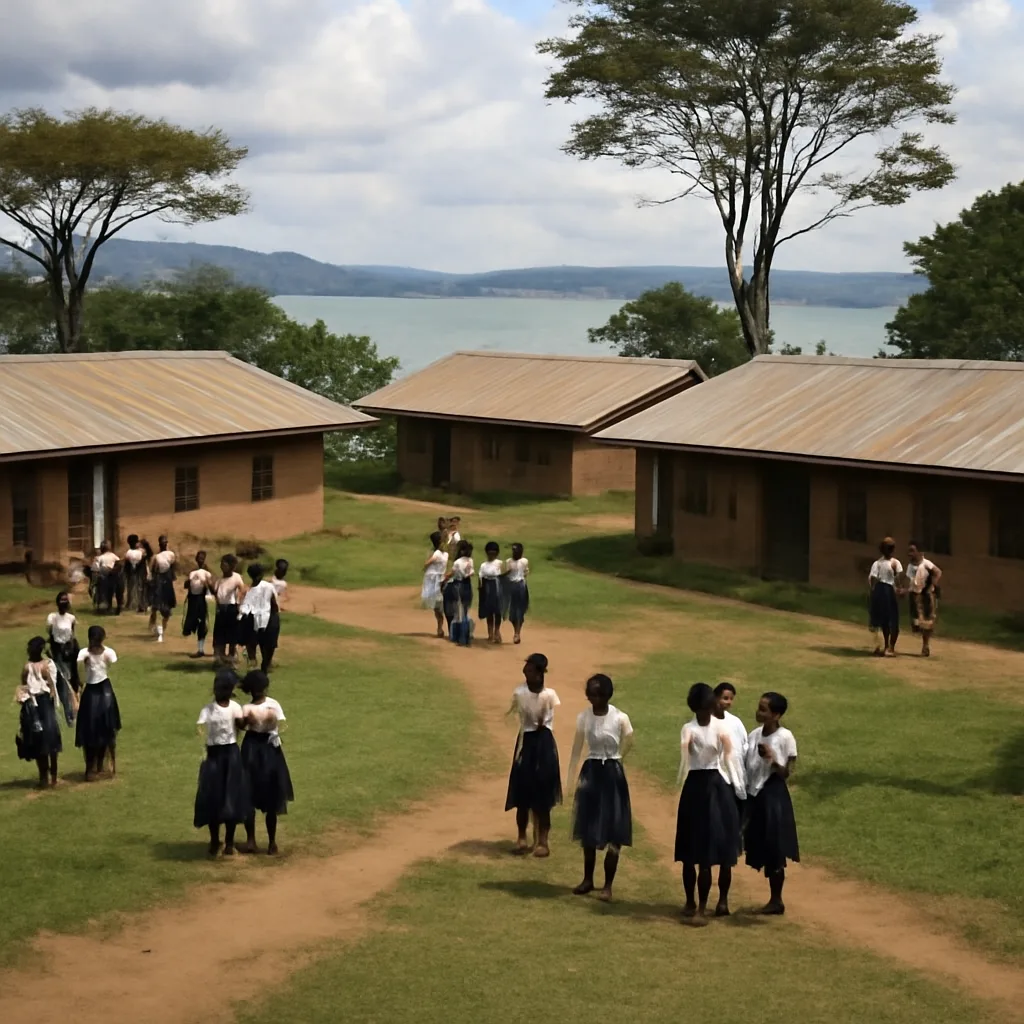
In January 1962, at a mission-run boarding school in Kashasha, near Lake Victoria in what was then Tanganyika, an episode of uncontrollable laughter began among a small group of pupils. Reports from visiting doctors and later World Health Organization (WHO) summaries indicate the laughter spread to other students and to people in nearby villages, producing absenteeism and disruption of daily life. The outbreak is commonly cited in medical literature as an example of mass psychogenic illness (MPI), sometimes termed mass sociogenic illness, rather than infection by a biological agent. Contemporary observers described the initial cases as episodes of prolonged giggling and laughter that could last minutes to hours, sometimes followed by crying, fainting, or respiratory symptoms. Affected individuals were predominantly schoolgirls aged roughly 12–18. The phenomenon spread within social networks at the school and to neighboring communities, leading to hundreds being affected and classes and other activities suspended. Physicians at the time, and later analyses, investigated the event without finding evidence of an infectious cause. Clinical descriptions emphasized the absence of fever, rash, or laboratory findings consistent with an infectious disease. Social and psychological factors were highlighted: the girls were living in a closed, high-stress environment (boarding school), many had recently experienced personal or community stresses linked to rapid social change in the postcolonial period, and the girls were part of close peer groups through which behaviors could spread. WHO field reports and later reviews framed the episode within the broader category of MPI, which has appeared in schools and workplaces worldwide. Key features that supported this interpretation included rapid onset and cessation coinciding with attention and suggestion, predominance among a single demographic group, lack of a plausible pathogen, and strong social and cultural connections among those affected. Scholars have also placed the 1962 incident in its historical context. Tanganyika had gained independence in 1961; the early postcolonial period involved social disruption, new educational expectations, and changing gender roles. Some historians and social scientists suggest that the outbreak reflected collective stress and provided an outlet for anxiety in a setting where young women had limited channels for expressing distress. Other analyses caution against reductive or pathologizing interpretations that overlook local meanings and the agency of those involved. The incident has been documented in WHO materials and public-health case studies and is frequently cited in reviews of mass psychogenic illness. While the designation of the event as MPI is widely accepted among clinicians and public-health researchers, some debate remains about the role of cultural expression, media attention, and local interpretations in shaping both the course of the outbreak and subsequent accounts. Today the 1962 Kashasha laughter outbreak is taught in public-health and psychiatry courses as a classic case of noninfectious mass illness with social transmission. It continues to be referenced in discussions about how communities, health workers, and authorities should respond to similar events: by conducting careful clinical assessments to exclude organic causes, avoiding unnecessary medical interventions, addressing social and psychological needs, and communicating clearly to the public to prevent stigma and rumor. Because primary source material is limited and interpretations have evolved, accounts vary in emphasis and detail. The key verifiable points are that an episode of contagious laughter among schoolgirls in northern Tanganyika began in early 1962, attracted local and international attention, yielded no infectious etiology, and was recorded in medical and public-health literature as an example of mass psychogenic illness.