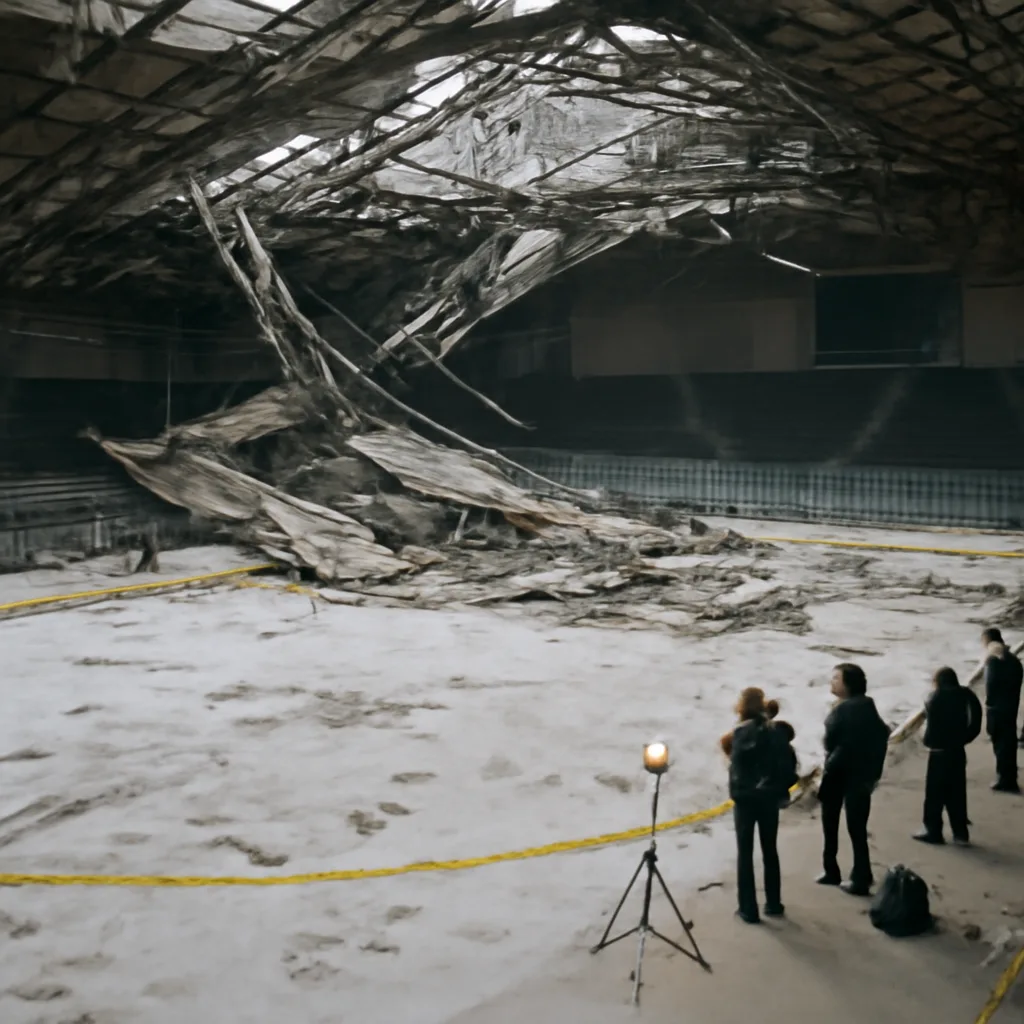
On the morning of January 13, 1983, officials announced the cancellation of a scheduled hockey game after a portion of the arena’s roof collapsed. The incident prompted an immediate evacuation of the facility and the closure of surrounding areas while emergency responders and building inspectors assessed structural damage and potential hazards. Details about the precise cause of the collapse and the extent of structural failure were subject to ongoing investigation at the time. Winter weather conditions and accumulated snow loads are commonly implicated in similar midwinter roof failures, but contemporaneous reports from that period did not definitively assign cause without inspection findings. Local authorities typically secure the scene, limit public access, and coordinate engineering assessments to determine whether progressive collapse, design deficiencies, maintenance shortfalls, or extraordinary loads were factors. Event organizers and team officials moved quickly to notify ticket holders and the public that the scheduled contest would not take place. Where possible, teams and venues communicated plans for ticket refunds, rescheduling or credit policies; exact remedies depended on the arena’s management and the league or event organizers. First responders prioritized personnel safety and checked for casualties. Early accounts indicated no confirmed game-related injuries immediately following the collapse, although emergency crews remained on site to search for anyone who might have been in enclosed service areas or maintenance spaces at the time. Structural engineers were dispatched to evaluate remaining roof integrity, shoring needs, and the risk of further collapse before recovery and cleanup operations could proceed. Investigations into facility incidents of this type generally include reviewing original design and construction documents, maintenance records, inspection logs, and recent weather data, as well as conducting on-site forensic analysis. Insurance claims and potential liability matters often follow, with municipal building departments and workplace safety agencies also taking part when public venues are involved. While this cancellation disrupted teams, fans and local businesses that depend on game-day activity, the immediate public safety response and subsequent inspections aimed to prevent further harm. Long-term outcomes in comparable cases range from repairs and strengthened maintenance protocols to prolonged closures or replacement of damaged structures, depending on damage severity and investigative findings. Because some contemporaneous reporting and official records can be incomplete or focused on evolving emergency response, researchers seeking definitive conclusions about cause, responsibility, or the sequence of structural failures should consult archived local newspapers, municipal building department files, engineering reports and legal records from the jurisdiction in question. These primary sources provide the most reliable, verifiable details about what investigators ultimately determined and about any corrective measures implemented afterward.