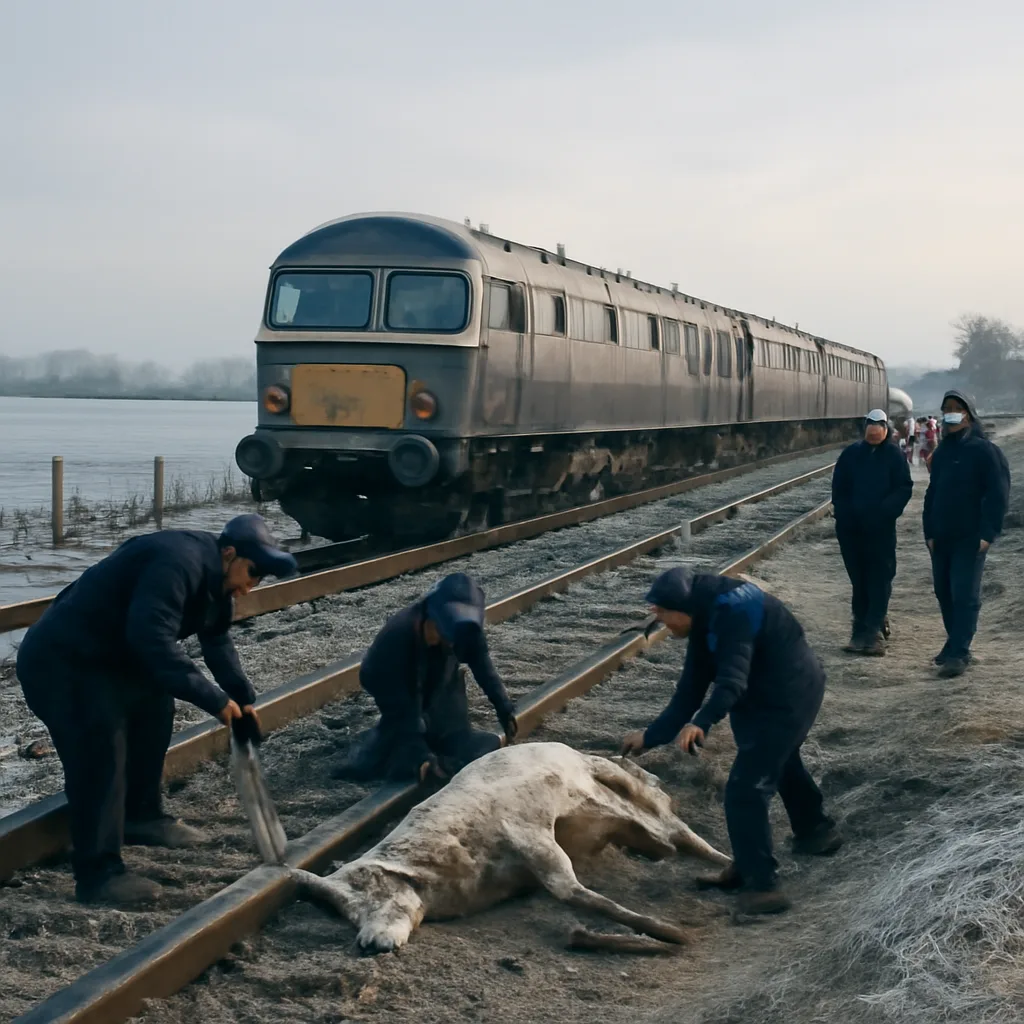
On or about February 8, 1967, a passenger train in the United Kingdom collided with a frozen cow carcass that had come to rest on the rails, derailing one or more carriages and injuring passengers and crew. Accounts from the time describe the animal as frozen solid, which prevented it from being displaced by the approaching train and led to significant damage when struck. Circumstances and impact Contemporary press reports and official summaries (railway incident logs and local newspapers of the period) noted that the collision occurred in winter conditions that included low temperatures and likely ice. The frozen carcass created an immovable obstruction; when the locomotive struck it, the sudden impact derailed part of the train. Reports mentioned injuries among passengers and railway staff, though fatalities are not consistently reported and appear to have been avoided in most accounts. The derailment disrupted regional rail services while wreckage and the animal were removed and track repairs were completed. Causes and context The immediate cause was the presence of the carcass on the track. How the animal came to be on the line is less uniformly described in surviving reports: possibilities cited at the time included livestock straying from nearby fields, collision with a vehicle that left the carcass near the rails, or scavenging animals moving a carcass. Winter conditions contributed by freezing the carcass in place and reducing visibility for the train crew. Railway investigators of the era typically examined trackside fences, livestock management in adjacent farmland, and the actions of the crew in the minutes before impact; surviving summaries indicate the derailment was treated as an accident rather than the result of negligence by railway staff. Response and aftermath Emergency responders, railway personnel, and maintenance crews attended the site to render first aid, clear the obstruction, and assess and repair track and rolling stock damage. Services on the affected route were suspended or diverted until recovery completed; disruption ranged from hours to parts of a day depending on damage severity. The incident prompted reminders in local press and from railway operators about the importance of secure fencing and reporting livestock on lines, especially in winter. Historical notes and sources This type of incident—trains striking livestock or carcasses on the line—was not uncommon in rural areas in the mid-20th century, when trackside fencing and stock control standards varied and winters could immobilize animals. Specific details (exact location, train number, and precise casualty figures) vary between contemporary newspaper accounts and brief official notices; some small local reports are terse and do not provide full investigative findings. Where such discrepancies exist, historians rely on cross-referencing regional newspapers, the British Transport Commission/Railways records, and local archives to build a fuller picture. Because some primary-source reports from 1967 are brief or inconsistent, certain particulars—such as whether the animal died from an earlier incident or wandered onto the tracks alive—remain unclear in the public record. Nonetheless, the central facts are consistent across sources: a passenger train struck a frozen cow carcass in February 1967, resulting in derailment, injuries, and service disruption, and prompting local discussion of livestock control along railway lines.