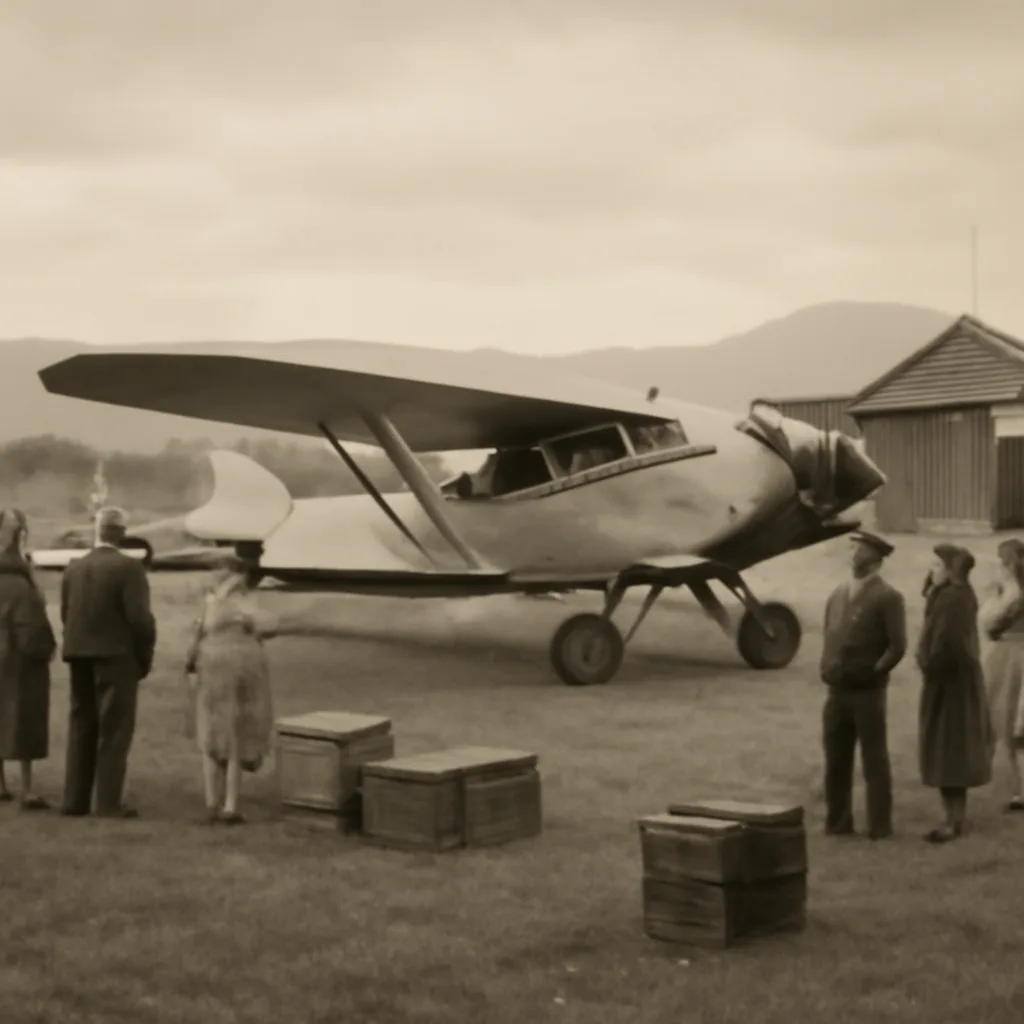
On February 21 (reported in some contemporary accounts as occurring that day), 1931, a Peruvian domestic flight was seized by armed men in an incident widely cited as the country’s first recorded airplane hijacking. The event took place during a period when commercial aviation in South America was still relatively new, aircraft were small and lightly regulated, and political unrest in parts of the region periodically spilled into transportation networks. Contemporary reports identify the aircraft as operating a domestic route within Peru; sources from the era and later summaries indicate that the hijackers boarded either at departure or en route, produced weapons, and compelled the crew to alter the flight’s intended destination or landing. Motives reported at the time varied between political objectives and criminal intent, and later historical treatments note that documentation is limited and sometimes inconsistent. Newspaper accounts from Peru and neighboring countries provided most of the immediate information, but official archival records remain sparse or incomplete in places, making some specifics—such as the exact number of perpetrators, their identities, and precise demands—subject to uncertainty. The technical and regulatory context helps explain why the incident occurred and why it is notable. In 1931 civilian airlines in Peru and across Latin America were operating with rudimentary security measures: passenger screening was minimal, cockpit and cabin separation was uncommon, and many flights used small aircraft with few crew. Governments were still developing aviation law and international norms; the 1930s would see gradual moves toward more formalized air policing and passenger protections. Against that backdrop, the seizure highlighted vulnerabilities that would inform later safety and legal responses. Reactions at the time combined alarm and political calculation. Peruvian authorities investigated, and newspapers debated whether the incident was an isolated criminal act, an example of political agitation, or evidence of inadequate oversight by airlines and the state. For aviation historians, the hijacking is a datum point in the early history of in-flight crime: it predates better-known mid-20th-century hijackings and illustrates how such acts emerged as aviation became a more prominent public sphere. Because primary-source records are patchy, some commonly repeated details are disputed among secondary accounts. Different contemporary newspapers gave different times, passenger counts, and descriptions of the perpetrators; later summaries sometimes conflate this incident with other regional episodes of the early 1930s. Consequently, historians caution against treating any single late report as fully authoritative. What is widely agreed is the basic outline: an armed seizure of a domestic Peruvian aircraft in February 1931 that is commonly referred to as Peru’s first recorded airplane hijacking. The incident’s legacy is mostly historiographical and regulatory rather than dramatic in popular memory. It serves as an early example of how political violence and criminality adapted to new technologies, prompting incremental changes in how states and airlines thought about passenger and crew safety. For researchers, the episode underscores the value—and limits—of contemporary press reporting for reconstructing early aviation crimes, and it invites further archival work in Peruvian governmental and airline records to clarify unresolved details. Notes on sources and uncertainty: reporting on the event derives chiefly from contemporary newspapers and later aviation histories; complete official records are not readily available in commonly cited secondary sources. Where details differ between accounts, this summary presents the consensus outline and notes that finer points (exact date in some reports, identities and motives of perpetrators) remain disputed or insufficiently documented.