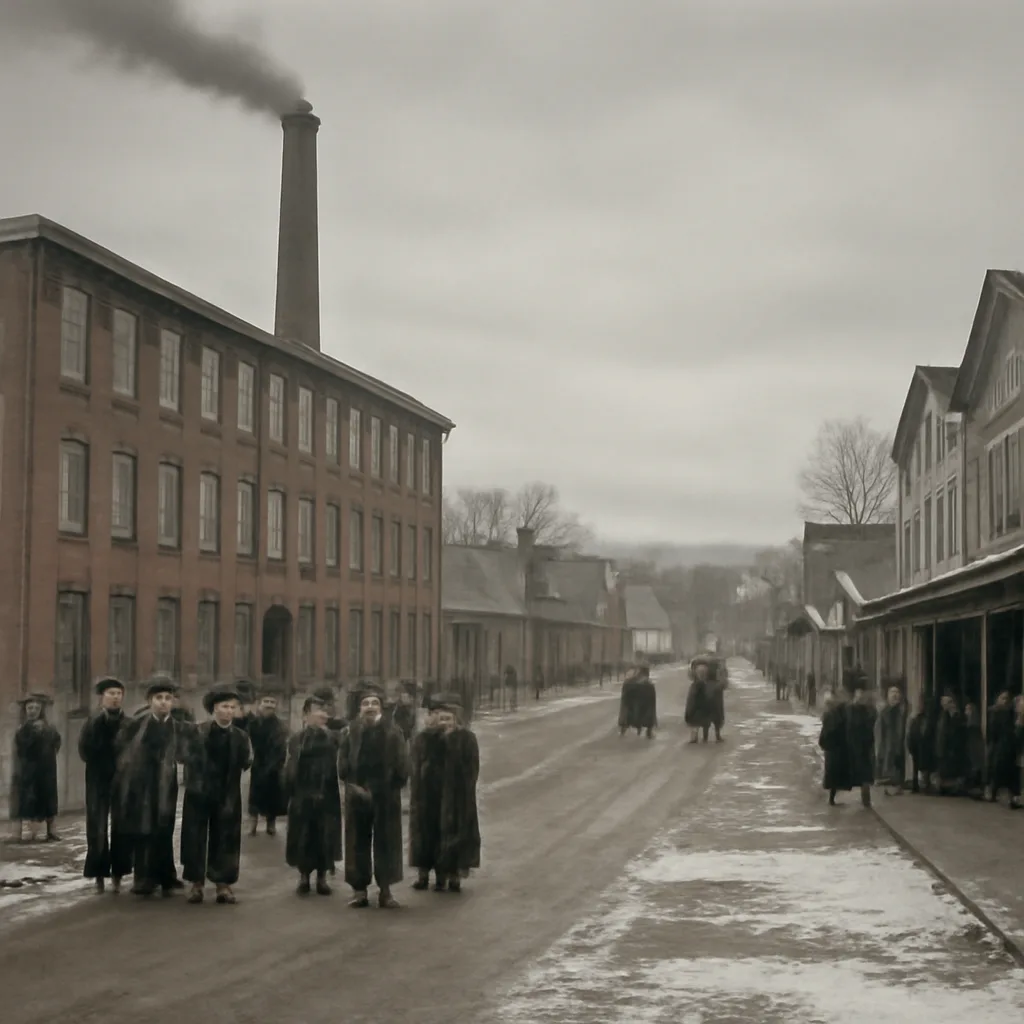
1913 Dalton Mill Panic: an early U.S. factory hysteria episode
On February 12, 1913, Dalton, Massachusetts, textile workers and townspeople experienced a sudden panic at a mill—an episode later discussed as collective hysteria tied to working conditions, rumor, and fear rather than a confirmed external threat.
On the morning of February 12, 1913, a sudden alarm rippled through the Dalton cotton mill and adjacent streets in Dalton, Massachusetts. Reports from local newspapers and subsequent summaries by regional historians describe a rapid evacuation of workers, shopkeepers, and residents after circulating rumors of impending violence or a dangerous incident at the mill. Within hours the disturbance subsided without a confirmed physical cause or casualty count that would justify the scale of alarm.
Context
Dalton in the early 20th century was a small industrial town whose economy and daily rhythms were dominated by textile mills. Work was regimented, conditions were often harsh, and news could travel quickly by word of mouth among workers and within immigrant communities. The era also saw frequent labor unrest nationally—strikes, lockouts, and anarchist fears—that heightened public anxieties about collective action and sabotage.
What happened
Contemporary accounts vary in detail but converge on a core sequence: a rumor or report—some sources say of an explosion or of armed men—spread through the mill and town, prompting many to flee or gather outdoors in alarm. Mill management and local officials moved to restore order. Police and, according to some reports, state authorities monitored the situation. By afternoon the crowd had dispersed and operations, while disrupted, resumed in the following days.
Why it matters
Historians and social historians interpret the Dalton episode as an example of ‘‘collective panic’’ or ‘‘mass hysteria’’ rather than an incident caused by a verifiable external threat. Key contributing factors likely included tense labor relations, recent regional news about strikes and industrial accidents, limited and slow official communication channels, and tightly knit communities where rumors could spread quickly. The event illustrates how social stressors in industrial towns could produce sudden mass responses that appeared irrational to outsiders but were rooted in real anxieties.
Evidence and limits
Primary sources consist mainly of local newspaper reports and municipal records; there is no authoritative single report establishing a definitive cause such as an accident or deliberate attack. Because records of the period are incomplete and contemporary reporting sometimes sensationalized events, historians treat the Dalton panic cautiously. It is often cited alongside other early-20th-century episodes of urban and workplace panic as part of broader studies of industrial society, rumor transmission, and community responses to perceived threats.
Aftermath
In the immediate aftermath, mill activity largely continued, and the town returned to normal routines, though the episode fed local conversations about workplace safety, communication, and policing. Over time Dalton’s panic became a minor footnote in regional histories but remains useful to scholars examining how industrial communities managed fear and uncertainty.
Significance
The 1913 Dalton mill panic is not famous for violence or large-scale loss, but for what it reveals about social dynamics in early industrial America: how fast-developing rumors, preexisting anxieties, and institutional limitations could produce collective actions that left little physical trace but lasting interpretive value for historians. Because details are sparse and sometimes contradictory, accounts emphasize the uncertainty around specific triggers while acknowledging the episode’s plausibility as a psychosocial phenomenon of its time.