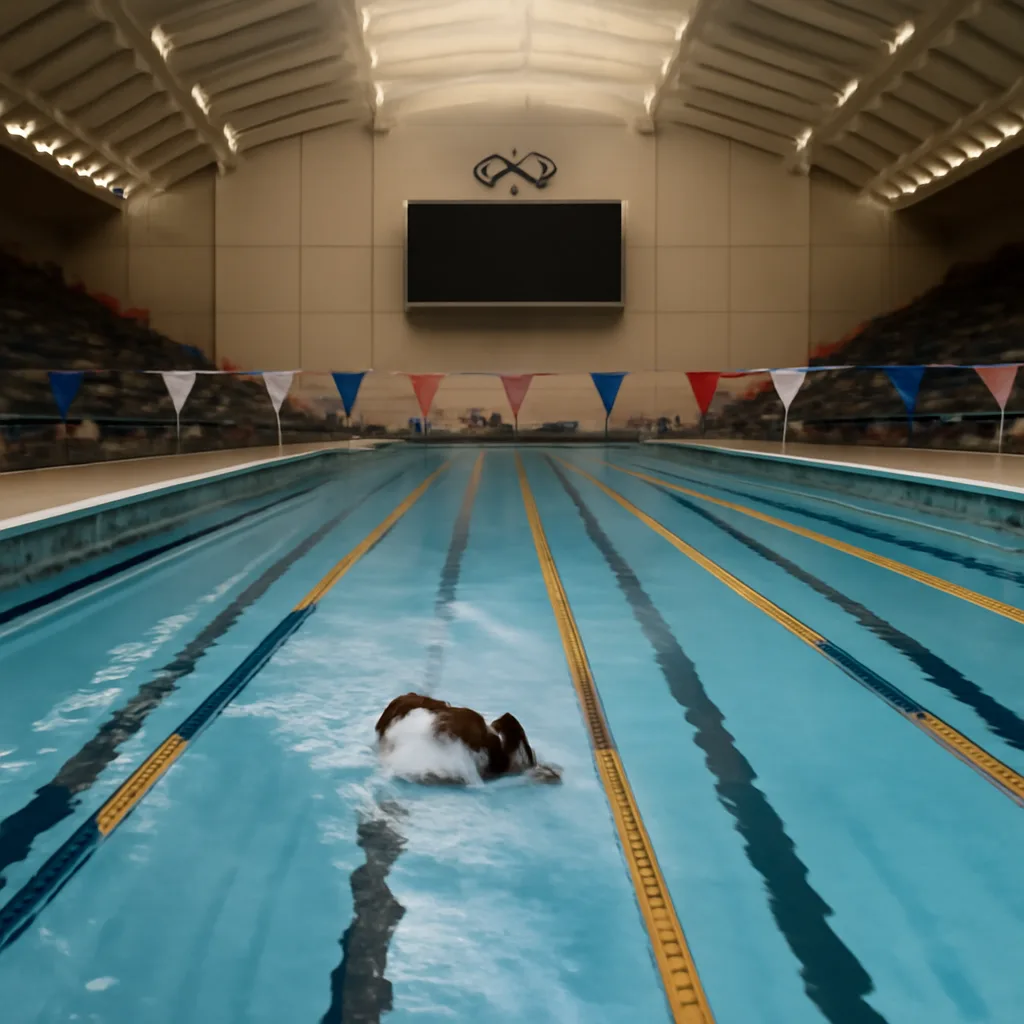
On September 19, 2000, during the Sydney Olympic Games, Eric Moussambani of Equatorial Guinea completed the men’s 100 metre freestyle heat in 1 minute 52.72 seconds. His time is widely reported as the slowest recorded in Olympic history for the event. The context of Moussambani’s swim — limited training opportunities, very little prior time in a 50-metre pool, and the attention drawn by the Olympics’ universality invitation system — shaped how his performance was received. Moussambani, nicknamed “Eric the Eel” by some international media, had trained for months in a 20-metre hotel pool in Malabo, Equatorial Guinea, and had limited competitive experience. He qualified for Sydney under the International Olympic Committee’s universality policy, which allows athletes from underrepresented nations to compete without meeting standard qualifying times. His heat was originally to include two other swimmers, but both were disqualified for false starts, leaving Moussambani alone in the lane. Swimming the race solo, Moussambani struggled with turns and breathing and finished well behind typical Olympic times for the distance. The widely cited time of 1:52.72 stands in contrast to elite Olympic 100m freestyle times, which are typically under 50 seconds. Despite the time disparity, observers noted the visible determination and the symbolic nature of his participation: the Olympic stage provided an opportunity for an athlete from a country with minimal swimming infrastructure to compete alongside world-class peers. Coverage of the race mixed admiration with sensationalism. Some accounts celebrated Moussambani’s personal achievement and the Olympic ideal of inclusion, while others framed the performance as comic or pitiable. Over time, many commentators, fellow athletes, and officials have emphasized the positive aspects: Moussambani’s subsequent role in promoting swimming in Equatorial Guinea, and the broader conversation his race sparked about access to training and resources for athletes from developing nations. Records and reporting consistently list Moussambani’s 1:52.72 as the slowest time in Olympic history for the men’s 100m freestyle. Documentation of the event is available in contemporary news reports and Olympic archives; however, media portrayals varied in tone and sometimes included imprecise or exaggerated descriptions. The basic facts — date, athlete, nation, event, and time — are well established. Moussambani’s swim remains notable not only for the numeric record but for what it revealed about the gap between athletes’ circumstances worldwide. It prompted discussion within the Olympic movement about how best to balance inclusivity with competitive standards and has become part of the Games’ lore as an example of perseverance on sport’s largest stage.