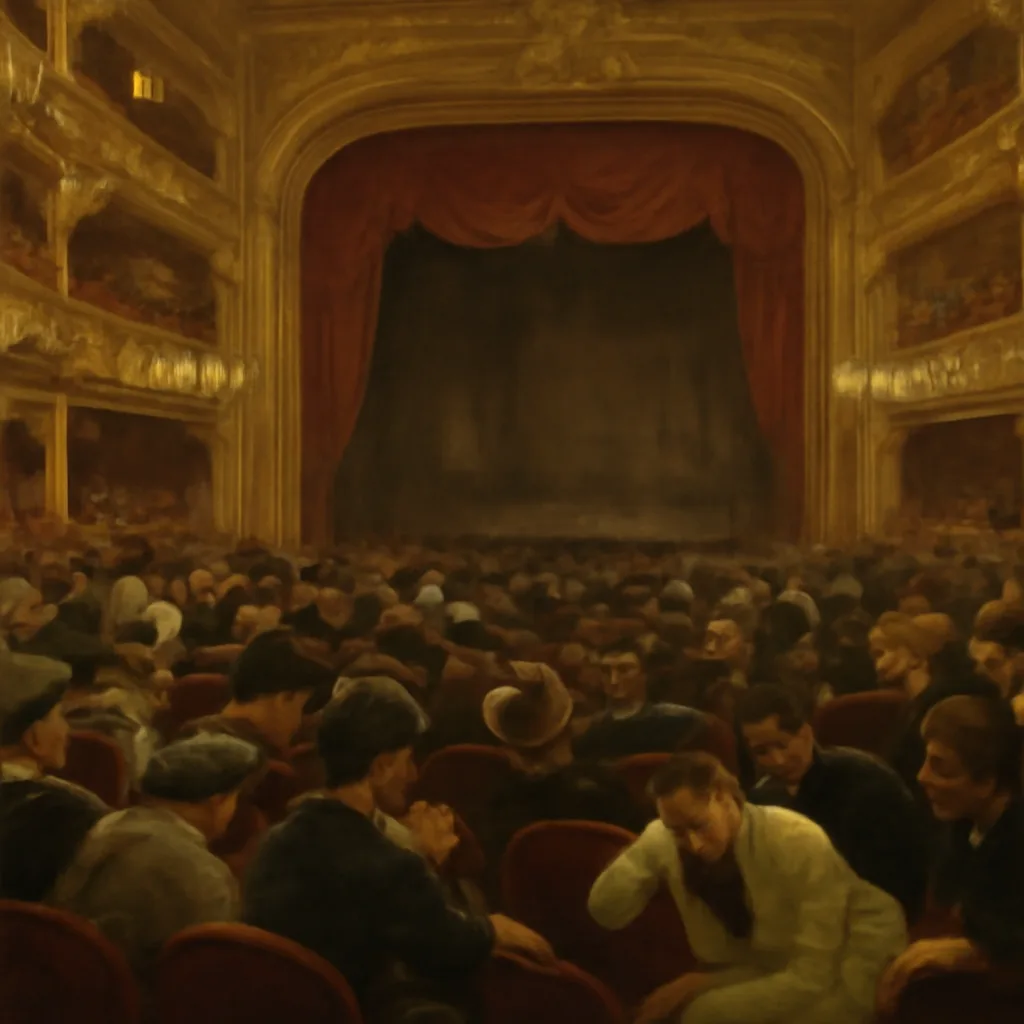
On 12 February (year often given as 1894 in secondary accounts), a disturbance at a Paris theater has been repeatedly cited in late-19th- and early-20th-century literature as an early example of mass hypnosis. Contemporary newspapers and later commentators described an outbreak of trembling, fainting, and imitative behavior among audience members during a performance. Some writers framed the episode as evidence that a hypnotic agent—whether an individual performer, a speaker, or a collective psychological contagion—had swept through the crowd. The historical record is fragmentary and partly contradictory. Surviving press reports from the period emphasize alarm and confusion in the house: several patrons reportedly fainted, others wept or screamed, and ushers struggled to restore order. Medical and psychiatric commentators of the era, working within evolving theories of hysteria, suggestion, and hypnotism, often read the event through contemporary clinical categories. In their accounts, the incident provided an accessible public demonstration of suggestion’s power in a group setting. Modern historians and psychologists caution against accepting the ‘‘mass hypnosis’’ label uncritically. Crowd behavior can produce rapid, contagious reactions without invoking a discrete hypnotic agent. Factors that likely contributed include heightened emotional arousal from dramatic stage action, preexisting anxieties among audience members, suggestive reporting that amplified perceptions of uniformity, and the cultural prominence of mesmerism and hypnotism debates in fin-de-siècle Paris. In other words, the same observable symptoms—fainting, trembling, and imitative gestures—can result from ordinary panic, psychosomatic response to anxiety, or social contagion rather than a single, medically definable hypnotic process. Scholars also note the diagnostic and rhetorical context: late-19th-century French medicine was actively engaged in defining and debating hysteria, suggestion, and the limits of scientific psychology. Public episodes labeled as ‘‘mass hypnosis’’ often served professional agendas—illustrating the reach of new therapeutic models or the dangers of suggestibility—so contemporary descriptions must be read with attention to the authors’ perspectives. Because primary documentation is limited and sometimes inconsistent, key details (such as the exact year in some retellings, the number of affected patrons, or whether a particular individual was identified as the source of suggestion) remain uncertain. The incident is therefore best treated as a historically significant, if ambiguous, example of how late-19th-century observers interpreted rapid, collective behavioral disturbances. It illuminates both popular anxieties about crowd psychology in urban modernity and the emergence of psychological concepts that would later be formalized in social psychology and mass-suggestion studies. In short, the February theater disturbance commonly dated to 1894 is historically attested as a disruptive, emotionally intense event in a Paris theater; whether it was genuinely ‘‘mass hypnosis’’ depends on interpretive choices. The episode remains useful to historians as evidence of contemporary debates about suggestion, the social dynamics of crowds, and how medical and journalistic voices shaped public memory of collective incidents.