
Zodiac Killer's Last Confirmed Letter Arrives, Feb. 1, 1974
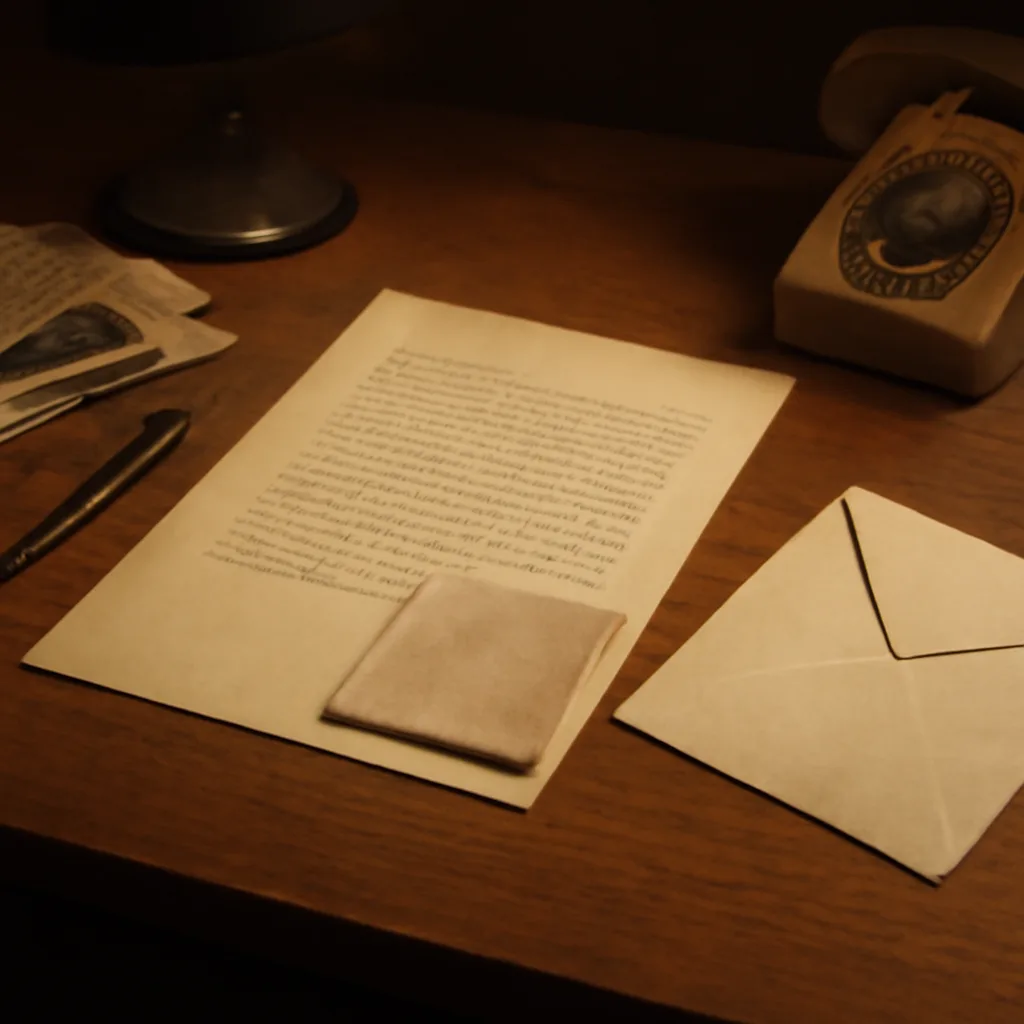
On February 1, 1974, investigators received what is widely regarded as the Zodiac Killer’s final confirmed communication: a short, typed letter sent to the San Francisco Chronicle that included a piece of a taxicab driver’s shirt as a claimed souvenir.
On February 1, 1974, the San Francisco Chronicle received a brief typed letter that law enforcement and many researchers treat as the Zodiac Killer’s final confirmed communication. The letter, postmarked that day, accompanied a swatch of cloth the sender claimed belonged to Paul Stine, a San Francisco taxi driver the Zodiac had murdered in 1969. It made no new cryptic ciphers and offered no clear clues to the killer’s identity.
Background
The Zodiac Killer is the name assigned to an unidentified serial killer who operated in Northern California in the late 1960s and early 1970s. The attacker is definitively linked to a series of shootings and one confirmed murder by ballistic and eyewitness evidence; he gained widespread attention after sending taunting letters and several ciphers to newspapers, in which he claimed responsibility for additional killings. Paul Stine was shot and killed in San Francisco’s Presidio Heights on October 11, 1969; a piece of Stine’s bloody shirt was removed by the killer and later mailed to the press in earlier communications.
The February 1, 1974 letter
The item received by the Chronicle in 1974 was brief and typed rather than handwritten. It included a small cloth fragment that the sender asserted came from Paul Stine’s shirt, echoing earlier mailings in which the Zodiac had sent pieces of evidence to prove authenticity. The letter contained no new lengthy cipher or detailed confession; its content was minimal and provocatively cryptic in the manner of previous Zodiac correspondence. Because the cloth’s provenance tied directly to Stine, many investigators considered the letter authentic or at least plausibly from the same author.
Investigative context and significance
By 1974, the Zodiac case had generated intense public, media, and law-enforcement attention for years. Previous letters and ciphers had prompted exhaustive efforts by local police departments, the FBI, and independent codebreakers; some ciphers were solved, others remain unsolved or disputed. The 1974 mailing is notable chiefly because it appears to represent the last communication that many researchers accept as definitively from the Zodiac. After this date, alleged Zodiac letters continued to surface intermittently, but their authenticity has been widely questioned.
Limitations and uncertainties
Despite the apparent link to Paul Stine’s shirt fragment, absolute proof linking the 1974 letter to the same individual responsible for earlier confirmed Zodiac murders remains elusive. Handwriting variation (the letter was typed), limited forensic technology of the era, and the possibility of hoaxes complicate certification. Subsequent advances in forensic science have prompted renewed reviews of some materials, but no conclusive identification of the Zodiac Killer has been announced publicly as of the last verified updates to the record. Historians and criminalists therefore treat the 1974 letter as the final widely accepted Zodiac mailing while acknowledging continued debate about later documents and the overall identity of the killer.
Legacy
The Zodiac case and its communications, including the 1974 letter, have left a lasting imprint on true-crime reporting, investigative techniques, and popular culture. The mixture of preserved physical evidence, ambiguous communications, contested documents, and unresolved questions has kept interest alive among professionals and amateur sleuths. The February 1, 1974 letter represents a closing note in the chain of materials most researchers consider reliably connected to the Zodiac, even as the broader mystery remains unsolved.