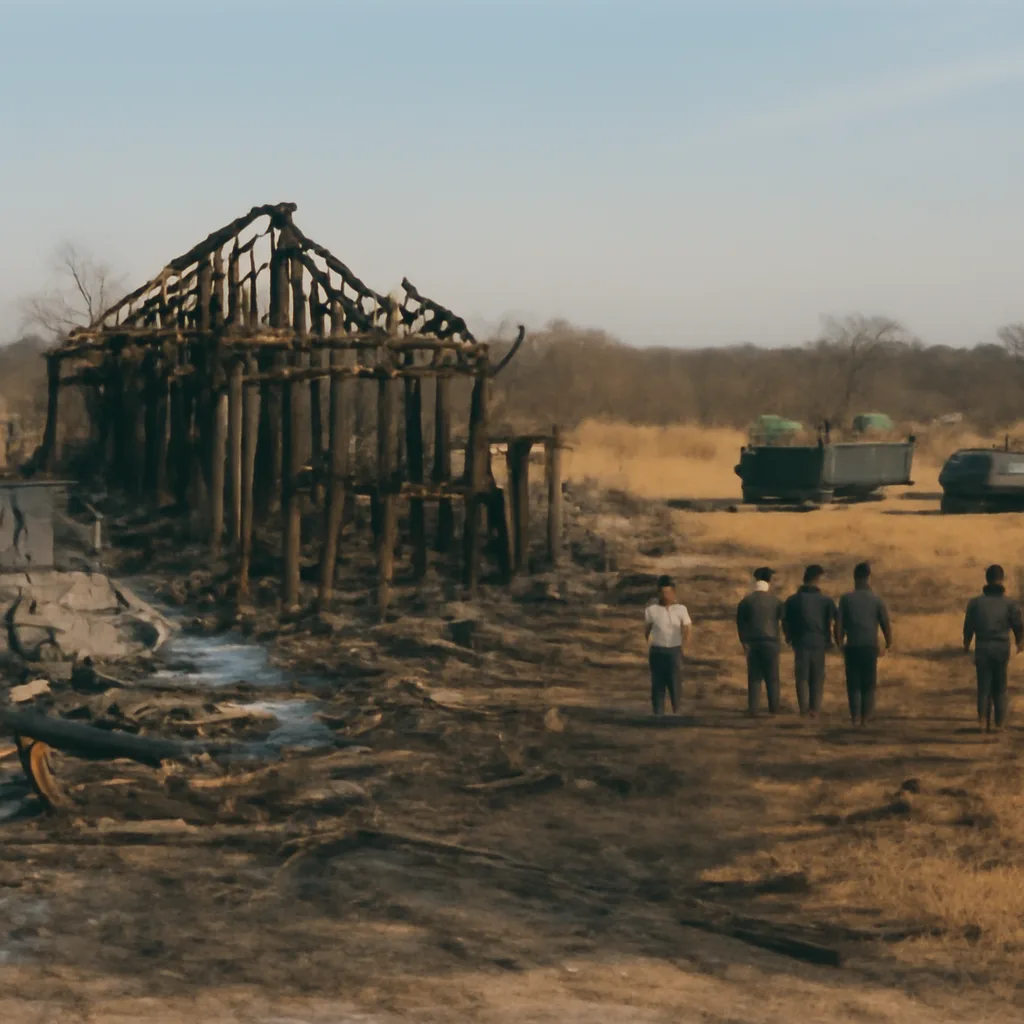
Waco Siege Ends as Cult Compound Burns After FBI Assault
On April 19, 1993, the 51-day federal standoff at the Branch Davidian compound near Waco, Texas, culminated in a massive fire during an FBI operation, killing scores inside the Mount Carmel center and ending the siege.
On April 19, 1993, the siege of the Branch Davidian compound near Waco, Texas, ended when fires consumed the Mount Carmel center during an FBI operation to force the remaining occupants from the building. The standoff had begun on February 28, 1993, after a Bureau of Alcohol, Tobacco and Firearms (ATF) raid aimed at serving arrest and search warrants related to alleged weapons violations. An initial gunfight left four ATF agents and six Branch Davidians dead, and federal agencies subsequently surrounded the compound, initiating a 51-day siege overseen by the FBI.
Negotiations between federal negotiators and Branch Davidian leader David Koresh (born Vernon Howell) continued intermittently during the standoff, and dozens of children and adults left the compound in the weeks that followed. Tensions escalated as authorities employed psychological and tactical pressure, including the use of loudspeakers, psychological operations, and the planned insertion of tear gas. On the morning of April 19, federal agents began a concerted effort to introduce CS tear gas into the complex using armored vehicles and hoses, intending to compel a surrender without storming the building.
Shortly after gas operations began, fires broke out in several locations within the compound. The blaze quickly spread through the largely wood-frame buildings of the Mount Carmel complex. Emergency crews were initially prevented from entering by safety concerns and the continuing tactical situation. In the aftermath, 76 people inside the compound died, including women and children; causes of death were later determined by investigators to include fire and smoke inhalation, although autopsy and forensic reports indicated that some victims had died from gunshot wounds as well. David Koresh was among the dead. The exact manner in which the fires started—whether intentionally set by some occupants, accidentally ignited during the chaos, or the result of other factors—remains disputed and has been the subject of multiple investigations, inquiries, and competing interpretations.
The Waco fire and siege prompted intense public debate and scrutiny of federal law enforcement tactics. Congressional hearings in 1995 examined ATF and FBI actions, and independent investigations and later analyses criticized planning, communication, and the use of certain tactics. The incident also fueled anti-government sentiment among some groups and was cited by extremists in subsequent years. Civil litigation followed; some families of Branch Davidians reached settlements with the government, while criminal prosecutions of survivors produced mixed outcomes.
The Waco siege has remained a heavily scrutinized and contested episode in late 20th-century American law enforcement history. Researchers and journalists continue to study the sequence of decisions, operational choices, and communications that led to the lethal conclusion. While official reports established many factual elements—dates, casualties, and the involvement of federal agencies—debate persists over responsibility for the fire’s origin and whether different tactics could have reduced the loss of life.