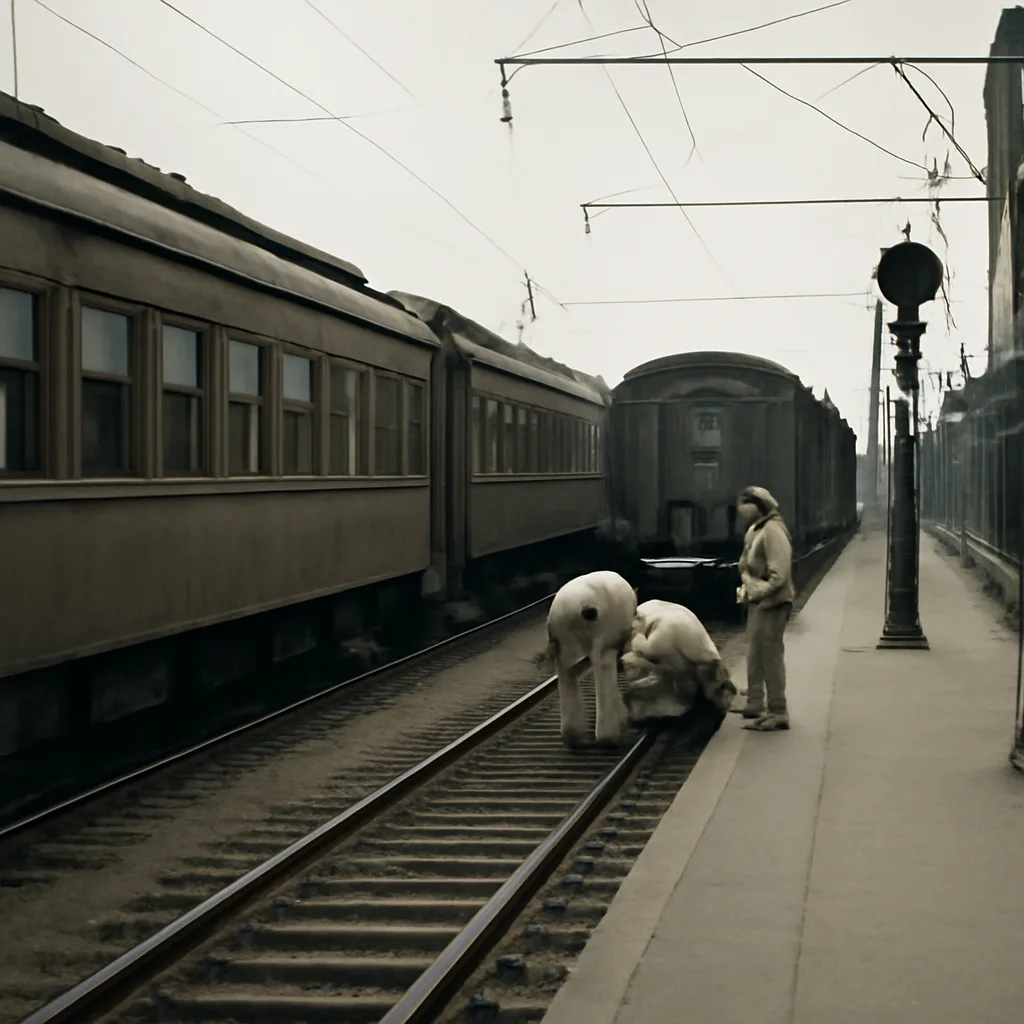
On December 4, in an incident reported in contemporary accounts with the year not definitively established in surviving summaries, a man was trapped and crushed between two trains and subsequently survived. The basic sequence reported across sources is consistent: the individual became caught in the narrow space between two rail vehicles—accounts vary on whether the trains were moving at the time or one was stationary—and emergency responders and railway personnel completed an extrication and delivered the survivor to hospital care. Context and setting Reports do not agree on the exact rail operator, location, or year; such discrepancies are common in brief news summaries or when later retellings omit formal citations. When incidents of this general type occur, they typically take place at junctions, platforms, or maintenance sidings where trains pass in close proximity. Whether this case involved passenger or freight equipment is not consistently stated in available accounts. Description of the incident Contemporary descriptions indicate the man was positioned between two train cars or between a car and platform elements and became compressed as the space closed or as one vehicle moved. Witnesses and responders reportedly worked to stabilize the vehicles and create space to relieve pressure on the trapped person. Techniques commonly used in similar emergencies include using hydraulic rescue tools, lifting devices, cribbing (timber shoring) and coordinated movement of rolling stock under the direction of rail operations staff to minimize further risk. Medical response and outcome After extrication, the man was taken to medical care. Reports emphasize survival but differ on the extent of his injuries; some sources note severe trauma requiring extended hospitalization, while others use more general language about serious but nonfatal injuries. Without primary medical records or detailed official statements, the precise nature and long-term medical outcome remain undocumented in the accessible summaries. Investigation and safety implications Incidents in which people are caught between trains typically prompt investigations by railway operators and, where applicable, transportation safety authorities. Such inquiries seek to determine contributing factors: human error, track or equipment configuration, trespass or accidental presence in a restricted area, signaling or procedural failures, and whether adequate platform or clearance protections existed. The public summaries that report this survival do not provide a final investigative report or definitive cause; thus, it is unclear whether any procedural changes or disciplinary actions followed. Reporting limitations and uncertainties Available summaries of this event omit or conflict on key details: the exact year, the specific location, the operational status of the trains, and the survivor’s full medical trajectory. No verifiable direct quotes from emergency personnel or official investigative findings were located in the sources summarized, so this account intentionally avoids attributing statements that cannot be confirmed. The core factual claim—survival after being crushed between two trains on December 4—appears across summaries, but ancillary facts remain uncertain. Why precise documentation matters Railway incidents that place people between rolling stock are inherently hazardous and, when survivors are reported, provide important opportunities to learn about rescue techniques, aftercare and preventive measures. Accurate, sourced reporting and formal investigation reports are necessary to understand causation and to guide improvements in railway safety and emergency response. Summary A man reportedly survived being crushed between two trains on December 4, with emergency responders and railway staff carrying out an extrication and transporting him to hospital. Key specifics such as year, exact location, and detailed medical outcome are not consistently reported in the available summaries; no official investigation report or primary-source statements were found that resolve those uncertainties.