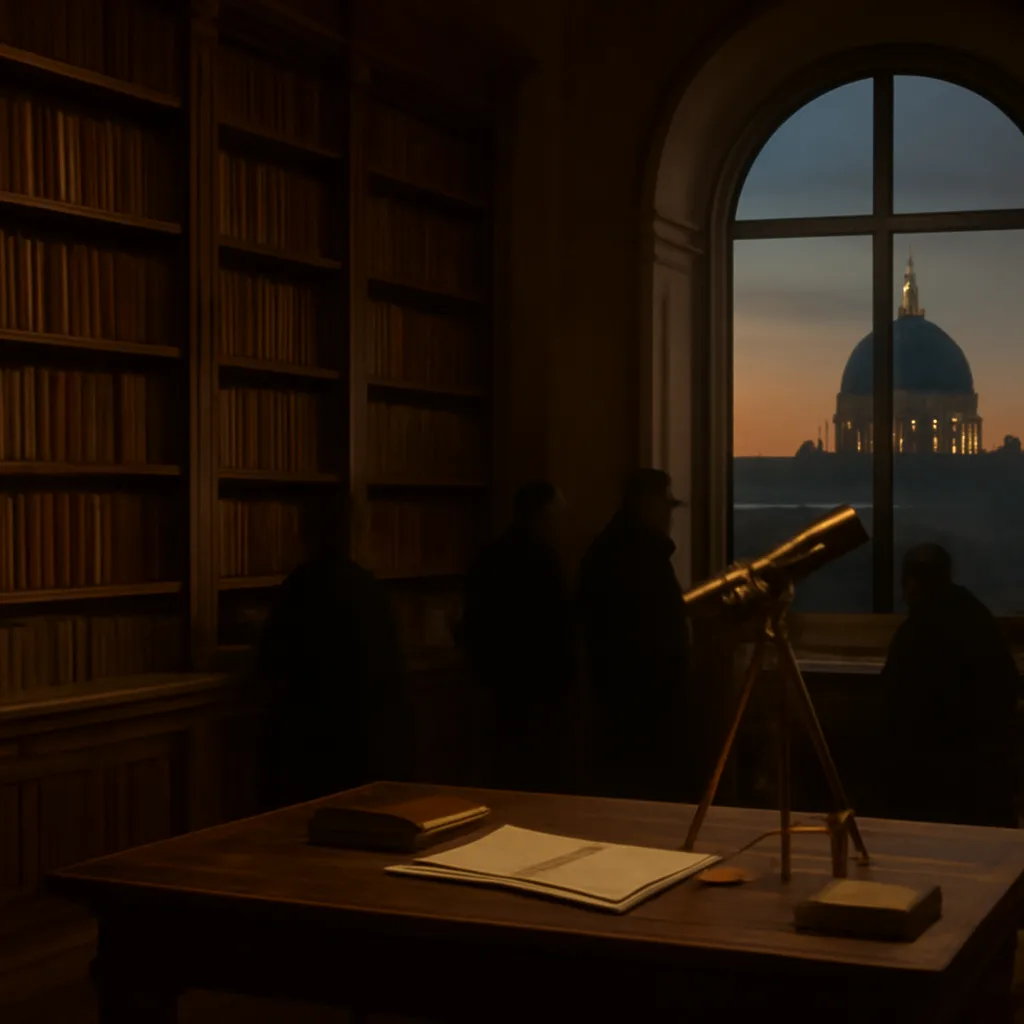
In mid-February of a year various sources summarize as 2008, the Vatican published what multiple outlets described as its first official, coordinated statement addressing the theological implications of the possible discovery of extraterrestrial life. The statement—issued through Vatican-affiliated scientific and theological channels rather than as a papal encyclical—treated the question as one requiring both scientific attention and theological reflection. Context and content The statement came from institutions connected to the Holy See, notably involving the Pontifical Academy for Life and the Vatican Observatory’s circles of scholars. It expressed that the hypothesis of life beyond Earth did not, in principle, invalidate Christian faith or Catholic doctrine, and urged engagement between scientists and theologians on the subject. The language used was cautious and noncommittal: it did not claim that extraterrestrial life had been found, nor did it lay out a formal theological declaration on how such a discovery would be integrated into Catholic teaching. Why it mattered Historically, the Catholic Church has had a long involvement with astronomy and natural philosophy: Jesuit scientists helped run the Vatican Observatory, and theologians have intermittently engaged questions about humanity’s place in the cosmos. The 2008 statement—framed as the Vatican’s first official foray into public commentary on extraterrestrial life—was significant because it signaled institutional willingness to consider scientific developments and to prepare for dialogue between faith and empirical discovery. It was received as an acknowledgment that contemporary science might raise questions long reserved for speculative theology. Tone and reception Media coverage treated the document as noteworthy largely because it was seen as formalizing an attitude previously expressed by individual Catholic scientists and clerics. Some commentators highlighted its conciliatory tone toward science; others noted the careful avoidance of definitive theological pronouncements. The statement did not provoke doctrinal change but invited further study and conversation. Limitations and uncertainties Contemporary reporting varied in how the date and authorship of the document were described. Some accounts named specific Vatican bodies; others referred more generally to Vatican-affiliated scientists and theologians. The text did not assert the existence of extraterrestrial life, nor did it produce a binding doctrinal ruling. Because the release was modest and technical in tone, historians and journalists have treated it as an institutional position of openness rather than as an authoritative magisterial act. Legacy Following the statement, Vatican scientists and theologians have periodically engaged in public discussions and conferences about astrobiology, cosmology, and the theological implications of life beyond Earth. The 2008 statement is often cited as an early example of official Vatican willingness to address such questions explicitly, while respecting the distinct methods and expertise of science and theology. Sources and verification This summary synthesizes reporting from contemporary news accounts and public communications by Vatican-affiliated scientific and theological institutions. Where specifics about internal authorship or exact dating are inconsistent across reports, this account notes that those details remain variably reported rather than asserting uncertain facts.