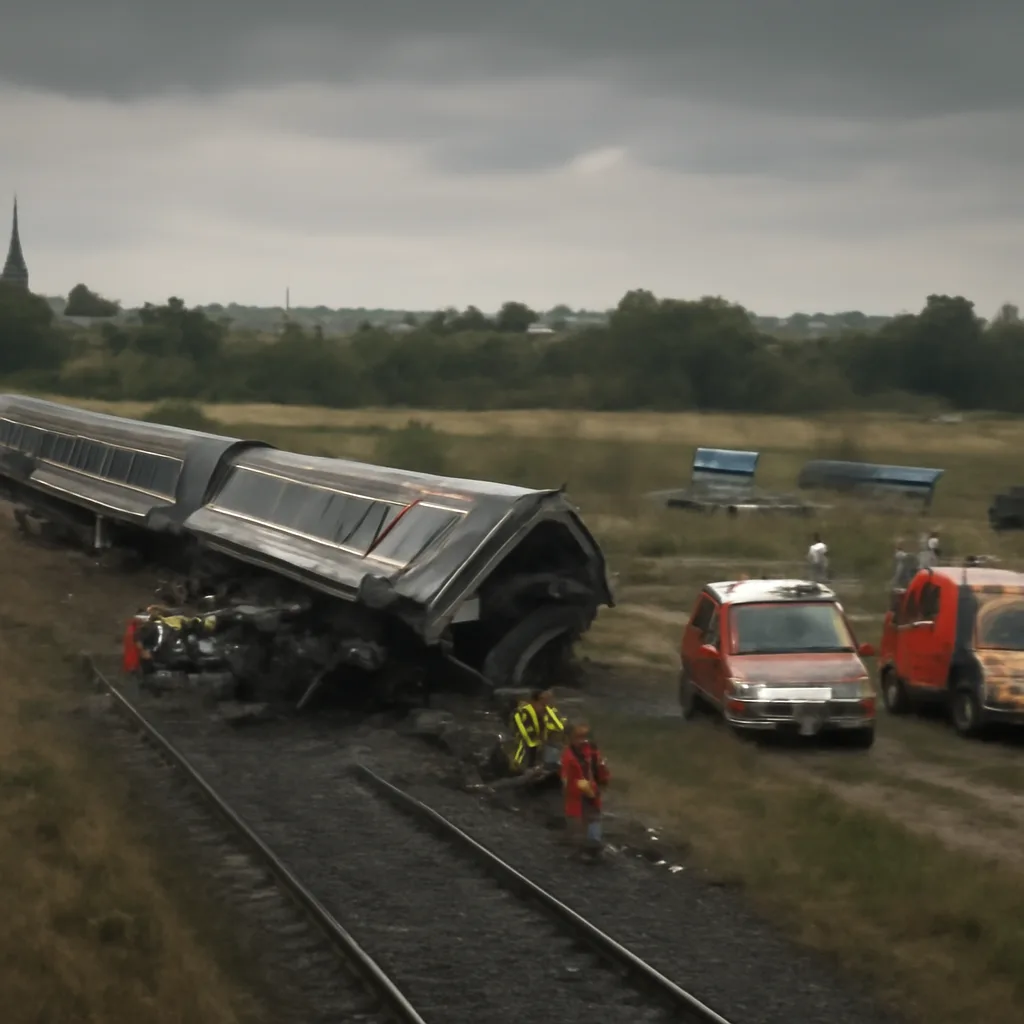
On July 24, a passenger train derailed near Santiago de Compostela in northwestern Spain, resulting in a large number of fatalities and numerous injuries. The accident occurred as the train approached the city; emergency responders, including local police, firefighters and medical teams, raced to the site to assist survivors, recover victims and secure the area. Initial reports from Spanish authorities and news organizations indicated that dozens of people were killed and many more were injured, with victims taken to nearby hospitals. Emergency services set up triage areas and hospitals activated emergency protocols to receive the surge of patients. Local and national officials expressed condolences and pledged resources for rescue, medical care and the subsequent investigation. Investigators from national railway safety agencies and law enforcement began examining the scene to determine the cause of the derailment. Typical lines of inquiry in such incidents include train speed entering curves, signaling and communication systems, track conditions, vehicle maintenance records and human factors such as operator actions. Authorities announced that a formal investigation would assess technical data recorders, witness statements and physical evidence from the wreckage. At the time of initial reporting, definitive conclusions had not been released. Spain’s rail operator and infrastructure manager were expected to cooperate with investigators. Political leaders called for a thorough, transparent probe and for support for victims’ families. Local communities and civic organizations mobilized to provide blood donations, shelter and material assistance to those affected. This accident came amid public scrutiny of rail safety in Spain and Europe generally, where past incidents have prompted reviews of infrastructure, speed controls and emergency response procedures. Any broader policy or regulatory changes would depend on the findings of the official inquiry. Because investigations in major transportation accidents can take weeks or months, authorities cautioned that casualty figures, timelines and technical explanations could change as more evidence became available. Media organizations covering the event relied on official statements, emergency service bulletins and hospital reports while noting that early figures are sometimes revised. The derailment has had immediate local impacts, including disrupted rail services in and out of Santiago de Compostela, temporary closures of tracks and station operations, and a community response focused on search, recovery and support. Longer-term effects will hinge on the investigation’s findings and any subsequent changes to operations, infrastructure investment or regulatory oversight. For those seeking to help, official channels—local government announcements, recognized relief organizations and hospital systems—were advised as the appropriate means to provide assistance, rather than unverified appeals circulating on social media. Journalists and the public were also encouraged to rely on confirmed official updates to avoid spreading unverified information during an evolving tragedy.