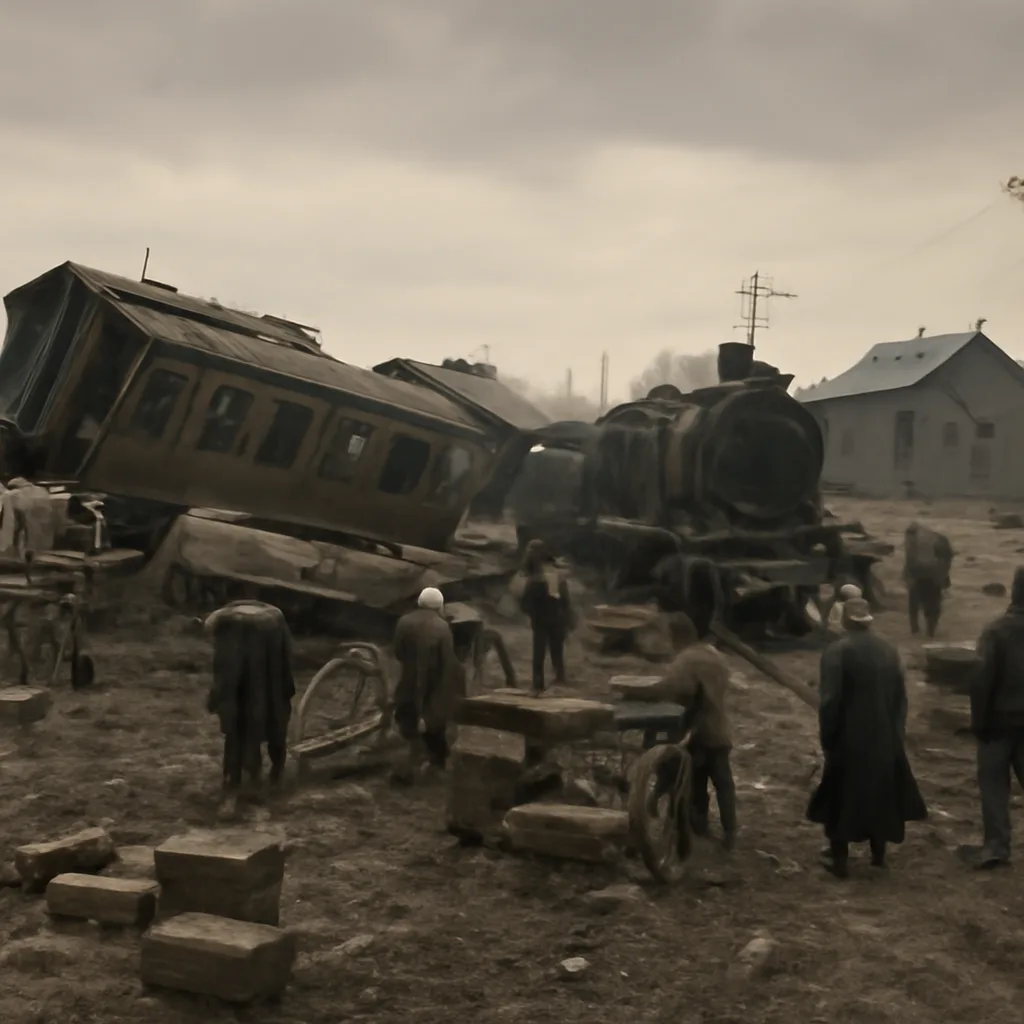
Overview The event commonly referred to as the Great Train Wreck of June 22 involved a severe collision between passenger trains, and—according to many contemporaneous accounts—trains carrying military personnel or wartime materiel. It occurred during World War I, when American railroads were under extreme stress from mobilization, increased traffic, and changing operational control. Multiple newspaper reports and later compilations mention June 22 as the date, but historians note that details such as the exact year, location, and casualty totals are inconsistently recorded across sources. Context By 1918 the American railroad network was handling dramatically increased volumes of both civilian and military traffic. In December 1917 the federal government assumed control of the railroads under the United States Railroad Administration (USRA) to coordinate wartime logistics. This reorganization, combined with manpower shortages and heavy schedules, contributed to higher accident risk. Rail accidents in this period often produced confusing and contradictory early reports, as telegraph lines, local officials, and newspapers competed to relay information. What is known - Multiple contemporary newspapers reported a serious multi‑train collision dated June 22 in connection with troop movements or military trains; several accounts came from states with major rail corridors. - Reported consequences included many injuries and fatalities, extensive damage to rolling stock, and temporary disruption of rail service in the affected area. - The scale and human cost were emphasized in immediate press coverage, though specific numbers vary widely among early accounts. Points of uncertainty and dispute - Year: Some secondary sources list the incident under 1918, tying it to wartime conditions, but other compilations place similar “Great Train Wreck” incidents on June 22 of different years. Contemporary newspapers sometimes omitted the year or printed contradictory dates in subsequent summaries. - Location: Sources are inconsistent about where the wreck occurred; several states have competing claims in regional press, and later summaries sometimes conflate different collisions that happened on June 22 in different years. - Casualty figures: Early reports often gave provisional counts that were later revised; no single authoritative casualty roster tied to a confirmed location and year appears in surviving federal accident summaries for that precise date. Why discrepancies exist The combination of wartime railway centralization, heavy traffic, and limited, rapidly circulating news led to muddled reporting. Telegraph-based news distribution, typographical errors, and later historians’ tendency to compile incidents under a shared headline (“Great Train Wreck”) contribute to confusion. Additionally, multiple serious rail accidents occurred in the 1910s, and later retellings sometimes merged details. How historians treat the episode Scholars and railway historians approach the Great Train Wreck of June 22 cautiously: as a label applied to a severe June 22 rail disaster in the World War I era rather than a single fully documented event with uncontested facts. Reliable study requires consulting original newspapers, railroad accident reports (state and federal), coroner records where available, and USRA operational records. Where those primary sources disagree, historians note uncertainties rather than presenting a single definitive narrative. Further research Researchers seeking to clarify particulars should: search digitized newspaper archives for June 1918 (and adjacent years) for local reporting; consult state public utilities or railroad commission accident reports; examine federal records in the National Archives related to the USRA and Interstate Commerce Commission accident investigations; and check local coroner or municipal records for identified locations. Conclusion “Great Train Wreck of June 22” reflects contemporary alarm about a severe rail disaster occurring on June 22 during the congested wartime period, but key details—especially the precise year, location, and casualty totals—remain inconsistently reported across sources. The incident is best treated as part of the broader history of early‑20th‑century rail hazards aggravated by wartime mobilization, with any definitive claims grounded in primary archival verification.