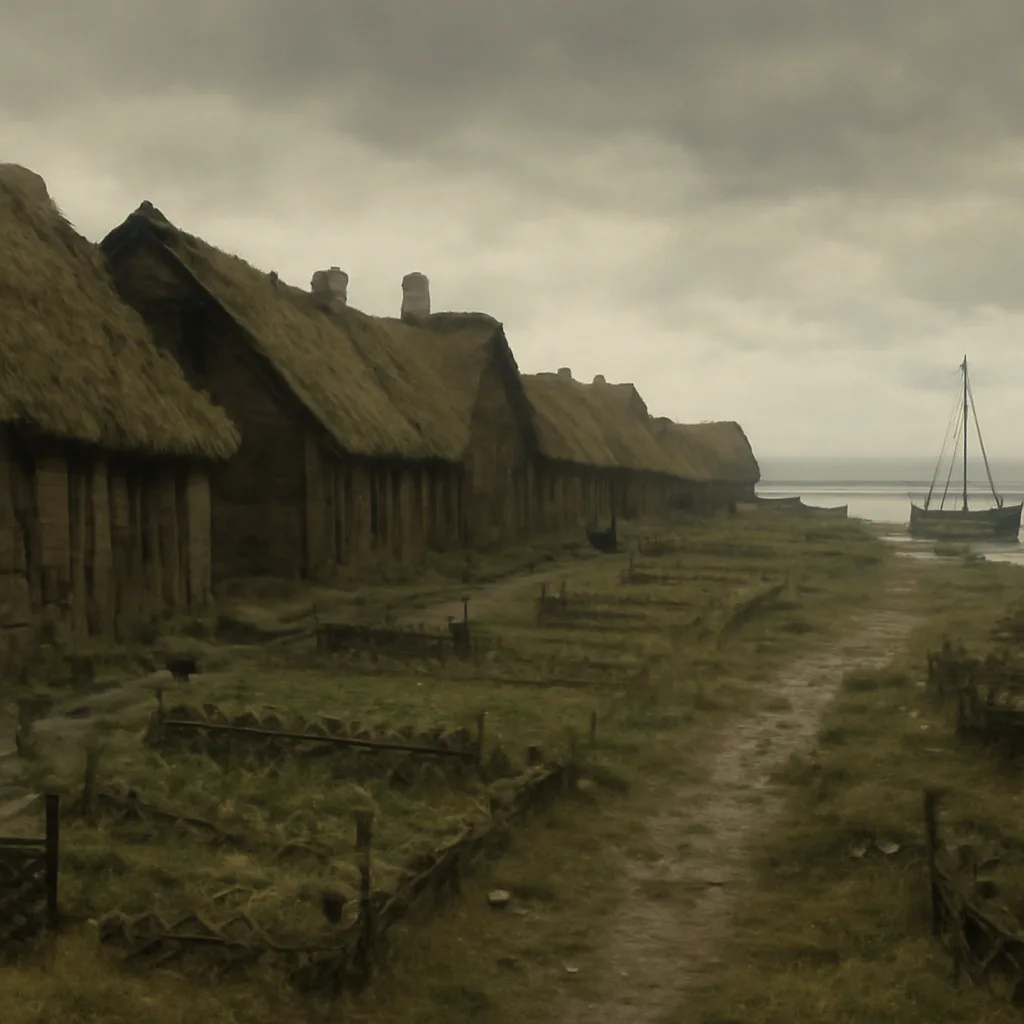
The First Documented Disappearance of an Entire Village (1587)
On February 12, 1587, reports from European explorers and colonial administrators recorded what many historians consider the earliest written account describing an entire village found abandoned with no clear explanation. The episode—documented in dispatches and later debated—illuminates early colonial encounters, gaps in record-keeping, and the hazards of interpreting sparse sources.
On February 12, 1587, a written report circulated among European officials describing an emptied settlement encountered during exploration and colonial activity. Scholars point to this episode as among the earliest extant documents that depict an entire village discovered abandoned rather than individually missing people or lone structures. The record survives in the form of dispatches and administrative notes produced in the context of late 16th-century exploration, colonization, and intermittent conflict.
Context: The late 1500s were a period of rapid maritime expansion, exploration, and colonial competition. European navies, merchantmen, and colonial agents traversed coasts and interior routes, producing reports for patrons and monarchs. Those reports varied in detail and reliability: some aimed at securing resources and settlements, others at justifying military or administrative action. That environment shaped how abandoned or depopulated settlements were observed and recorded.
What the sources say: The surviving contemporaneous accounts describe a settlement—houses intact or partially so, crops and domestic items left behind, and occasionally signs of sudden departure such as unharvested food. The reports do not provide a single, definitive cause. They were written by observers with limited ethnographic training and often with political motives, and many entries are terse, formulaic, and colored by the expectations and fears of their authors.
Possible explanations: Historians and archaeologists have proposed multiple, nonexclusive reasons a whole village might have been empty when visited. These include: seasonal or temporary movement (for hunting, transhumance, or ritual reasons); forced relocation due to conflict, slavery, or colonial pressures; epidemics or disease-induced mortality prompting abandonment; strategic evacuation in the face of danger; or misinterpretation by observers who encountered a secondary camp or satellite settlement. In many cases for early documentary instances, the evidence is too limited to determine which factor—or combination of factors—applies.
Limitations and debates: The claim that a specific 1587 report represents the “first documented disappearance of an entire village” depends on definitions (what counts as a village; what counts as documentation) and on the survival of records. Earlier episodes of depopulation or abandonment almost certainly occurred but may lack surviving written description in European archives or were described in ways that modern readers interpret differently. Indigenous oral histories and non-European written sources can offer alternate perspectives but are unevenly preserved or recognized in archival traditions that historians have long privileged.
Why it matters: Even when details are scarce, such early reports illuminate the fraught dynamics of contact zones—how observers recorded, interpreted, and sometimes misread the lives and movements of others. They also caution against simple narratives: abandonment might reflect agency (planned movement), coercion, disease, or a mix. For historians, these documents are entry points for cross-checking with archaeological data, ecological studies, and surviving local knowledge to build fuller accounts.
Ongoing research: Modern scholarship treats early reports like the 1587 account as pieces of a larger puzzle. Archaeological fieldwork, palaeoenvironmental studies, and interdisciplinary analysis can corroborate or refute particular causes of abandonment. At the same time, ethical scholarship seeks out descendant communities’ perspectives and oral histories to avoid privileging a single archival voice.
In short: The 1587 report is significant not because it definitively explains why an entire village was found empty, but because it marks an early surviving attempt to record such an occurrence. Its value lies in prompting careful, multidisciplinary inquiry rather than offering a final explanation.