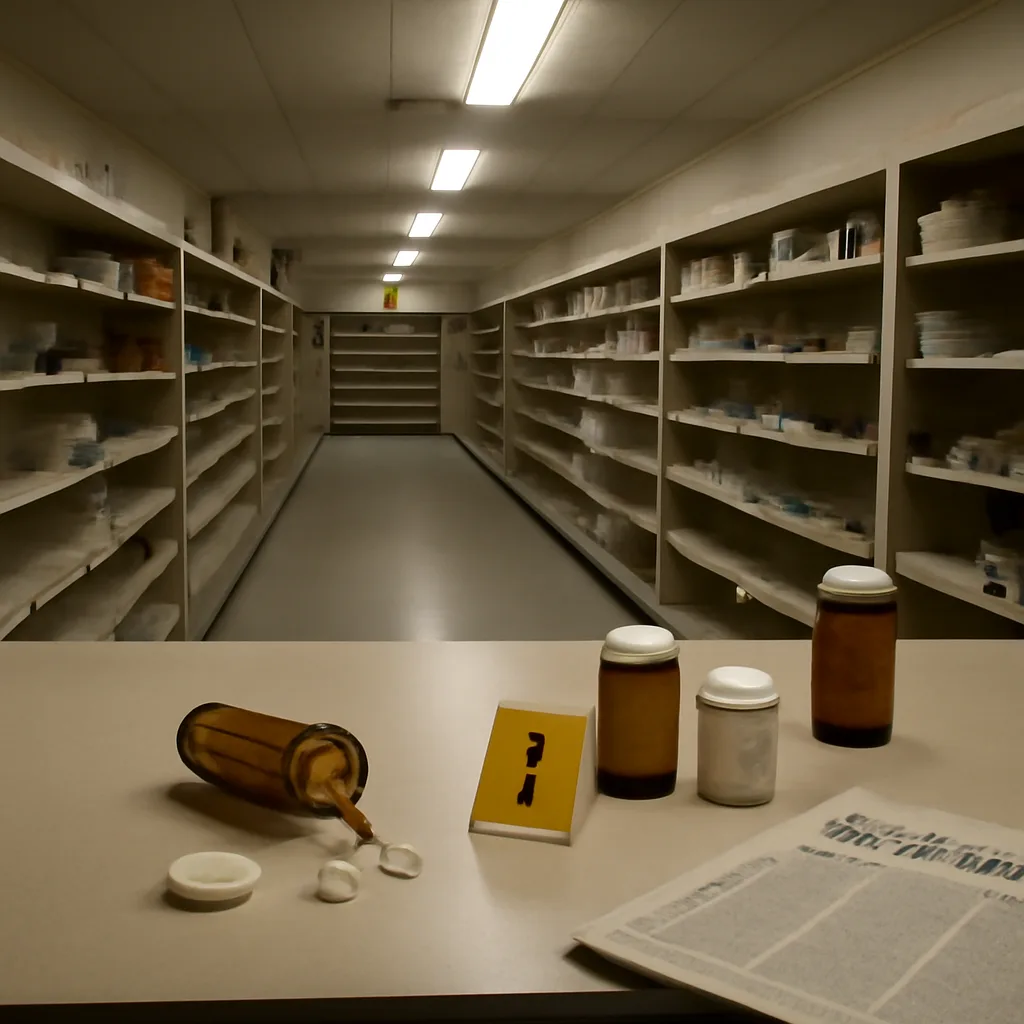
The 1982 Chicago Tylenol Murders: The First Widely Publicized Poisoning of Consumer Goods
In early October 1982, seven people in the Chicago area died after taking cyanide-laced Extra-Strength Tylenol capsules, triggering a nationwide panic, major changes in product packaging and federal anti-tampering laws, and a still-unsolved investigation.
In the first days of October 1982 a cluster of sudden deaths in the Chicago area revealed a new and chilling form of criminal harm: intentional poisoning of over-the-counter medication on store shelves. Between late September and early October seven people—ranging in age from 12 to 35—died after ingesting Extra-Strength Tylenol (acetaminophen) capsules that had been tampered with and laced with potassium cyanide. The victims were not connected to one another; the common factor was purchase of the same branded product from different retail stores.
The cases came to public attention when investigators linked the deaths and found that in at least some instances the opened capsules contained particles identified as cyanide. News of the deaths—intensified by warnings from local and federal health authorities—spread quickly, producing widespread alarm about the safety of consumer packaged goods. Johnson & Johnson, the manufacturer of Tylenol, halted production and distribution of Tylenol products nationwide and issued a public recall of an estimated 31 million bottles. Retailers removed Tylenol from shelves, and consumers were advised to avoid all acetaminophen capsules until authorities could respond.
The incident prompted a broad law-enforcement response. The Federal Bureau of Investigation (FBI) led the criminal investigation, conducting forensic examinations of recovered product, bottle tamper evidence and sales records, and following numerous leads. Despite extensive inquiries, arrests, and several suspects who drew investigative attention, no one was ever convicted for the poisonings; the case remains officially unsolved. The lack of a definitive perpetrator left lingering uncertainty and contributed to continuing public attention and speculation.
Beyond the immediate tragedy and unanswered questions, the Tylenol poisonings had significant and lasting impacts on public policy, industry practices and consumer expectations. Johnson & Johnson pioneered a concerted media response—reaching out directly to the public, advising how to dispose of existing capsules, and offering refunds—which was widely cited as an example of corporate crisis management. The broader response included rapid adoption of tamper-evident packaging across the pharmaceutical industry, including the introduction of sealed boxes, foil seals, and plastic safety seals meant to make post-production tampering immediately visible.
Legally and legislatively, the case helped spur passage of the 1983 Federal Anti-Tampering Act, which made the malicious tampering of consumer products a federal crime when it affected interstate commerce, and increased penalties for related offenses. Retailers and manufacturers developed new protocols for inventory control, product inspection and packaging design. The public’s trust in packaged medicines was permanently affected, and the Tylenol case became a reference point in discussions about product safety, crisis response, and corporate responsibility.
Historically, the Chicago Tylenol poisonings are widely described as the first high-profile instance in the United States of mass poisoning via consumer products on store shelves, shaping later approaches to consumer protection and crisis communication. However, it is important to note that intentional contamination of goods is not uniquely new in human history; earlier but less publicized incidents occurred in different contexts. What distinguishes the 1982 case is the combination of a national consumer market, mass media coverage, rapid corporate and governmental action, and lasting regulatory change. The deaths and the unresolved investigation continue to be remembered both for their human cost and for the material changes they prompted in how packaged medicines are protected and sold.