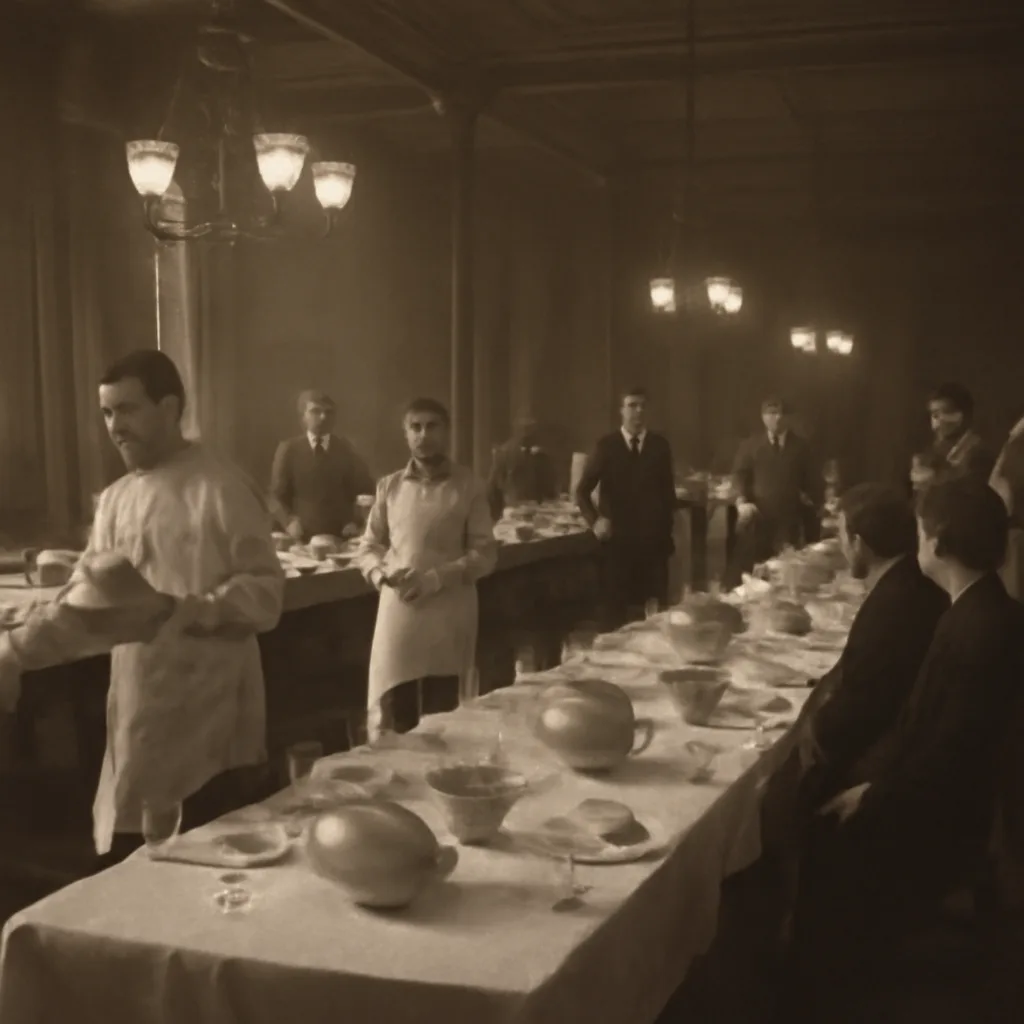
In late 19th-century America, expanding urbanization and social clubs led to more large, catered gatherings. One banquet held on May 20 of an uncertain year in the 1880s became notable as the first well-documented mass food-poisoning incident in the United States. Attendees developed acute gastrointestinal symptoms within hours of the meal, with a high attack rate among those who shared specific dishes. Contemporary physicians and local health authorities recorded the outbreak in detail and attempted to trace the source, marking an early instance of epidemiologic inquiry into a foodborne event. Accounts from local newspapers, medical reports and minutes of civic organizations describe a similar pattern: rapid onset of vomiting, diarrhea and prostration following a communal banquet; clustering among those who ate certain preparations; and efforts to identify a contaminated ingredient or poor food-handling practice. Investigators of the time considered several possible causes that were consistent with the clinical picture: bacterial contamination from pork, fish or poultry; spoilage from improper storage; or contaminated sauces and gravies prepared in bulk and left at unsafe temperatures. Laboratory methods to identify specific pathogens were rudimentary or absent, so conclusions remained tentative. The outbreak’s significance lies less in a single proven cause than in its role as an early public-health teaching moment. Health officials used reports from the event to advocate for better kitchen sanitation, oversight of catering for large events, and prompt reporting of suspected foodborne illness. Newspapers and medical journals published recommendations — such as separating raw and cooked foods, refrigerating perishable items when possible, and ensuring thorough reheating of leftovers — that anticipated later, science-based food-safety rules. Historians note the limitations of the contemporary record. Precise dating varies between sources, and the absence of bacteriological confirmation means the specific pathogen cannot be identified with confidence. Some later summaries conflate this banquet with other 19th-century outbreaks, so careful scholarship distinguishes the banquet widely cited as the earliest well-documented U.S. mass food-poisoning incident from other, less thoroughly recorded events. Despite uncertainties, the banquet stands as an important milestone in the social and medical history of food safety. It illustrates how communal dining and expanding food services exposed vulnerabilities in food preparation and distribution, and how early public-health responses began to shape expectations for sanitation and accountability. Lessons drawn from the incident contributed to a gradual shift toward institutional inspections, food-safety education, and, eventually, laboratory-based outbreak investigation practices that would develop more fully in the 20th century.