
Stadium Stand Collapse Kills Dozens During May 24 Football Match
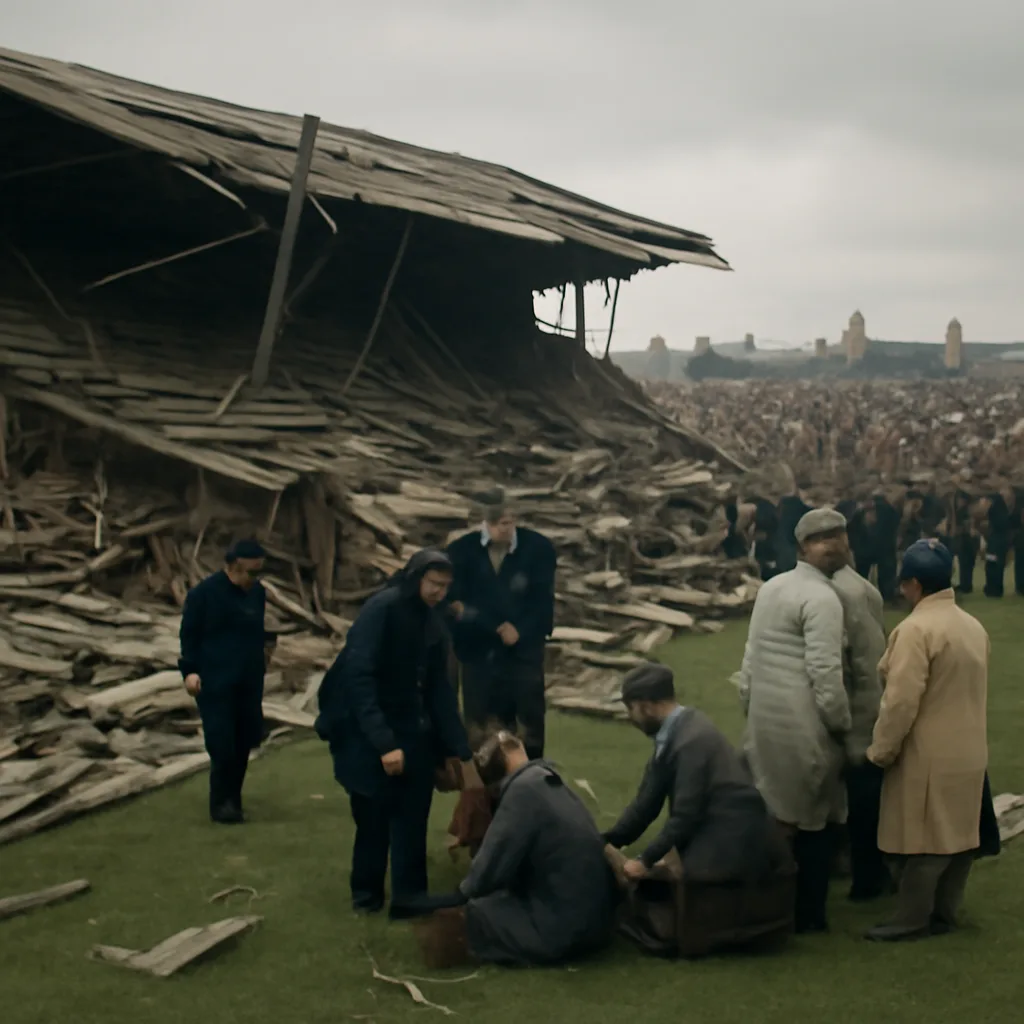
On May 24, during a crowded football match, a terrace stand collapsed, causing dozens of deaths and numerous injuries; investigations later examined crowding, structural condition and emergency response.
On May 24 of an unspecified year, a stadium terrace stand collapsed during a football match, resulting in dozens of fatalities and many more injured. Eyewitnesses reported that the stand, heavily occupied by spectators, gave way as the crowd shifted. Emergency services responded, recovering victims and transporting the injured to nearby hospitals. Local authorities launched an inquiry into the cause of the collapse, focusing on factors commonly implicated in such disasters: structural weakness or deterioration of the stand, inadequate maintenance or inspection, overcrowding beyond the stand’s capacity, and the adequacy of crowd-control measures.
The immediate aftermath saw rescue teams working under difficult conditions to reach victims trapped beneath debris. Hospitals reported receiving a large number of casualties, stretching medical resources. Families of those affected faced delays and confusion as officials compiled lists of the dead and injured. Authorities temporarily closed the stadium and suspended football fixtures while investigators and engineers examined the site.
Structural engineers typically examine load-bearing elements, fastenings, foundations and signs of corrosion or rot in such inquiries. If maintenance records are available, investigators review them to determine whether known defects were addressed. Witness testimony and photographic evidence from the event are used to reconstruct movements of the crowd and the sequence of failure. Coroners or medical examiners establish causes of death for victims; in similar incidents, causes have included crush injuries, blunt trauma, and asphyxiation.
Public reaction to stadium collapses of this type has historically included demands for accountability, revisions of safety standards, and reforms in stadium design and crowd management. Authorities may impose new inspection regimes, reinforce or replace unsafe structures, and limit standing-room capacities or ban uncovered terrace stands. Sporting bodies often review fixture schedules, ticketing practices and stewarding arrangements to reduce risk at future events.
Where legal processes follow, families of victims may pursue civil claims against stadium operators, owners or maintenance contractors, and criminal investigations may consider negligence or breaches of safety regulations. The pace and transparency of investigations and legal proceedings vary by jurisdiction and historical period.
Because the exact year of this event is not specified here, readers should consult primary contemporary reports, official inquiry documents or authoritative historical accounts for precise casualty figures, names of the stadium and teams involved, and the outcomes of investigations and legal actions. This summary avoids attributing specific findings or verdicts that would require documentation from those sources.