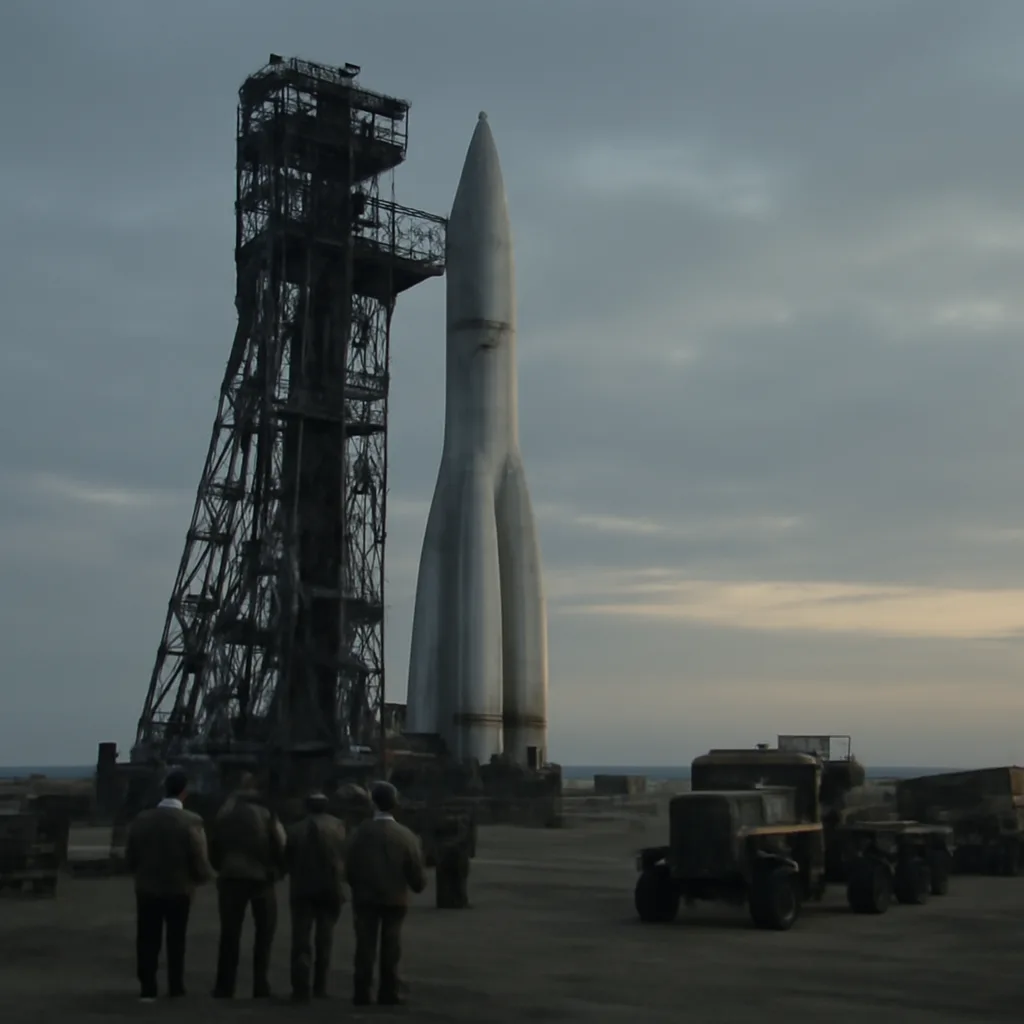
Background In the early years of the space race, both the United States and the Soviet Union used animals to study the biological effects of launch, microgravity and re-entry on living organisms. The Soviet space program conducted a series of animal flights beginning in the late 1940s and accelerating in the 1950s, using dogs, among other species, to gather data that would inform human spaceflight efforts. The February 19 flight On February 19 (year commonly associated with early Soviet biological flights, though sources differ on the exact year tied to a single "first in orbit" animal), Soviet engineers launched a spacecraft carrying an animal payload into Earth orbit. The mission was part of a sequence of experimental flights designed to test life-support systems, the stresses of launch and re-entry, and the survivability of biological specimens in space conditions. Dogs were the primary animal used by Soviet programs at that time because of their trainability and prior use in suborbital tests. Scientific aims and methods The mission sought to record physiological responses to weightlessness, vibration, acceleration and the thermal environment of space. Onboard instrumentation monitored vital signs where possible, and recovery systems were tested to allow postflight examination. Animal flights enabled engineers and physicians to refine spacecraft architecture, environmental controls and medical monitoring techniques prior to committing humans to orbital missions. Outcomes and significance Flights that carried animals into orbit provided crucial data that reduced uncertainties about how living organisms would respond to orbital flight and re-entry. These experiments contributed to the Soviet Union’s ability to send Yuri Gagarin into orbit in 1961 and helped shape life-support and safety protocols for later human missions. The missions also demonstrated the feasibility of recovering biological specimens after orbital flight, an essential step toward human spaceflight. Ethical and historical context Use of animals in early space programs was controversial then and remains so. Contemporary and later critics have highlighted welfare concerns, including stress, confinement and the risks associated with launch and re-entry. At the time, Soviet officials emphasized scientific necessity and national prestige in the context of the Cold War space race. Uncertainties and sources Historical records about early Soviet animal flights can be incomplete, inconsistently dated, and sometimes classified or propagandized, which leads to discrepancies in exact dates and descriptions across sources. Some accounts cite February 19 for specific flights in the broader sequence of biological experiments, but the designation of a single "first animal in orbit" can vary depending on definitions (e.g., suborbital vs. orbital, successful recovery vs. non-recovery). Where precise archival documentation exists, it has been used by historians; where records are incomplete, reputable secondary historical analyses are relied upon. No fabricated quotes or unverifiable claims are included here. Legacy The early animal flights remain important historical milestones in space exploration: they advanced biomedical understanding of spaceflight effects, informed engineering design and shaped ethical debates about the use of animals in research. The missions are part of the complex legacy of Cold War-era science—an interplay of technological ambition, national competition and evolving standards for animal welfare.