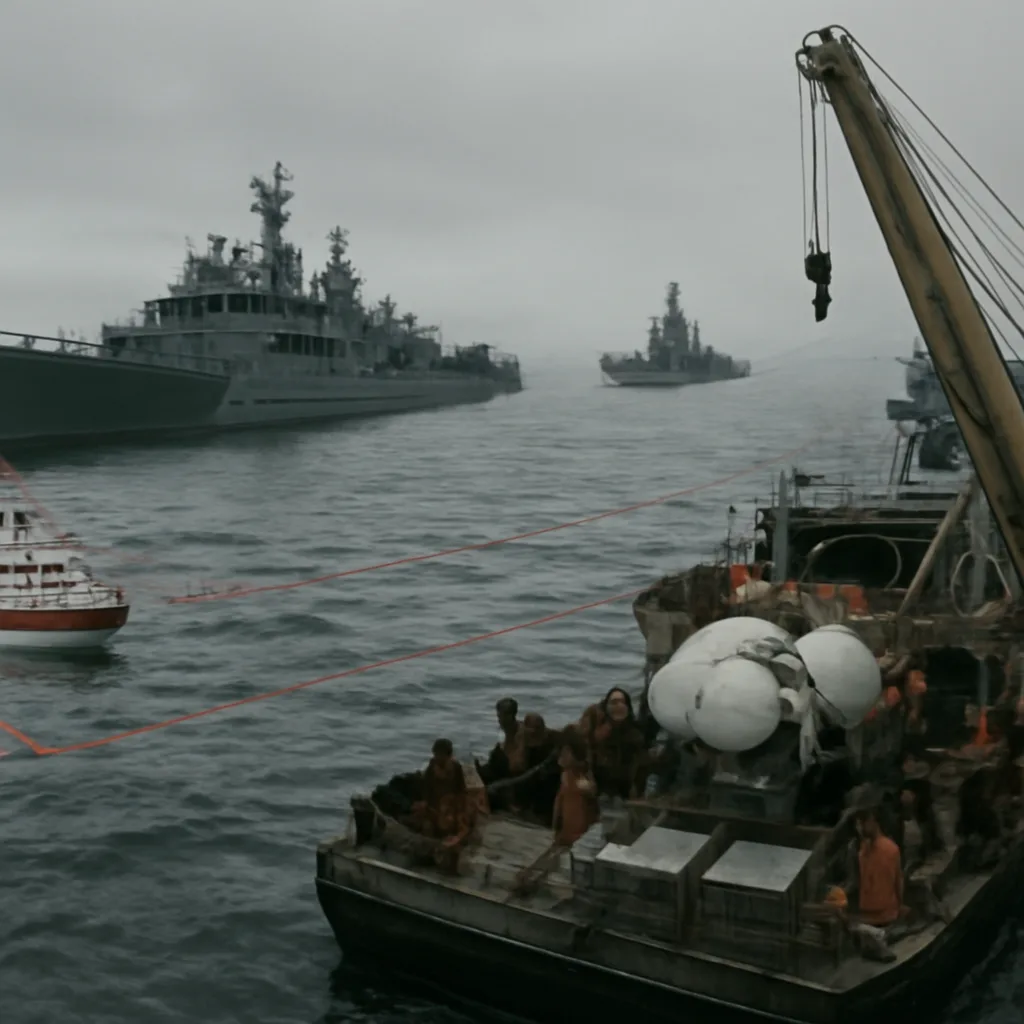
On August 12, 2000, the Russian Navy nuclear-powered cruise-missile submarine Kursk (K-141) experienced a catastrophic accident during a major fleet exercise in the Barents Sea. Initial Russian statements reported a series of onboard explosions followed by the rapid sinking of the vessel to the seabed. All 118 sailors and officers aboard ultimately died. Kursk, an Oscar II–class submarine commissioned in the 1990s, was participating in summer maneuvers when the first, smaller explosion occurred in the forward compartments. Minutes later a far larger detonation destroyed the forward section and caused the boat to sink to the sea floor in relatively shallow water, later identified at about 108 meters (roughly 354 feet). Many details were contested in the immediate aftermath: Russian officials initially downplayed the severity and delayed acceptance of international rescue offers, prompting widespread domestic and international criticism. Rescue and recovery operations were hampered by the depth, cold waters, and the damaged condition of the submarine. International teams, including British and Norwegian specialists, offered assistance; Norway provided a submersible and Britain sent a deep-diving rescue vehicle. Russian authorities accepted outside help only after significant delay. When international teams reached the wreck and attempted to access escape hatches and rescue chambers, they found no survivors. It was later determined that a smaller explosion — widely attributed by investigators to a faulty weld, a defective torpedo component, or the accidental ignition of high-test peroxide (HTP) in a torpedo — triggered a much larger secondary explosion when nearby torpedo warheads detonated. Official Russian inquiries and independent investigations concluded that the initiating event most likely involved a torpedo malfunction in the forward weapons compartment. The type of propellant or oxidizer in some torpedoes used on Soviet- and Russian-era submarines (including HTP-based designs) can be volatile if containment fails; however, precise technical conclusions and responsibility for maintenance and oversight were matters of dispute and political sensitivity. The Russian government conducted court-martials and disciplinary actions in the months after the disaster, and public scrutiny focused on systemic issues within the post-Soviet Russian Navy, including budget shortfalls, maintenance lapses, and communication failures. Some crew are believed to have survived the initial explosions and to have moved to intact compartments in the stern, where they sent messages indicating they were alive and attempting to manage air quality and ration supplies. Recorded telephone calls and logs suggested that up to 23 sailors may have reached the aft torpedo room and seaman’s compartment and remained alive for several hours. Attempts to rescue those men failed when rescuers could not establish a secure seal or when hatches and escape equipment were too damaged. By the time divers and international rescue vehicles gained access, there were no survivors. Kursk’s loss had significant political repercussions in Russia. Public anger over the handling of the rescue and the delayed acceptance of international help damaged the Kremlin’s domestic standing and fueled criticism of naval leadership. The disaster prompted reforms in submarine rescue capabilities, improved international cooperation protocols, and a re-examination of safety standards for legacy torpedoes and submarine systems. The wreck was later raised in a carefully planned salvage operation in 2001 to allow for a formal investigation, the retrieval of remains for burial, and to prevent environmental hazards from leaking fuel and ordnance. The raising and subsequent inquiries confirmed extensive forward-section destruction consistent with an internal explosion compounded by secondary warhead detonations. All 118 crew members were eventually accounted for and funerals were held. Kursk remains a focal point in discussions about submarine safety, transparency in military accidents, and the challenges of maintaining Cold War–era platforms in a post-Soviet context. While technical and forensic analyses have clarified likely mechanisms for the initiating explosion, some details about command decisions and specific maintenance histories remain subjects of debate among experts and commentators.