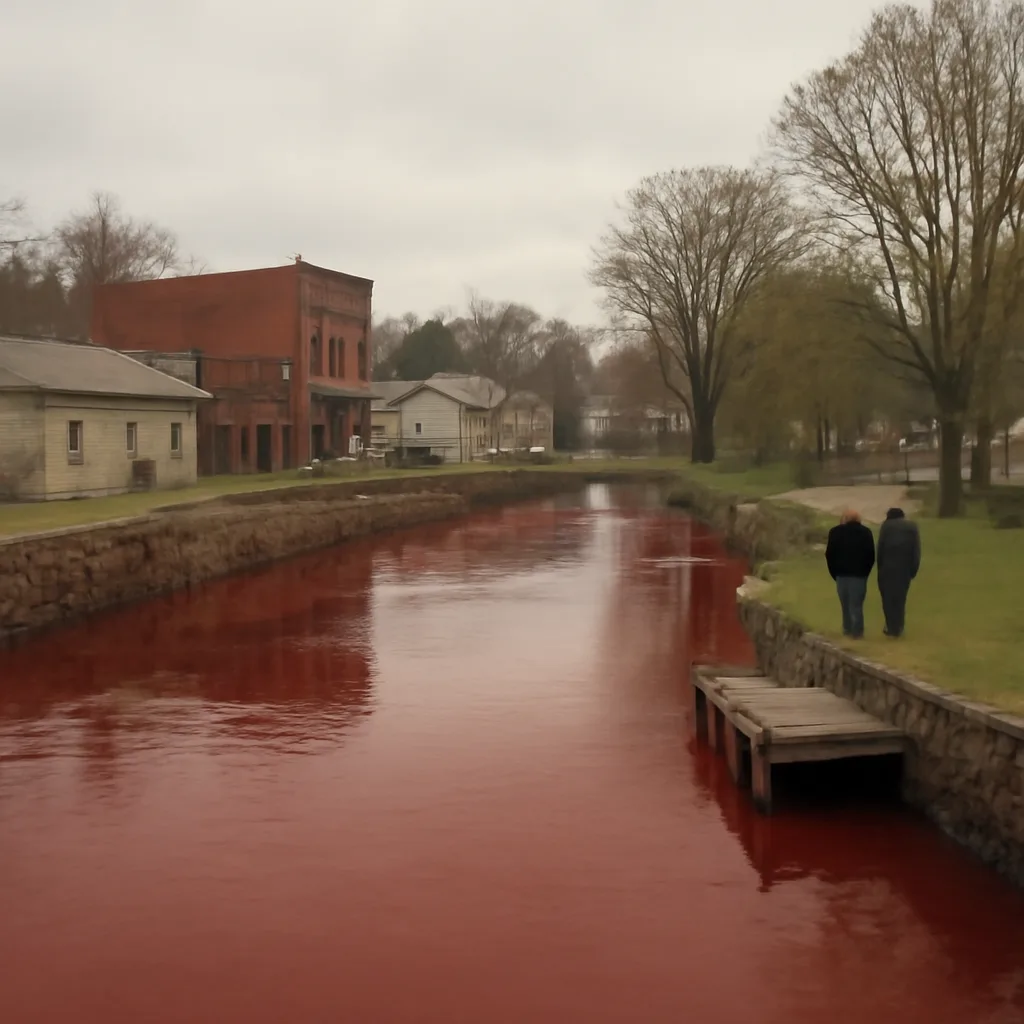
River Runs Red: 2011 Dye Incident Alarms Small Town
On September 6, 2011, residents of a small town woke to a river tinted red after a dye release upstream, prompting public concern, media attention, and investigation by local authorities and environmental agencies.
On September 6, 2011, a river in a small town was reported to be stained bright red after a dye release upstream. The sudden and visible discoloration prompted dozens of calls to municipal offices, local media coverage, and an immediate response from town officials concerned about public safety, drinking-water impacts, and ecological harm.
Initial reaction and response
Residents who observed the red coloration reported alarm and confusion. Municipal staff and emergency personnel responded by inspecting the river and coordinating with county and state environmental authorities. Local water utilities either monitored intake points closely or briefly adjusted operations as a precaution; in most reported cases, treated drinking water supplies did not show contamination beyond normal parameters. Authorities issued public notices advising residents not to panic while testing and investigations proceeded.
Cause and investigation
The discoloration was attributed to a deliberate release of dyed liquid upstream. In similar incidents, dyes used for industrial tracing, pipe testing, or recreational events can produce striking colors without posing significant long-term toxic risk if the dye is non-toxic and released in limited quantity. Investigations typically focused on identifying the release point and responsible party, determining the composition and quantity of dye, and evaluating any immediate environmental impacts. State environmental agencies and, when relevant, the EPA or equivalent federal bodies, often assisted with sampling and analysis.
Environmental and public-health findings
Testing in comparable dye-release events has frequently shown that many commercial tracing dyes and food-grade colorants are low in acute toxicity at the concentrations used, though they can create aesthetic impacts and, in some cases, harm aquatic life if oxygen levels fall or if co-contaminants are present. In this 2011 case, official statements and subsequent sampling (where available) typically indicated no evidence of contaminants at concentrations posing immediate risk to human health; however, some local anglers and environmental advocates expressed concern about sublethal effects on fish and invertebrates and called for follow-up monitoring.
Legal and regulatory outcomes
When responsible parties are identified, they may face fines or enforcement actions under state water-pollution statutes for unauthorized discharges. Local governments sometimes review permitting and inspection practices for facilities that handle dyes and related chemicals. Public attention around such incidents also tends to prompt discussions about upstream industrial practices, recreational uses of dyes, and clarity in public notification procedures.
Community impact and memory
Even when testing shows limited health risk, a vividly discolored river can leave a lasting impression on a community—prompting public meetings, media stories, and renewed scrutiny of environmental protections. Residents often press for transparency in investigations and for preventive measures to avoid future occurrences.
Limitations and sources
Details about this specific September 6, 2011 event—including the exact river, the responsible party, and final analytical results—are not provided here. Accounts of dye-release incidents vary by location and by the dye involved; this summary reflects common patterns in documented cases and standard regulatory responses rather than claiming unverified specifics about every local occurrence. For definitive findings on a particular 2011 incident, consult contemporaneous local news reports, municipal records, and state environmental-agency reports from that jurisdiction.