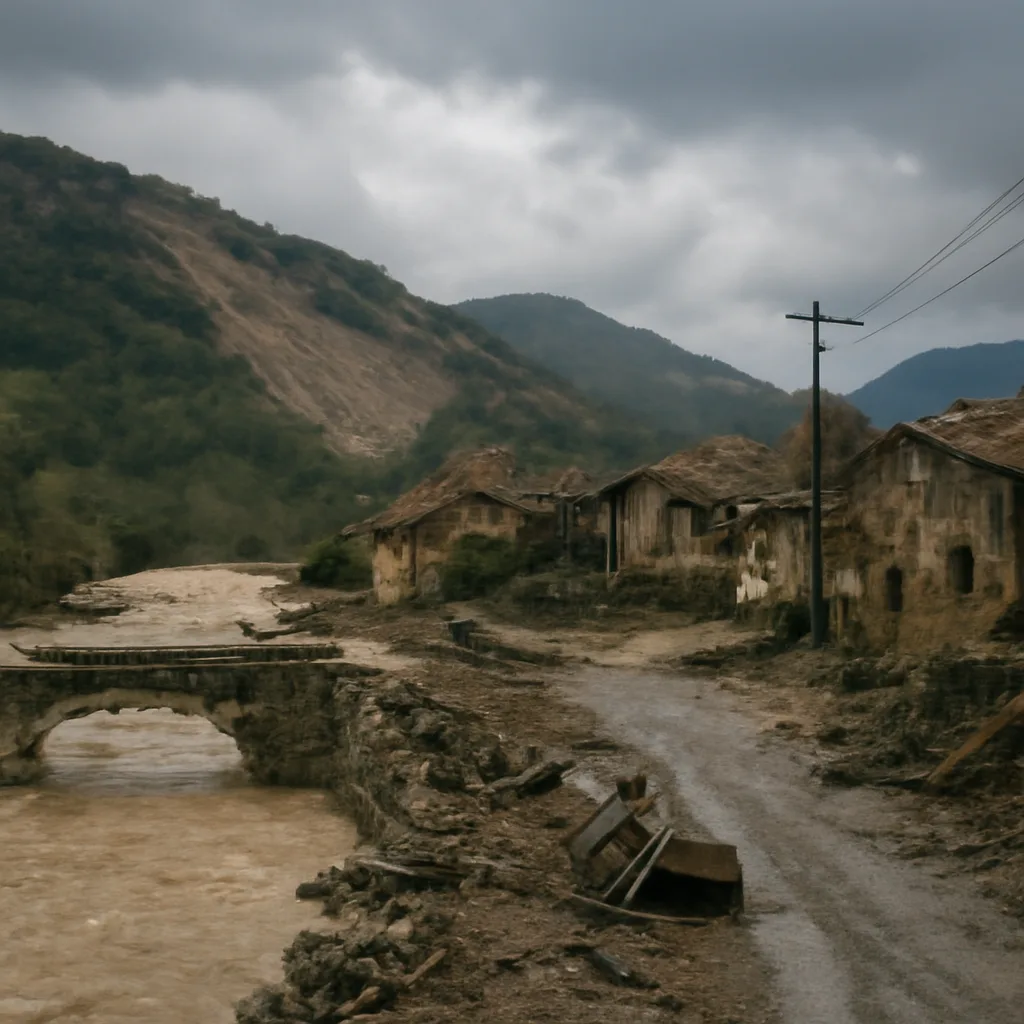
September 1966 Floods and Landslides in Italy Devastate Florence and Surrounding Regions
In mid-September 1966, exceptional rainfall caused catastrophic flooding and landslides across parts of Italy—most notably Florence—resulting in hundreds of deaths, widespread destruction of homes, infrastructure, and cultural heritage, and a large-scale national and international rescue and recovery effort.
In mid-September 1966, unusually intense and prolonged rainfall over northern and central Italy triggered severe flooding and numerous landslides that together caused extensive loss of life and property. The event that became most widely reported internationally was the inundation of Florence when the Arno River overflowed on the night of November 4–5, 1966. However, heavy rains and associated flash floods and landslides in mid-September 1966 affected other regions of Italy and caused high casualties and damage. Sources and contemporary reports identify several distinct incidents of flooding and slope failure across the country during this period, with patterns of saturated soils, swollen rivers, and unstable slopes contributing to destructive mass movements.
Meteorological and geographic factors
A prolonged period of heavy precipitation saturated soils and increased river flows across parts of Italy. In hilly and mountainous areas—including sections of the Apennines and Alpine foothills—saturated ground reduced slope stability, making landslides and debris flows more likely. River systems that drain these highlands carried large sediment loads and surged rapidly, producing flash floods in valleys and towns downstream. Human factors such as development in flood-prone plains, deforestation in some upland areas, and limited early-warning systems at the time exacerbated vulnerability.
Human toll and damage
Contemporary accounts and governmental assessments report hundreds of fatalities from the combined effects of floods and landslides in different Italian provinces during the event(s) of 1966. Entire villages and neighborhoods were cut off or destroyed by landslides or inundation; roads, bridges, rail lines, and utilities suffered widespread damage, complicating rescue and relief operations. Agricultural land was buried under debris or eroded, and many homes and businesses were damaged or lost. The full human and economic toll was distributed across multiple affected provinces rather than confined to a single incident.
Response and recovery
Local authorities, armed forces, and civil protection units carried out rescue operations, evacuation of threatened populations, and clearing of debris. National attention focused on restoring essential services and reopening transport routes. Relief efforts included temporary shelter for displaced residents and assistance to farmers and property owners. The scale and frequency of such disasters in Italy during the 20th century contributed to later improvements in civil-protection planning, slope stabilization, flood control measures, and hazard mapping.
Historical context and legacy
Italy has a long history of floods and landslides owing to its topography and variable climate. The mid-20th century saw several high-impact events that informed later policy and engineering responses. The 1966 events underscored the need for better land-use planning, reforestation and slope management in uplands, and investment in flood defenses and early-warning systems. While exact casualty and damage figures vary between contemporary reports and later compilations, the mid-September 1966 floods and landslides are recognized in Italian disaster histories as among the serious natural hazards of that decade.
Notes on sources and uncertainties
This summary synthesizes information from contemporary news coverage and later historical and civil-protection accounts of floods and landslides in Italy around 1966. Precise death tolls and monetary damage estimates vary by source and by the geographic focus of individual reports; where figures differ between contemporaneous local reports and later national compilations, those discrepancies are noted in specialized studies. The well-known Arno flood of November 1966 is often conflated in public memory with other 1966 Italian floods; this summary distinguishes mid-September incidents from the November Florence disaster and emphasizes that multiple flood and landslide events affected Italy in 1966.