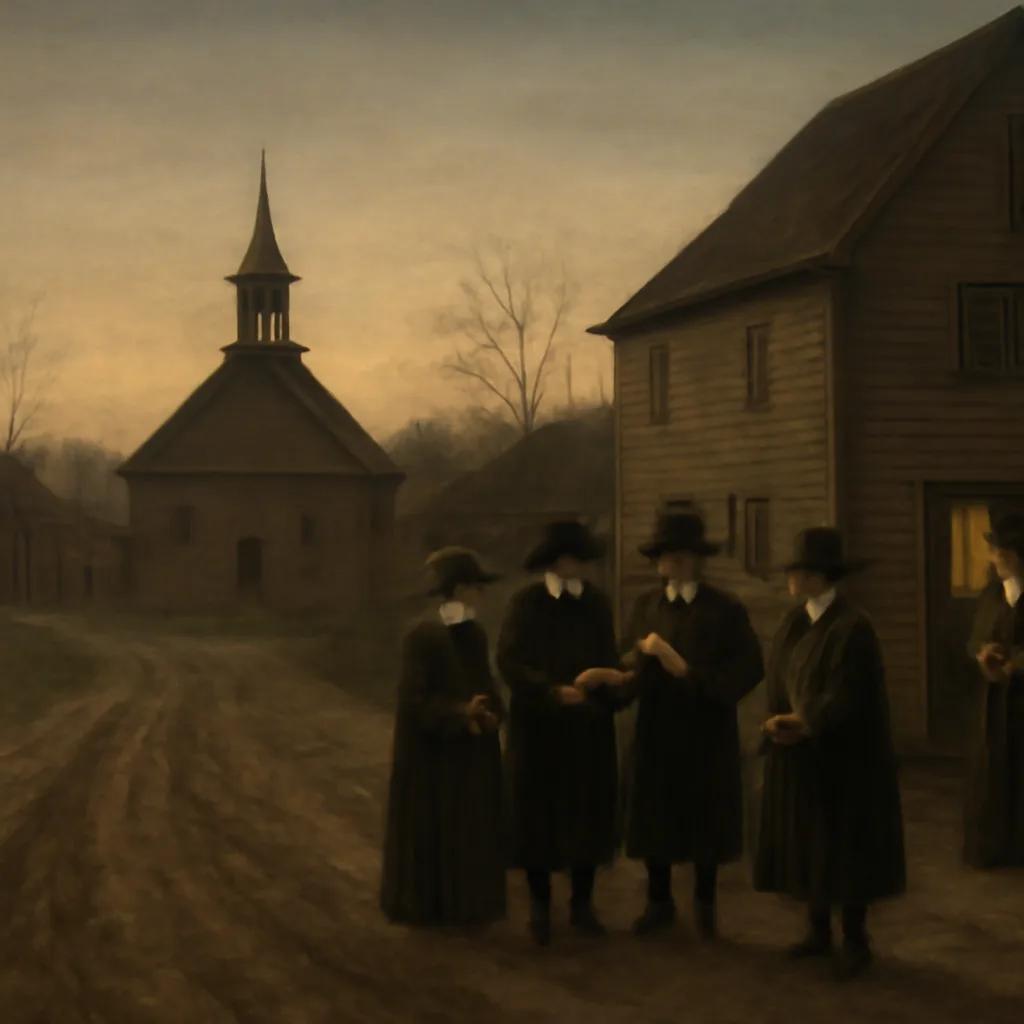
In February 1692, a cluster of symptoms and accusations in Salem Village (now Danvers), Massachusetts, prompted local authorities to begin formal proceedings that initiated what has come to be called the Salem witch trials. On or about February 29, 1692, magistrates in neighboring Salem Town began interviewing several young women whose fits and allegations implicated other community members. Those examinations and the subsequent issuance of warrants led to the first arrests and the entry of the conflict into the colonial court system. Context Salem in 1692 was a small, religiously conservative New England community subject to social, economic, familial, and jurisdictional tensions. The legal and cultural framework of the Massachusetts Bay Colony combined strict Puritan theology with English common-law practices. Belief in the reality of witchcraft and demonic influence was widespread in seventeenth-century New England; contemporaries viewed afflictions blamed on witches as both a spiritual danger and a legal offense. Immediate events The catalyst for the 1692 prosecutions was a group of adolescent and young adult women who exhibited convulsive behavior and made accusations of bewitchment against neighbors. Local ministers and magistrates examined the afflicted and the accused, following procedures available in colonial practice: gathering testimonies, observing afflicted behavior, and considering physical evidence such as “witness” fits. When magistrates judged there was sufficient cause, they issued warrants for arrest. Those early arrests in late February and March brought accused individuals before county authorities, marking the shift from village rumor and pastoral intervention to formal legal action. Legal process and expansion Once cases entered the legal system, they moved through examinations by justices of the peace and ultimately to county or special courts. The crisis escalated as more accusations spread beyond Salem Village into other towns. Over the following months, dozens of people were accused; many were imprisoned, several were tried and convicted, and nineteen were executed in 1692–1693. Procedural practices of the time—such as reliance on afflicted testimony, “touch tests,” and spectral evidence (testimony that the spirit or specter of the accused appeared to the afflicted)—played a significant role in convictions, though the use and acceptance of such evidence became increasingly controversial. Aftermath and historical significance The immediate aftermath included public debate in the colony, apologies from some ministers and officials, and later legal and legislative actions that questioned the trials’ fairness. By the end of 1693, prosecutions had largely ceased; in subsequent years, several colonial authorities expressed regret and the Massachusetts government made partial restitution to some victims’ families. Historically, the Salem witch trials are studied as a complex phenomenon shaped by religious belief, local politics, gender and family dynamics, legal culture, and mass panic. Scholars continue to analyze primary sources—court records, depositions, sermons, and correspondence—to understand how and why the prosecutions unfolded as they did. Notes on dating and sources The precise chronology of early examinations and arrests in late February and early March 1692 is reconstructed from surviving court records, warrants, and contemporary accounts; some specific dates and informal actions occurring at the village level are not recorded exhaustively and are the subject of careful scholarly reconstruction. The broad sequence—accusations and fits in Salem Village leading to magistrates’ examinations and the first arrests at the end of February 1692—is well supported by primary documents from the period.