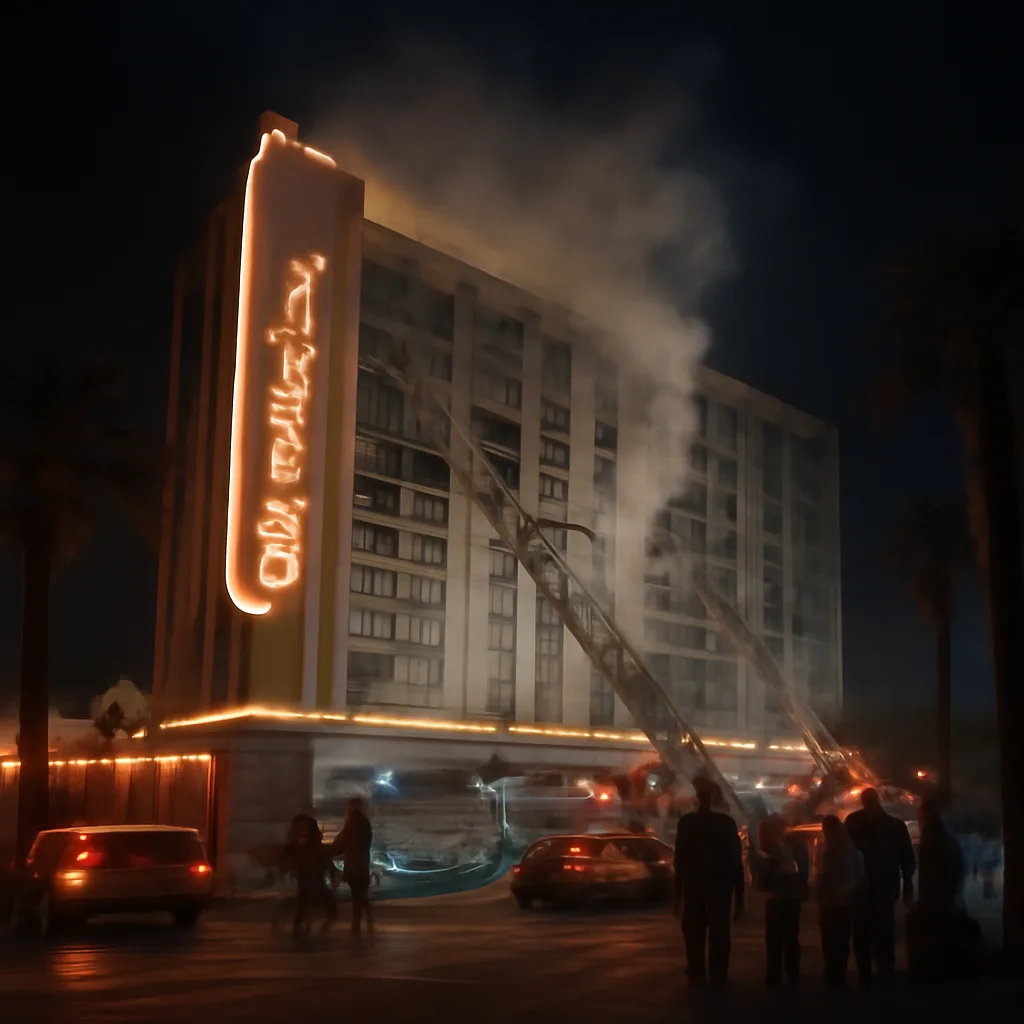
November 21, 1980 Las Vegas Hotel Fire Kills Dozens
On November 21, 1980, a major fire broke out in a Las Vegas hotel, resulting in dozens of deaths and many injuries; investigations afterward examined causes, safety lapses, and changes in fire codes. Details about the building and exact tolls varied among contemporary reports.
On the night of November 21, 1980, a significant fire occurred at a Las Vegas hotel, producing widespread loss of life and prompting scrutiny of fire safety practices in the city’s hospitality industry. Contemporary news reports and later reviews described chaotic evacuation efforts, heavy smoke conditions, and emergency responses stretched by the building’s configuration and the number of guests.
Eyewitness and press accounts from the period emphasized rapid smoke spread through corridors and stairwells, complicating escape routes. Rescue crews focused on evacuating guests and searching rooms; many survivors were treated for smoke inhalation and burns. Hospitals in the Las Vegas area received a surge of patients that night.
Investigations by local and state authorities looked at multiple potential contributing factors, including the origin and cause of the blaze, the presence and functioning of fire detection and alarm systems, the availability and accessibility of fire exits, and the fire-resistance of interior materials. Reports from the era indicated concerns about combustible furnishings and finishes, lack of automatic sprinklers in certain spaces, and door or corridor designs that allowed smoke and heat to move between areas. Determinations about a single definitive cause were reported as part of official inquiries, though some contemporaneous details and casualty counts varied across sources.
The human toll—dozens killed and many injured—led to public outcry and pressure on regulators and hotel operators. In response, local and state officials reviewed building and fire codes, and the incident is cited in historical discussions of how Las Vegas addressed hotel fire safety in the 1980s. Changes in regulations, retrofitting of older properties, and stricter enforcement of inspection protocols followed in various jurisdictions, aiming to reduce the risk of similar tragedies.
The November 1980 fire also influenced how the hospitality industry considered emergency planning, staff training, and guest notification systems. Subsequent analyses in trade and safety publications highlighted the need for comprehensive evacuation plans, routine drills, functioning alarms, and suppression systems. These assessments informed policy shifts over the next decade.
Because contemporary reporting sometimes offered differing figures for fatalities and injuries and because official records and archival material may vary in detail, researchers and readers should consult primary sources—such as newspaper archives, fire department reports, and state investigative records—for the most precise accounting. This summary reflects commonly reported elements of the event while noting that some specifics were disputed or updated after initial reports.