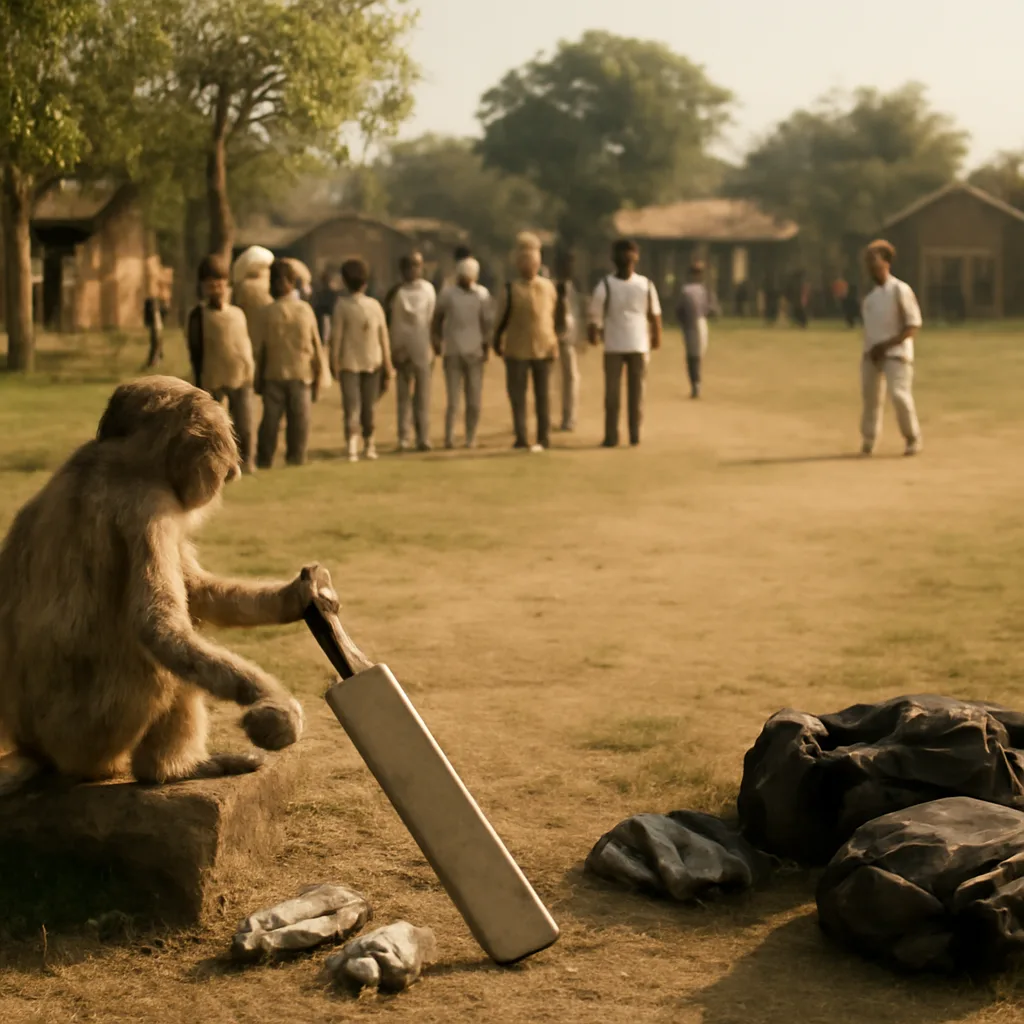
On August 1, a monkey interrupted a local cricket match by entering the playing area and taking equipment, bringing play to an immediate halt. The incident occurred during an informal community game, where players and spectators watched as the animal collected bats and other items before retreating to a nearby tree or structure (reports differ on the exact perch). Organizers and bystanders paused the match and tried nonviolently to recover the gear and encourage the monkey to leave. Such incidents are not uncommon in areas where human activity and monkey populations overlap. Monkeys are opportunistic and often investigate items that attract attention or carry human scent. In cricket-playing regions, bats and bags can be particularly attractive because they are portable, sometimes left unattended at the edge of fields, and may contain food or items with food residue. Responses from players and locals typically emphasize safety and avoidance of confrontation. Common measures include keeping a calm demeanor, avoiding sudden movements that might provoke the animal, and attempting to distract it with food placed at a distance. Local wildlife or municipal authorities are sometimes contacted if the animal does not leave or shows aggressive behavior, though in many community incidents residents handle the situation themselves. Beyond immediate recovery, incidents like this highlight ongoing challenges in managing human–wildlife interactions. Contributing factors often include habitat encroachment, availability of anthropogenic food sources, and habituation of animals to human presence. Long-term mitigation strategies employed in various communities include secure storage for food and equipment, public education about not feeding wildlife, and physical barriers where feasible. Wildlife officials may also conduct targeted interventions when individuals become persistent problem animals, though such measures are governed by local laws and conservation policies. No evidence suggests the monkey intended to cause harm; in related cases animals typically act out of curiosity or in search of food. There were no confirmed reports of injuries to players or spectators in this incident. The match was delayed until players recovered their equipment or deemed it safe to continue. While anecdotal, this episode serves as a reminder for recreational groups in areas with wild primates to adopt simple precautions: store bags and gear off the ground and attended, avoid leaving food or scented items accessible, and have a plan for contacting local animal-control or wildlife authorities if an animal becomes aggressive or does not leave. Accurate local guidance will depend on regional wildlife laws and the species involved. No official statements from wildlife authorities or named sources were available at the time of reporting; details come from on-the-ground accounts and standard practices for such encounters. The date of the event is recorded as August 1; the year was not specified in the available information.