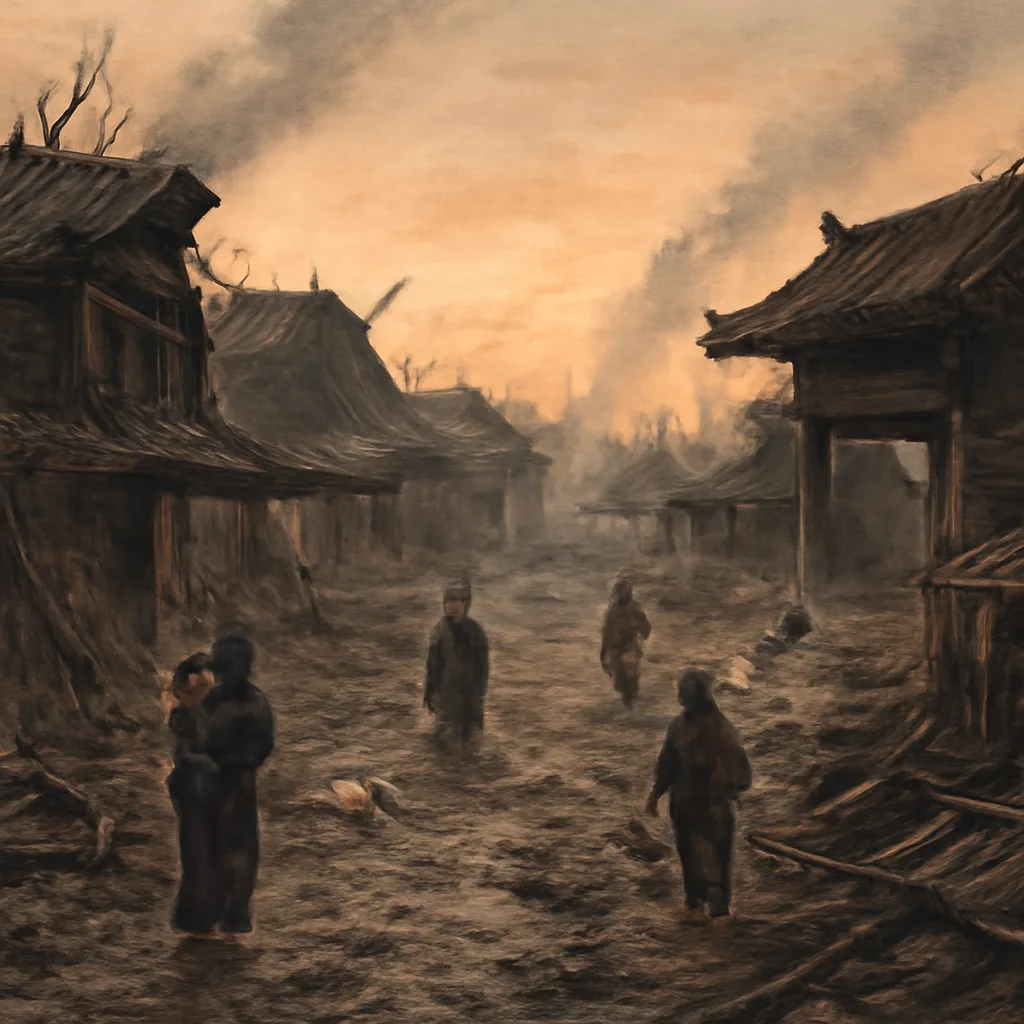
On the night of March 2–3, 1657 (Meireki 3), a massive conflagration broke out in Edo (present-day Tokyo) and burned for three days. Known in Japanese as the Great Fire of Meireki (Meireki no taika), it consumed large portions of the shogunal capital—residential districts, temples, markets, and castle suburbs—leaving the city in ruins and producing one of the deadliest urban fires in history. Origins and spread Contemporary sources differ on the fire’s precise point of origin, but many accounts place its start in the densely built districts near the Nihonbashi and Asakusa areas. Edo’s wooden architecture, closely packed dwellings, narrow streets, thatched roofs, and prevailing strong winds contributed to rapid fire spread. Efforts to create firebreaks and to demolish buildings to halt the advance were hampered by confusion, delayed orders, and the city’s complex social geography, which concentrated vulnerable populations in low-lying and congested wards. Extent and casualties The fire destroyed roughly two-thirds of Edo, including tens of thousands of houses, numerous temples and shrines, and large tracts of merchant and artisan quarters. Estimates of the death toll vary; contemporary and later sources commonly cite figures ranging from 100,000 to 200,000 dead, though historians caution these numbers may be imprecise because of incomplete records, overlapping counts, and the difficulty of distinguishing fire deaths from those who subsequently perished from exposure, disease, or displacement. Regardless of the exact figure, the disaster caused catastrophic human and material losses and left many survivors homeless. Political and social consequences The Meireki Fire had immediate political repercussions for the Tokugawa shogunate. The destruction of residences of high-ranking samurai and officials exposed vulnerabilities in urban administration and emergency response. Officials undertook relief measures for refugees and directed reconstruction efforts. The disaster accelerated deliberate changes in urban planning: wider streets, reorganization of districts, relocation of some temples and shrines, and the imposition of stricter building regulations aimed at reducing fire risk. The shogunate also used reconstruction to reinforce its authority by supervising rebuilding and reassigning lands. Cultural impact and memory The scale of the catastrophe left a lasting imprint on Edo’s cultural memory. The disaster appears in period prints, literature, and official records, and it influenced later debates about urban safety, architecture, and social order. The Great Fire of Meireki is often cited by historians as a turning point in the development of Edo’s urban landscape during the early Tokugawa period. Historiography and uncertainties Scholars continue to debate particulars such as the exact death toll, the fire’s initial cause, and the full effectiveness of the shogunate’s response. Available sources include official records, temple registries, diaries, and later compilations; each has limitations. Where figures and details are uncertain, historians typically present ranges or note the evidentiary constraints rather than a single definitive account. Legacy The Meireki Fire of 1657 remains a pivotal event in Japanese urban history. Beyond the immediate tragedy, the disaster prompted administrative, architectural, and social changes that shaped Edo’s growth into one of the largest cities in the world by the eighteenth century.