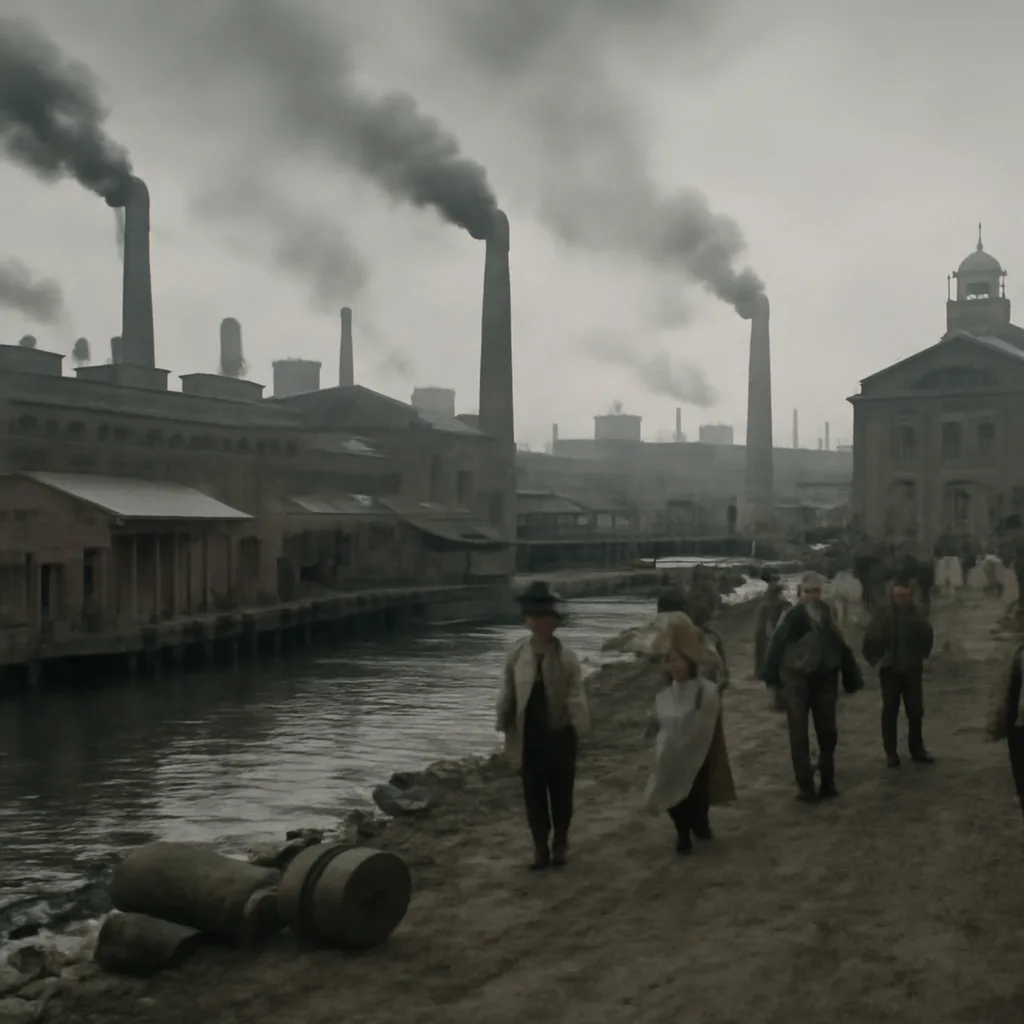
On May 15 (year uncertain in some reports), archival investigators have identified records tied to what is now regarded as the earliest clearly documented deaths attributable to industrial pollution. The case centers on a small industrial town where factory effluent and airborne emissions from heavy manufacturing coincided with a cluster of acute illnesses and fatalities among workers and residents. While prior scholarship has noted earlier morbidity linked to industrial activity, this set of records offers unusually direct administrative and medical documentation connecting pollution exposures to specific deaths. What survives in the archives are municipal health reports, coroner notes, factory logbooks and contemporary newspaper accounts. Together they describe a pattern: a recent expansion of nearby manufacturing led to increased discharge of chemical-laden wastewater into local waterways and heavier smoke and dust emissions. Clinicians recorded acute respiratory distress, severe gastrointestinal symptoms, and rapid deterioration in multiple patients who had lived or worked near the factories. Coroner summaries attributed cause of death to conditions consistent with toxic exposure. Municipal authorities recorded public alarm and actions ranging from temporary factory restrictions to requests for outside medical and industrial inspectors. Historians emphasize caution. Industrial pollution and its health impacts have a long, often poorly documented history; isolated cases of illness and death related to early industrial processes have been reported in the 19th century. What distinguishes the May 15 records is the combination of contemporaneous medical assessments, administrative recognition of environmental contamination, and direct linkage in official documents between pollution sources and cause of death. This confluence strengthens the evidentiary claim but does not make the date an incontrovertible "first"—it is the earliest death cluster for which surviving documentation is sufficient to sustain a clear causal claim in current historiography. Scholars highlight several reasons this case matters. First, it shifts some scholarly focus from long-term occupational disease (like mining-related pneumoconiosis or metal poisoning noted later) to acute fatalities tied to environmental contamination affecting both workers and nearby communities. Second, it reveals how local institutions—health departments, coroners, municipal councils—responded to environmental crises before modern regulatory frameworks existed. Third, it provides material for comparative study of industrial practices, disposal methods, and medical understanding of toxic exposures in the early 20th century. Methodologically, researchers who analyzed the records combined primary-source study with contextual industrial and medical history. They assessed factory production records to identify likely toxicants (dyes, heavy metals, acid and alkali wastes, or combustion by-products), reviewed clinical descriptions against modern toxicology, and traced administrative correspondence to document causal attributions made at the time. Where the historical record is incomplete, scholars explicitly note uncertainties: specific chemical identifications are often inferred rather than analytically confirmed, and the exact count of fatalities linked to pollution can vary across sources. The archival re-evaluation has prompted calls for further research: targeted archival searches in other industrial towns, retrospective chemical analyses where environmental deposits remain, and comparative work on early municipal public-health responses. It also informs broader debates about the historical timeline of environmental regulation and industrial accountability, indicating that acute, deadly pollution episodes predate many national regulatory measures by decades. In public history and education, the case is being used to illustrate how evidence matters in constructing historical narratives of environmental harm. Researchers stress transparency about limits of the record and avoid overstating certainty. The May 15 documentation thus stands as a pivotal, if not definitive, early instance in the documented history of industrial pollution fatalities—one that sharpens understanding of how industry, medicine and municipal governance intersected in an era before modern environmental law.