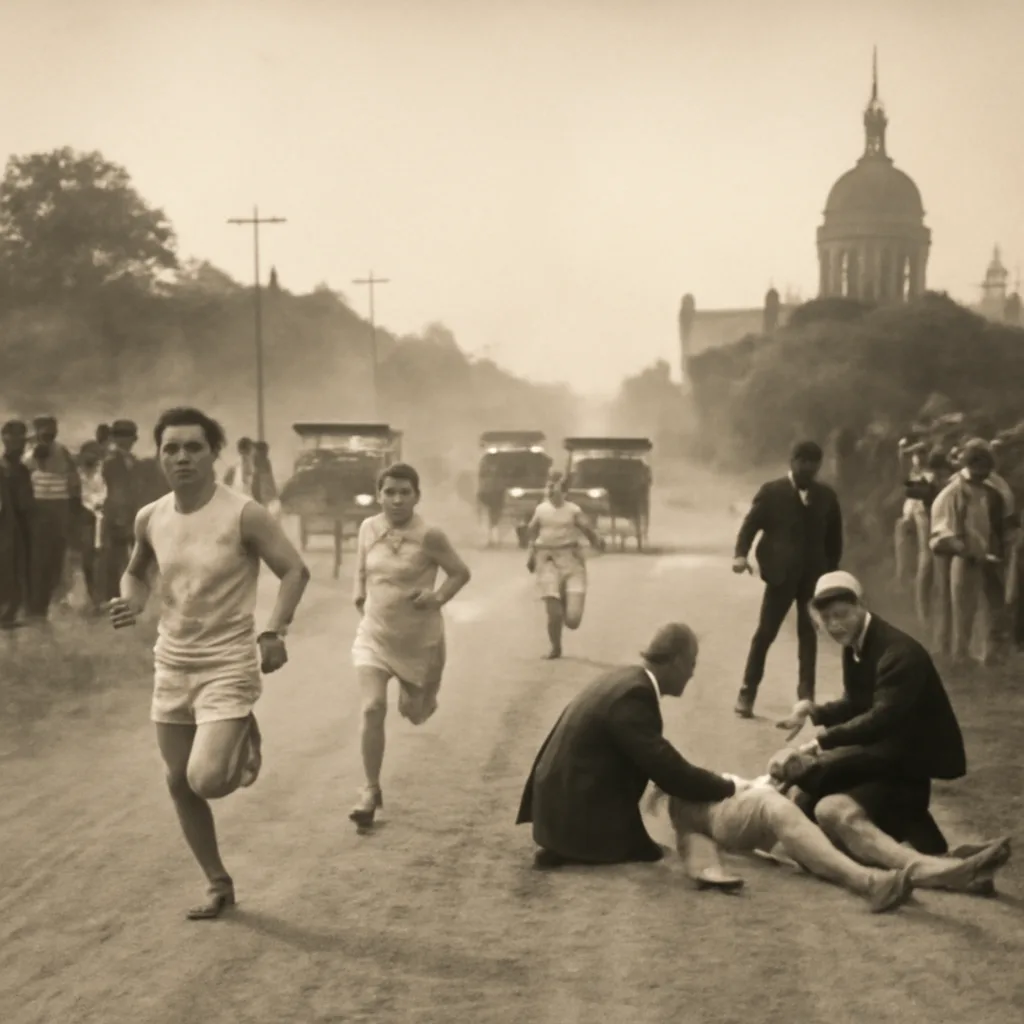
The marathon at the 1904 Olympic Games in St. Louis, held as part of the Louisiana Purchase Exposition, became infamous for its dangerous conditions and poor organization. On the day of the race—July 24 by contemporary schedules—runners faced high temperatures, dusty roads, scarce water stations, and limited medical oversight. Those conditions produced multiple incidents of severe physical distress, including at least one runner who collapsed while dehydrated and reporting hallucinations. The marathon course wound through dusty, unpaved streets and rural stretches outside the city. Organizers provided very few places where athletes could take on liquids; some reports indicate water was sparse because of a misguided concern that it would slow the runners. Cars and officials accompanying the field stirred dust that exacerbated inhalation of particulates. Under these circumstances, several competitors suffered cramps, fainting, and heat-related collapse. Contemporary newspaper accounts and later historical analyses document specific cases of runners losing consciousness or exhibiting confused behavior. One participant was found delirious and described as hallucinating, a symptom consistent with severe dehydration, heat exhaustion, or heatstroke. Medications of the period and ad hoc treatments sometimes made symptoms worse—some athletes received stimulants or tonics, and medical understanding of exertional heat illness was limited. The chaos of the event extended beyond individual collapses. The winner, Thomas Hicks of the United States, was assisted by trainers who gave him strychnine and brandy as stimulants—treatments judged dangerous by modern standards but reported in multiple contemporary sources. Other competitors were helped into vehicles, suffered from inhaled dust, or were disqualified after failing to complete the course due to extreme conditions. One entrant, widely reported in period coverage, was transported by car for part of the course yet still appeared in accounts of collapse and disorientation. Medical and historical evaluations since 1904 have characterized the race as a lesson in how not to stage a long-distance event. The combination of inadequate hydration, extreme heat, dusty roads, and rudimentary medical response contributed to cases of dehydration, heatstroke, and neuropsychiatric symptoms such as hallucinations. While precise medical diagnoses for individual runners cannot be retroactively confirmed, contemporaneous descriptions align with what modern medicine identifies as signs of severe heat-related illness. The 1904 marathon prompted criticism at the time and has been repeatedly cited by historians as a striking example of early Olympic disorganization. It influenced later developments in race management: standardizing more frequent access to fluids, improving course surfaces and safety, and establishing clearer protocols for medical intervention. Though grim, the episode helped catalyze changes that made endurance events safer for future competitors. Because records from 1904 vary in detail and terminology, some specifics remain disputed or ambiguous—such as exact timings, precise medical treatments administered to particular athletes, and the full extent of psychogenic versus physiologic causes of reported hallucinations. Historians rely on newspaper reports, official Olympic documents, participant memoirs, and later analyses to piece together the event; where sources conflict, accounts are noted as such. Overall, the collapse of dehydrated and hallucinating runners during the 1904 Olympic marathon stands as a historically documented episode illustrating the dangers athletes faced in an era before modern sports medicine and event planning.