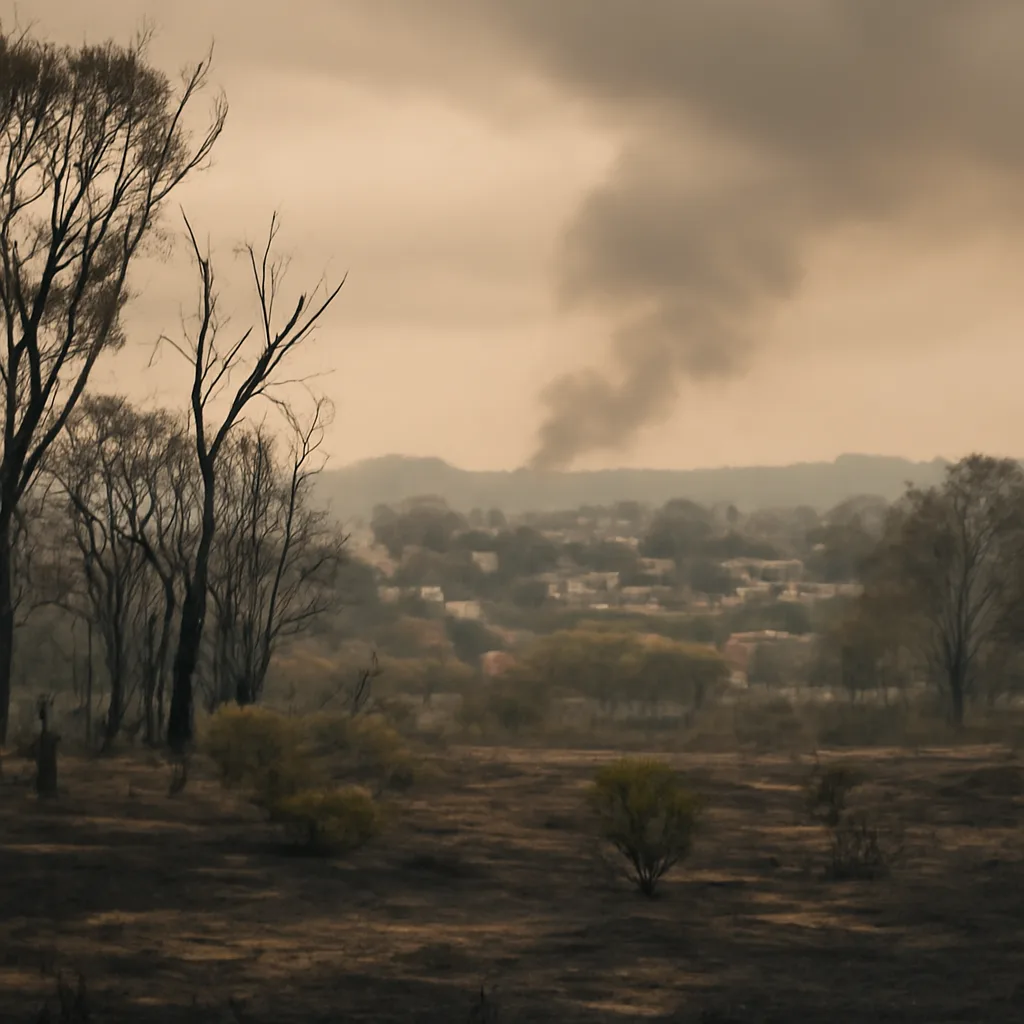
Late-2019 Australian Bushfires Sweep Through Multiple States, Devastating Towns and Wildlife
Beginning in spring 2019 and intensifying in late 2019, widespread bushfires burned across several Australian states, destroying homes, killing and displacing wildlife, and prompting large-scale firefighting and relief efforts.
Overview
From mid-2019 into the southern-hemisphere summer, Australia experienced extensive bushfires that affected multiple states and territories. Fires began earlier in spring than typical in some regions and, after a long, dry winter and spring in parts of the country, conditions in November and December 2019 allowed blazes to spread rapidly. The 2019–2020 fire season is often discussed as part of a broader sequence that peaked in late 2019 and early 2020.
Scope and locations
Major fire activity in late 2019 occurred in Queensland, New South Wales, Victoria, South Australia and Western Australia, with particularly severe impacts in parts of New South Wales and Victoria as the season progressed into December and January. Large fire complexes burned across national parks, private property and near regional towns; smoke plumes reached major cities and reduced air quality across wide areas.
Human and community impacts
The fires destroyed and damaged numerous homes and other structures, forced mass evacuations from towns and coastal communities, and disrupted transport and services. Fatality counts and injury figures for the full 2019–2020 season vary by source; fatalities in the broader season were reported primarily in late 2019 and early 2020. Local emergency services, volunteer brigades and interstate firefighting crews conducted protection, containment and evacuation operations. Governments at state and federal levels activated relief programs and disaster declarations for affected regions.
Environmental and wildlife consequences
The fires burned extensive tracts of forest, woodland and grassland. Early independent estimates and later consolidated assessments indicated very large areas scorched, with substantial losses of habitat. The fires had severe impacts on native wildlife populations, including koalas and various bird and marsupial species, and raised concerns about longer-term ecological effects such as reduced habitat connectivity and altered fire regimes.
Causes and contributing factors
Individual fires had differing ignition sources, including lightning, accidental human causes and, in some cases, deliberate ignitions that were subject to police investigation. Climatic and meteorological conditions—extended drought in parts of Australia, low fuel moisture, high temperatures and strong winds—contributed to fire severity and rapid spread. Scientific and governmental reviews of the 2019–2020 season examined the roles of land management, preparedness, and climate variability and change as factors influencing fire risk and impacts.
Response and recovery
Response efforts included firefighting by local and interstate crews, aerial firefighting assets, community evacuations and emergency shelters, and coordination between state and federal agencies. Recovery efforts focused on rebuilding homes and infrastructure, delivering financial and mental-health support to affected communities, and ecological restoration work. Numerous charities and community groups mobilised aid for displaced residents.
Reporting and uncertainty
Contemporary reporting often references the 2019–2020 bushfire season as a whole; this summary focuses on the late-2019 period when fires intensified across multiple states. Exact figures for area burned, economic cost and wildlife mortality vary between initial reports and later studies; readers should consult official post-season government reports and peer-reviewed research for precise, updated statistics.
Legacy
The late-2019 fires—and the larger 2019–2020 season—prompted renewed public and political debate in Australia on fire management, land use, emergency preparedness and the influence of climate trends on extreme fire seasons. They also led to increased investment in firefighting resources and support programs for affected communities and ecosystems.