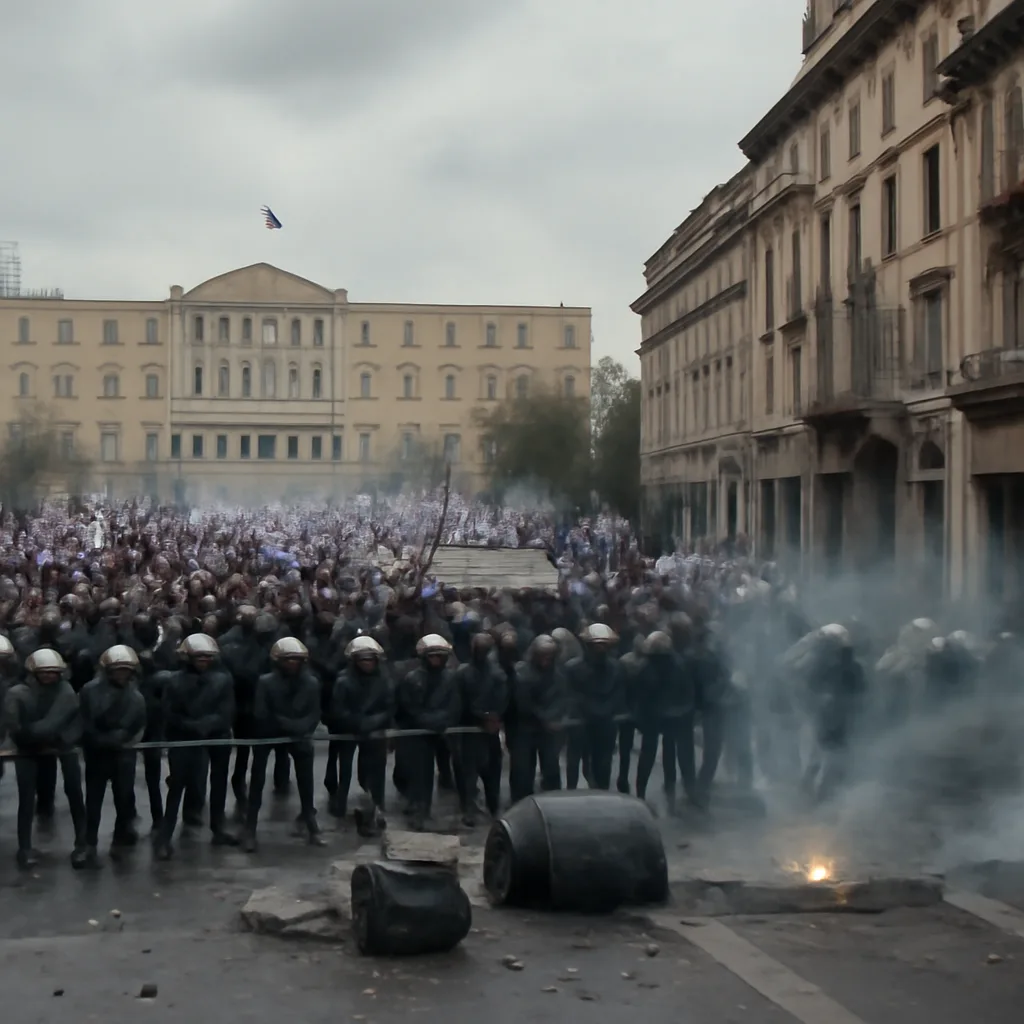
On September 21, widespread protests in Athens over Greece’s continuing debt crisis intensified into large-scale riots in central districts, reflecting deep public anger about austerity measures, unemployment, and political uncertainty. Demonstrations that began as organized marches and rallies at government and parliamentary sites devolved in some areas into confrontations between protesters and police, with baton charges, tear gas and arrests reported by multiple local news outlets. The unrest unfolded against the backdrop of prolonged negotiations with international creditors and the enforcement of fiscal adjustment programs that have included pension cuts, tax increases and reductions in public spending. Public discontent has been fueled by years of economic contraction and high unemployment, particularly among young people. For many demonstrators, the September actions were described by organizers as a response to renewed austerity steps and perceived erosion of living standards. Scenes from downtown Athens showed groups of protesters gathering outside the Hellenic Parliament and in neighborhoods such as Syntagma and Exarcheia, areas that have been focal points for previous mobilizations. Reports indicated instances of vandalism, smashed shopfronts and burning trash bins, as well as police efforts to contain crowds and clear key arteries. Emergency services dealt with injuries among both protesters and law enforcement, and several arrests were made; official tallies of casualties and detainees varied between agencies and were being compiled in the aftermath. Political leaders offered contrasting responses. Government officials framed the unrest as the regrettable result of economic necessity and insisted on maintaining public order while defending the reforms as required by creditor agreements. Opposition parties and trade unions criticized the government’s policies and called for renewed negotiations to alleviate social hardships. Labor unions had previously announced general strikes and coordinated actions that helped concentrate public mobilization on the day. Economic impacts were immediate for the city: public transport experienced disruptions, schools and many businesses closed or operated under limited hours, and tourist areas reported disturbances affecting visitors and service workers. Markets and financial commentators noted the potential for renewed market anxiety given Greece’s vulnerability to investor sentiment when large civil disturbances coincide with fiscal stresses. International reactions included appeals for de-escalation from diplomatic missions and calls for restraint from international organizations monitoring the country’s economic programs. Neighboring countries and European institutions emphasized the need for political dialogue to address both the fiscal commitments Greece faces and the social consequences of implementing those commitments. Analysts cautioned that while single-day flare-ups are common in periods of fiscal crisis, sustained unrest could complicate ongoing negotiations with creditors and further strain public services. Observers also noted the durability of public anger shaped by nearly a decade of austerity measures since the onset of the broader eurozone debt crisis. Accurate and complete counts of injured, arrested and property damage were not immediately available and varied across reports in the hours following the events. Local media and official statements were the primary contemporaneous sources; further official summaries were expected after investigators and municipal authorities completed assessments. This episode forms part of a series of confrontations tied to Greece’s prolonged economic adjustment, and it highlighted the continuing tensions between meeting external fiscal obligations and addressing domestic social and economic needs.