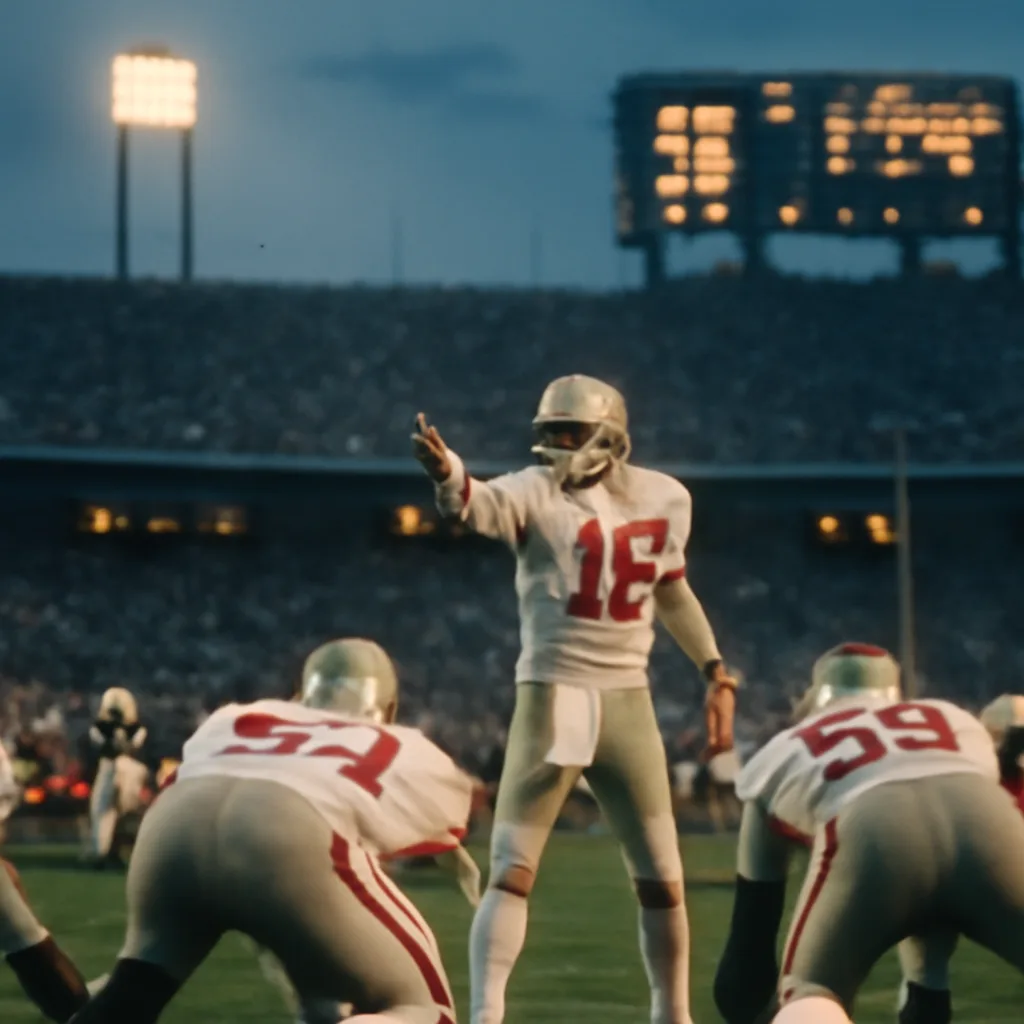
On January 22, 1989, Super Bowl XXIII in Miami reached its dramatic climax when San Francisco 49ers quarterback Joe Montana led a 92-yard game-winning drive in the fourth quarter against the Cincinnati Bengals. The drive culminated with John Taylor's 10-yard touchdown catch with 34 seconds remaining, completing one of the most famous late-game comebacks in NFL history. Among the visual details captured and remembered from that sequence is Montana gesturing toward the stands at one point during the drive. Photographs and televised footage show Montana briefly pointing in the direction of the crowd; one of the people identified in media accounts and by observers at the time was Canadian actor John Candy, who was in attendance. Candy's presence in the stadium was noted in contemporary reporting and later retrospectives as a moment of pop-culture color amid the sporting drama. The gesture itself has been interpreted in different ways. As with many in-game gestures, it could have been a quick acknowledgement of a known spectator, a directional signal to teammates, or simply a spontaneous reaction caught on camera. There is no contemporaneous record indicating that Montana and Candy exchanged words or that the gesture had any effect on play-calling or the outcome of the drive. Context helps explain why the moment drew attention. Montana's composure and on-field awareness during the march down the field cemented his reputation as a clutch performer; incidental details, such as notable celebrities in attendance, became part of the cultural memory surrounding the game. John Candy, a prominent film and television actor in the 1980s, was one of several celebrities present at Super Bowl XXIII, and his recognition in photos from the event made the sighting easy to note for journalists and fans. When recounting the episode, it is important to separate documented facts from later embellishment. The facts supported by visual evidence and reporting are: Montana led the late 92-yard drive that produced the winning touchdown on January 22, 1989, and he was filmed briefly pointing toward the stands during that sequence; John Candy was in attendance and has been identified in images from the game. Assertions that the gesture constituted a personal acknowledgment, a scripted interaction, or had strategic significance are not substantiated by primary sources and remain speculative. Super Bowl XXIII remains widely remembered for Montana's calm leadership and the final drive's drama. The small human details — celebrity spectators, fleeting gestures, and photographic captures — contribute to the broader historical texture of the event but should be treated as anecdotal accompaniment rather than causal elements of the sporting outcome.