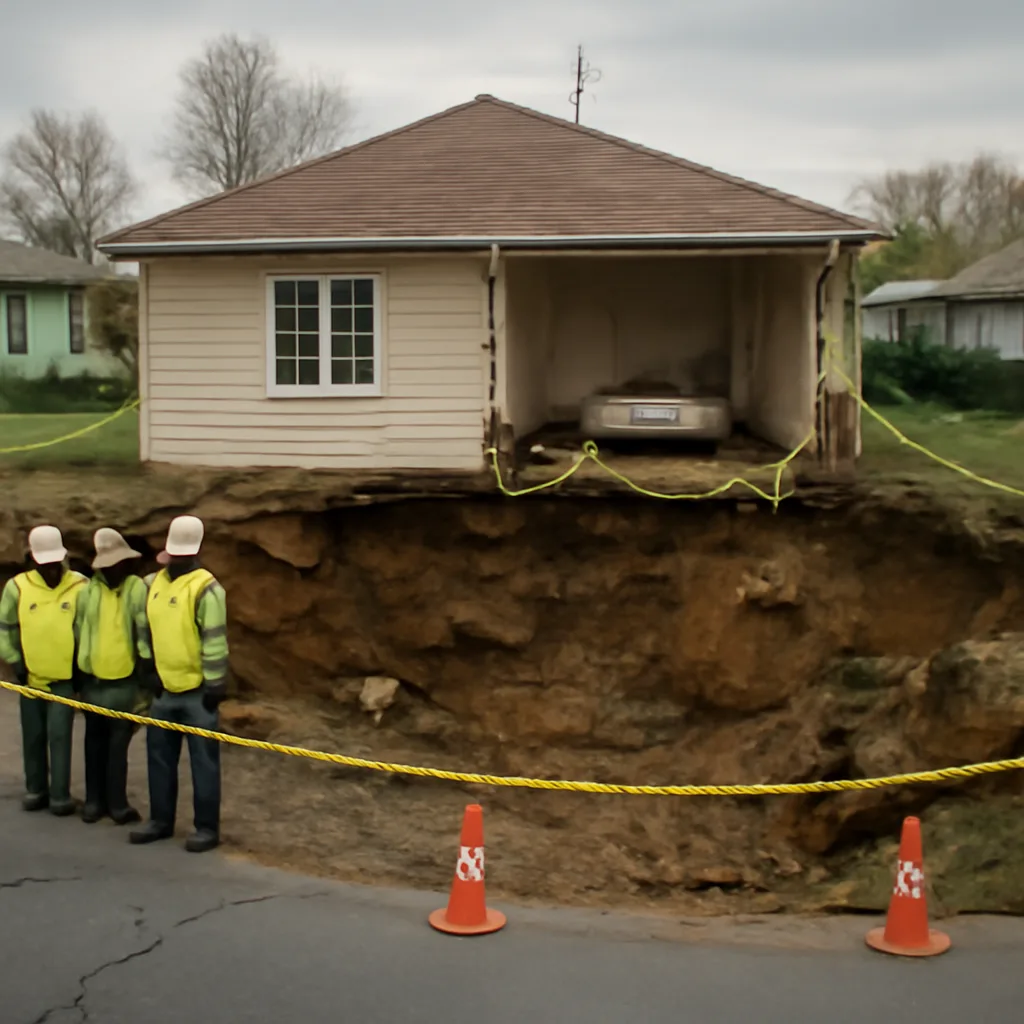
On Feb. 28, a single-family house experienced a sudden structural collapse when a sinkhole opened beneath the property, swallowing one bedroom and causing partial failure of the building’s foundation and first floor. The event prompted an immediate emergency response: occupants were evacuated, utility services to the house were shut off as a precaution, and local officials cordoned off the area to protect neighboring properties and bystanders. Sinkholes form when the ground surface collapses into an underground void. In many regions this is associated with natural processes such as dissolution of soluble rock (limestone, gypsum, or salt), changes in the water table, or human activities including broken water or sewer lines, mining, or excavation. At the scene on Feb. 28, investigators from municipal public works and geotechnical specialists were called in to assess subsurface conditions, stabilize the site, and determine short- and long-term risks to adjacent properties. Initial on-scene measures typically include acoustic and visual inspections, provisional fencing, and temporary shoring if parts of the remaining structure are unstable. Utilities—water, gas, electric—are commonly disconnected to reduce risks of fire, contamination, or further collapse. Authorities also often use ground-penetrating radar, borehole drilling, and soil sampling to characterize the void and the mechanisms that caused it. These are standard steps while a more detailed geotechnical evaluation is prepared. Officials cautioned that determining a definitive cause can take days to weeks. Water intrusion—whether from heavy rainfall, a leaking pipe, or a failing sewer main—is a frequent contributor to sinkhole development because flowing water can erode supporting soils. In some locales, underlying karst geology (where bedrock dissolves to form cavities) increases natural susceptibility. Conversely, human alterations such as construction, poor drainage, or underground utility failures also commonly play a role. Local authorities said they would review recent utility records, weather history, and subsurface maps as part of the inquiry. Property owners and neighbors affected by a sinkhole event typically face multiple practical concerns: emergency housing, insurance claims, and decisions about repair or demolition. Homeowner policies vary in coverage for sinkhole damage; in many jurisdictions, standard policies cover sudden structural collapse but not gradual subsidence, and separate sinkhole endorsements may be required. Officials generally advise residents to document damage with photos, retain all related receipts, and contact their insurer promptly. Longer-term mitigation depends on the scale and cause of the void. Small, shallow sinkholes are sometimes backfilled and the foundation rebuilt if the subsurface can be stabilized. Larger or deeper collapses may require injection grouting, installation of piled foundations that transfer building loads to deeper competent strata, or demolition and relocation if risks remain high. Municipalities can also address public risk by repairing underground utilities, improving stormwater management, and updating land-use maps to reflect known hazards. No fatalities were reported at the scene on Feb. 28, and local officials urged residents in the area to stay away from the site until engineers complete their assessment. Investigators have not yet released a final determination of the sinkhole’s cause. Updates are expected as geotechnical testing and utility inspections conclude and as local agencies evaluate options for remediation and public safety.