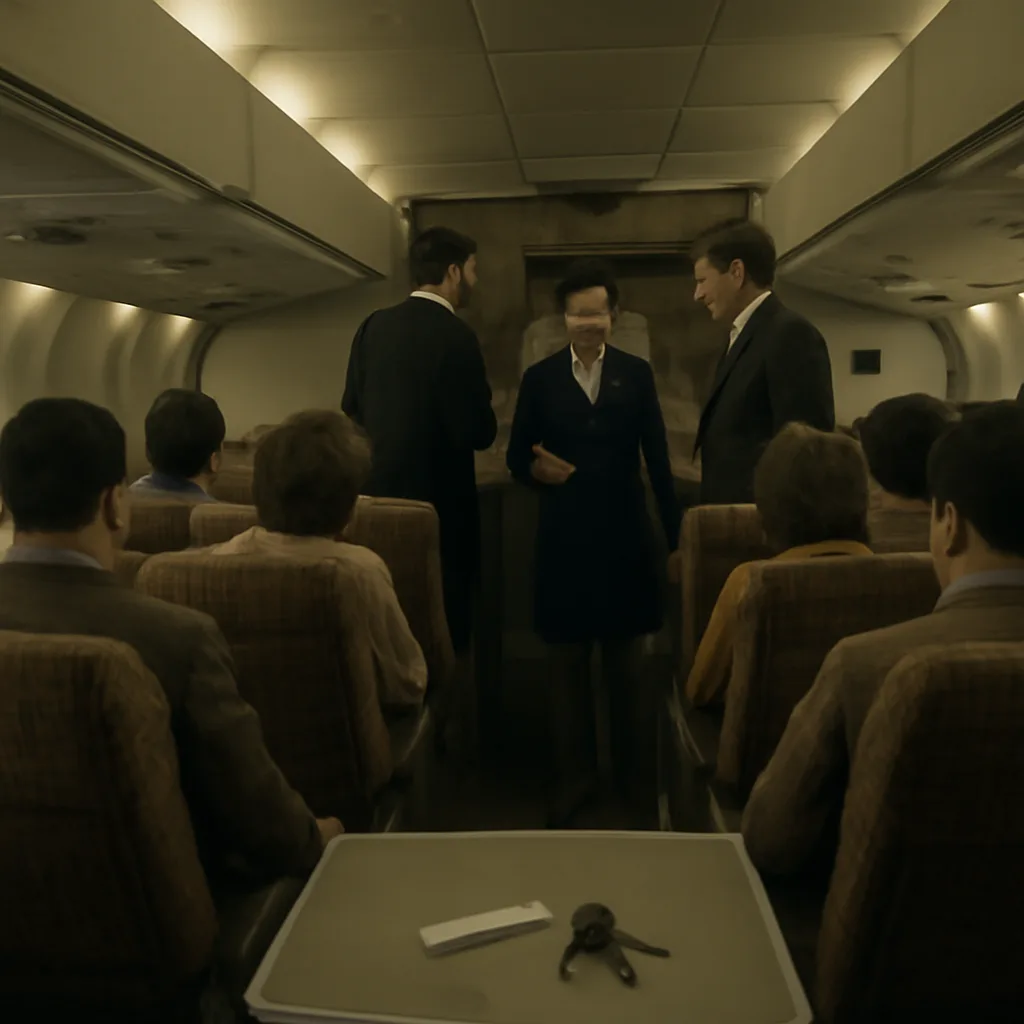
On or around February 24, 1976, a commercial airliner was seized when a passenger produced what crew and passengers believed to be a grenade. The device proved to be a crude imitation constructed from common items, reported in contemporary accounts as including a tube of toothpaste and shoelaces fashioned to resemble a grenade’s pin and detonator. The incident unfolded at a time when dozens of aircraft hijackings occurred worldwide, prompting heightened airline security and public alarm. Available reporting from the period indicates the hijacker used the improvised device to force compliance and to secure control of the cabin. Crew members, trained in limited anti-hijacking measures of the era, engaged in negotiation while avoiding actions likely to escalate the situation. Passengers were ordered to remain seated and calm. After a period of negotiation and maneuvering by the crew and ground authorities, the suspect was subdued and disarmed; the imitation grenade was later confirmed to be nonfunctional. Contemporary law-enforcement accounts and later summaries agree on the device’s improvised nature but differ on some operational details, including the precise timing and the hijacker’s stated motives. Investigations after the incident focused on how such a simple assemblage of everyday items could intimidate a cabin full of people and what procedural changes were necessary to prevent similar threats. The event contributed to an evolving awareness within the aviation industry: the need for better screening at airports, clearer crew protocols for dealing with suspected explosives, and improved passenger safety briefings. It also illustrated a broader problem of the era—security measures that were often reactive and varied widely by country and airline. Records from 1976 indicate that airports, airlines, and governments were increasingly pressured to standardize security procedures. Incidents involving improvised weapons highlighted gaps in detection technology and screening procedures that would be addressed over subsequent decades through stricter baggage checks, metal detectors, and later technological advances. While this specific hijacking did not result in mass casualties, it became one of several high-profile cases that shaped policy discussions. Because contemporary coverage and later summaries include inconsistent details—some sources date the incident specifically to February 24, 1976, while others place it in late February of that year without an exact day—historians and archivists treat certain particulars as uncertain. Likewise, public records available online and in newspaper archives from the period do not always include full law-enforcement file details or court records that could confirm motivation or the complete sequence of actions. What remains consistent across sources is that the device was an imitation, assembled from ordinary items, and that the threat was sufficient to compel compliance until authorities regained control. This episode is often cited in retrospective discussions about aviation security in the 1970s: a decade marked by creative but sometimes crudely improvised threats that nevertheless forced industry-wide changes. The incident underscores how perceptions of danger, even when based on fraudulent devices, can have real consequences for passenger safety and public policy.