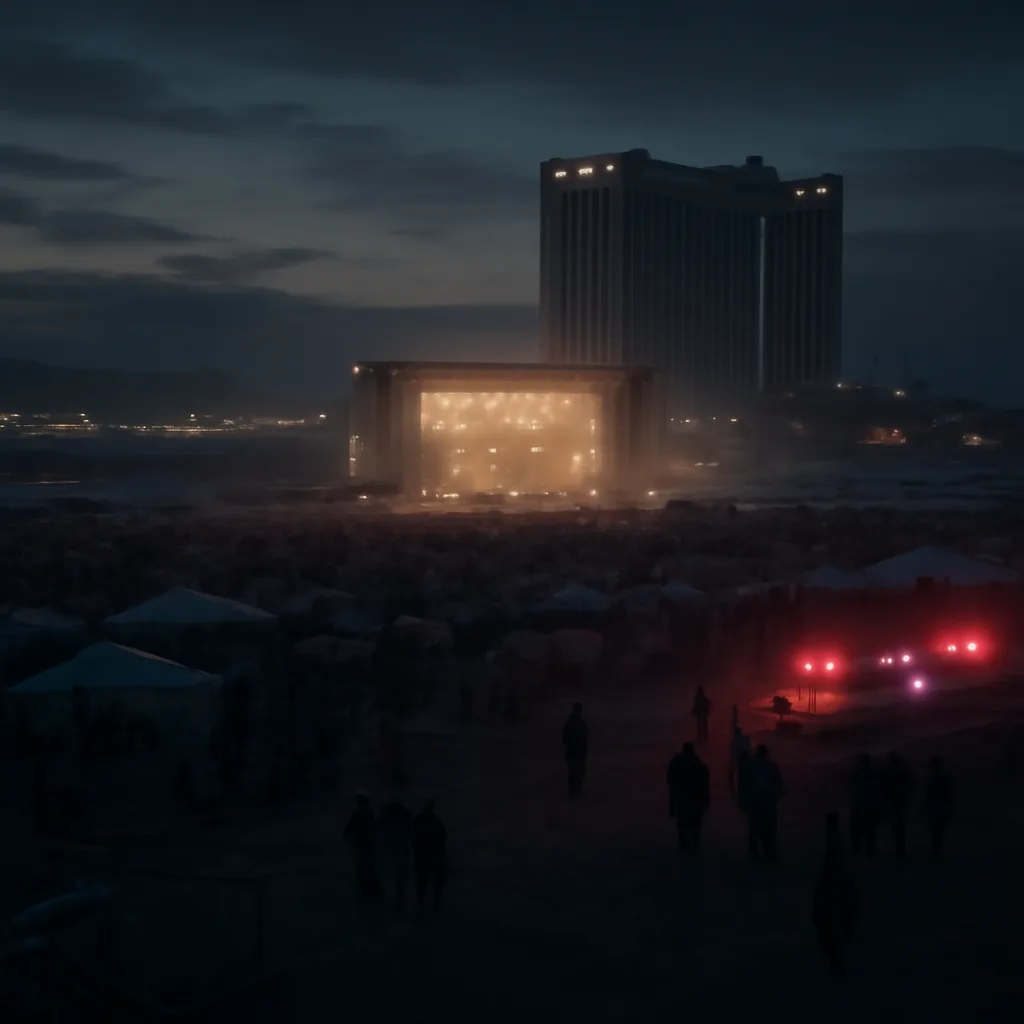
On October 1, a gunman fired from a room on an upper floor of a Las Vegas hotel into a densely packed outdoor music festival on the Las Vegas Strip. The attack occurred during an evening performance at the Route 91 Harvest country music festival, which drew tens of thousands of attendees to a field near multiple hotel-casinos. According to law enforcement timelines compiled afterward, the shooting began just before 10:10 p.m. local time with automatic and semi-automatic gunfire directed into the crowd from a high-rise suite. The sound of sustained gunfire continued for several minutes. Festivalgoers initially sought shelter where they could — dropping to the ground, running between stages and tents, or fleeing toward nearby hotels and the Strip. First responders and casino security personnel moved rapidly to triage and evacuate the wounded and to secure the area. Police say the shooter had checked into a hotel room on an upper floor some days before the attack. During subsequent searches, authorities found multiple firearms and equipment in the suspect’s room. Investigators later identified the shooter as a single individual who died in the hotel room; available public records indicate he was found dead of a self-inflicted gunshot wound when officers breached the suite. No co-conspirators were publicly confirmed by investigators; inquiries into motive produced no widely accepted single explanation, and aspects of the perpetrator’s planning and background were the subject of official investigation and media reporting. The human cost was severe. Official counts reported dozens of people killed and hundreds more wounded by gunfire and in the ensuing crush as people fled. Victims included concertgoers from multiple states and countries; hospitals across the Las Vegas area received casualties, and some critically injured patients were transported to trauma centers out of the region. The scale of casualties made this incident one of the deadliest mass shootings in contemporary U.S. history. The shooting prompted a multiagency investigation involving local police, the FBI and other federal authorities. Investigators examined the shooter’s weapons, travel, purchases and digital footprint, and interviewed witnesses and survivors to reconstruct the sequence of events. Law enforcement also reviewed hotel security footage and communications to determine timelines and whether any warning signs had been missed. In the aftermath, survivors, families of victims and public officials called for reviews of event safety, building access and gun laws. Concert promoters and venues undertook changes to improve emergency communication, screening and evacuation procedures. Support services, including counseling and victim assistance, were made available to those affected. Memorials and vigils were held locally and elsewhere as communities sought to mourn and to support survivors and families. Because some investigative details and aspects of motive remained complex and the subject of ongoing review for months afterward, certain specifics reported early in the response evolved as authorities released more information. Reporting on the event drew on official statements, hospital reports and accounts from survivors and emergency personnel to assemble an understanding of what occurred and its impact. The Las Vegas shooting had lasting effects on public debates about public-safety planning at large events, firearm access and how best to prevent and respond to mass-casualty incidents. It also prompted changes in how some festivals and large venues plan for active-shooter scenarios and coordinate with law enforcement and medical services.