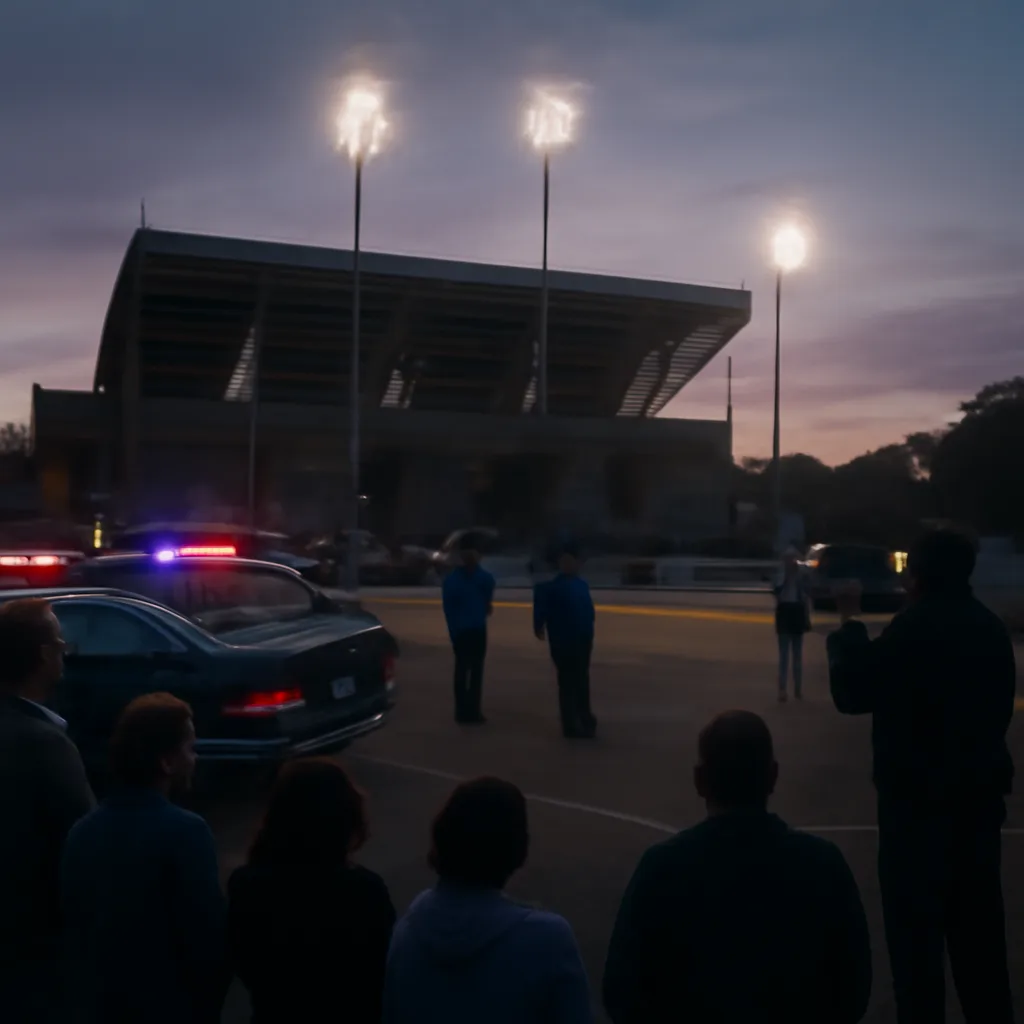
Shortly after kickoff on Sept. 22, law enforcement agencies received reports of gunfire in the vicinity of a college stadium hosting a football game. Officers moved quickly to assess the scene outside the venue, set perimeters, and coordinate with stadium security. Game officials and law enforcement decided that there was no immediate threat to spectators inside the stadium and allowed play to continue while investigators worked nearby. Witnesses reported hearing multiple shots and described a rapid response by uniformed officers and marked vehicles arriving on adjacent streets and lot areas. Authorities conducted a search of the surrounding perimeter and reviewed security camera footage. Medical teams remained on alert and emergency medical services staged nearby; stadium staff communicated safety information to attendees through public-address announcements and in-venue messaging. Local law enforcement later said preliminary findings did not indicate an ongoing active shooter inside the stadium, and no mass evacuation was ordered. Investigators cautioned that details were preliminary and said the investigation remained active; they appealed for anyone with video or information to come forward. Information about injuries, the number of people involved outside the stadium, or the motives behind the shots was not confirmed publicly by investigators at the time of reporting. School and stadium officials emphasized their protocols for responding to threats near large events, including coordination with local law enforcement, locked-entry procedures for the venue, and medical response plans. Officials also said decisions about whether to pause or stop a game are made based on real-time assessments of threat to spectators, participants, and staff. Incidents involving gunfire near public venues prompt varied responses depending on the information available to responders at the scene. In this instance, the continuing of the game while law enforcement secured the surrounding area reflects a determination—based on their assessment—that immediate danger had been contained or was not present inside the stadium. Investigations typically proceed to identify suspects, determine motive, and assess any potential links to other criminal activity. Given the sensitive and ongoing nature of such investigations, confirmed details were limited at the time officials released initial statements. Media reports and eyewitness accounts can vary in early stages; authorities urged the public to rely on official updates for verified information. Follow-up reporting and official disclosures from law enforcement and the institution involved are necessary to provide a full account of what occurred, whether any arrests were made, and whether any additional safety measures will be implemented for future events.