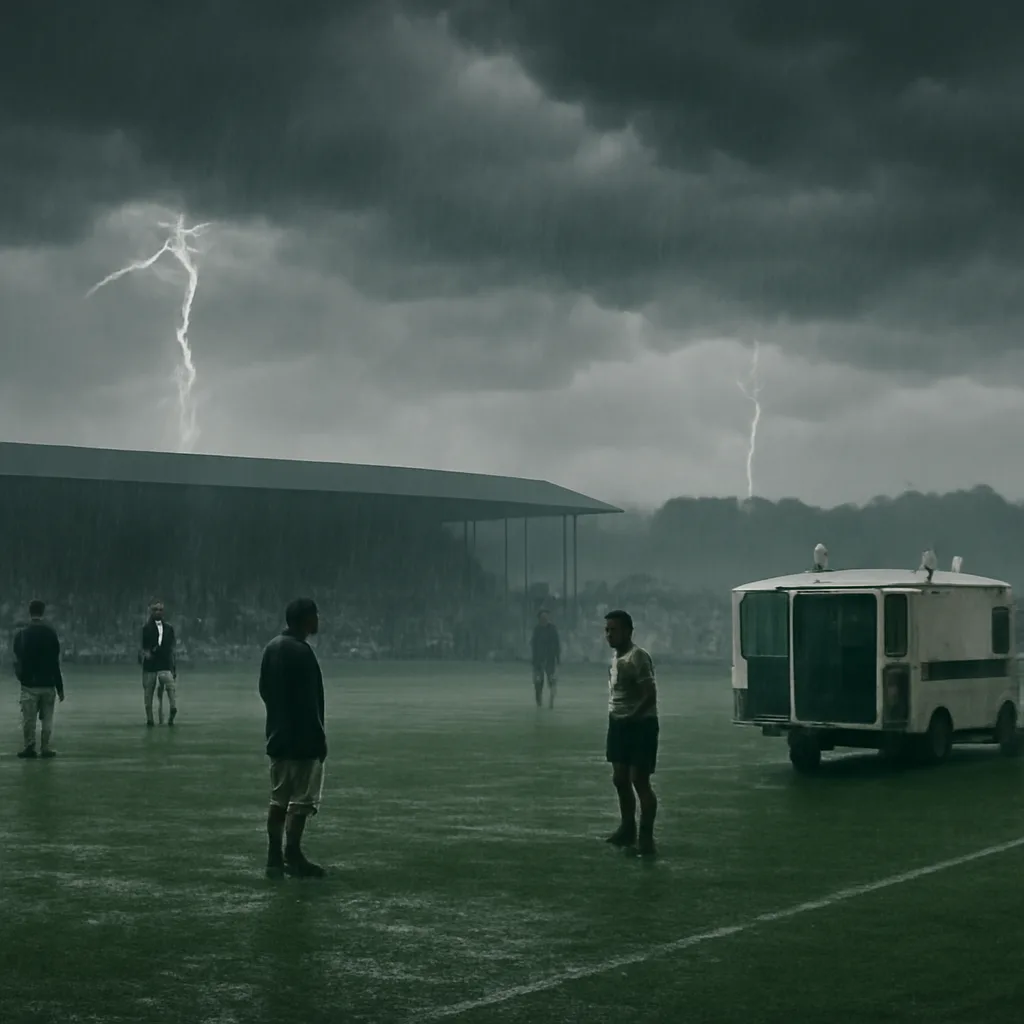
On 25 October of an unspecified year, a footballer died after being struck by lightning during a match. Such incidents, while rare, have occurred in outdoor sports when severe thunderstorms develop suddenly and players remain on exposed pitches. Contemporary accounts of similar events typically describe heavy rain and visible lightning in the minutes before the strike, and immediate medical response attempts followed by pronouncements of death either on site or after transfer to a hospital. Records of lightning fatalities in sport show that crowds, teammates, and officials often witnessed the event, and emergency protocols at the time varied widely by country and competition level. In many jurisdictions in the late 20th century and earlier, organized procedures for suspending play due to lightning were less standardized than they are today. This lack of standardized practice has been cited in retrospective safety reviews as a contributing factor in on-field lightning deaths. Because the precise year and location for the 25 October incident are not specified here, verification of identity, team affiliations, and official investigative findings requires consulting contemporaneous local news reports, match records, or coroner/medical examiner statements. Such primary sources would confirm whether play was suspended before the strike, whether lightning detection or weather warnings were in effect, and whether any disciplinary or procedural changes followed the incident. In the wider historical context, deaths from lightning strikes at sports events prompted changes to safety guidance from national federations and international bodies. Modern recommendations typically call for immediate suspension of outdoor activities at the first sign of thunder or lightning within a defined radius, evacuation to substantial indoor shelter, and a waiting period (often 30 minutes) after the last observed lightning or thunder before resuming play. Because details about the date’s year and the individual involved are unclear here, this summary avoids attributing specific names or locales. Researchers seeking to confirm particulars should search newspaper archives, football association bulletins, and public coroner records for incidents listed on 25 October in the decades when documented on-field lightning fatalities occurred. When possible, prioritize primary-source contemporaneous reporting and official medical or investigative findings to avoid propagation of inaccuracies.