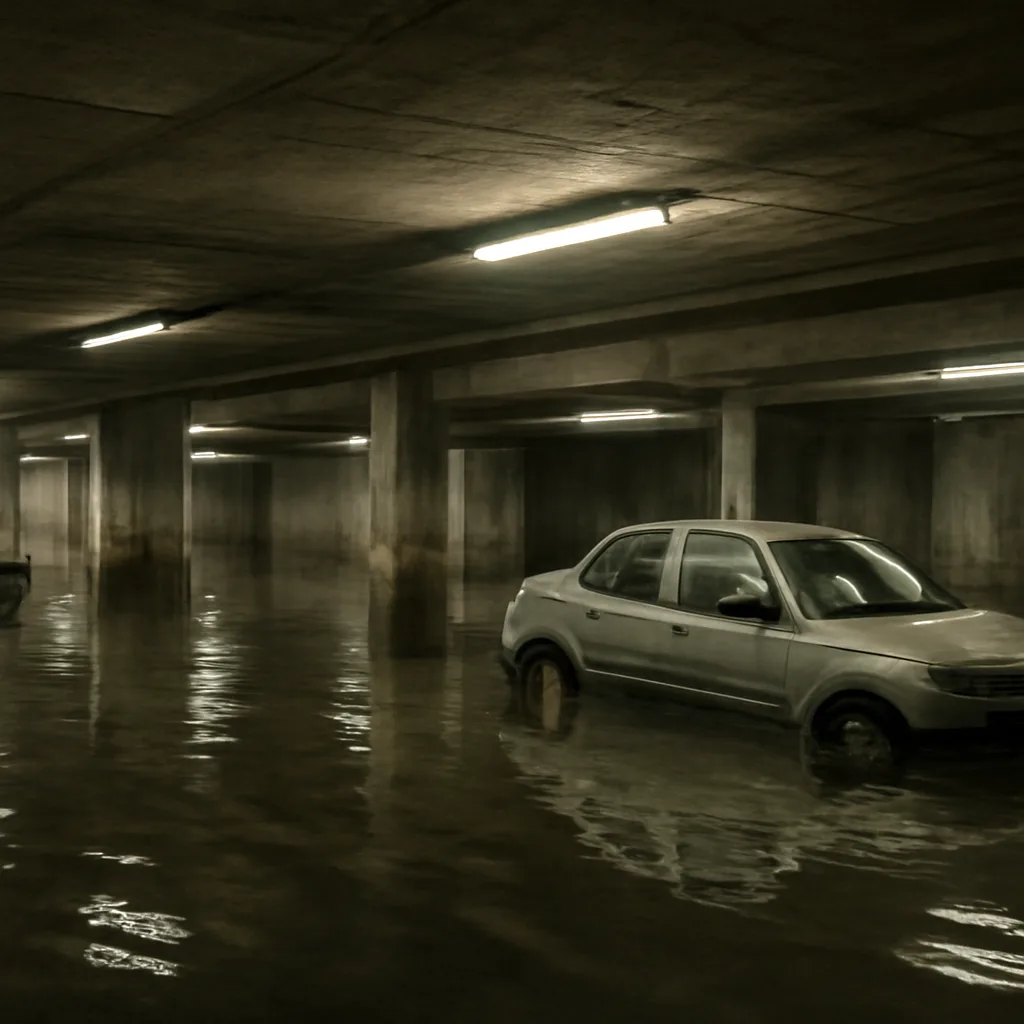
A subterranean parking garage flooded after intense rainfall, and observers reported seeing live fish swimming in the standing water. The incident drew attention because fish are not native to indoor garages, prompting questions about how they arrived and what their presence indicates about stormwater flows and local drainage systems. Flooding of underground structures during severe weather is not uncommon, especially where storm drains, sewer systems, or nearby bodies of water are overwhelmed. Fish can be carried by floodwaters through connected drainage channels, storm sewers, culverts, or breaches in retaining walls. In some cases, fish have entered basements and buildings when surface runoff creates temporary channels from ponds, creeks, or landscaped retention basins into built environments. The specific pathway by which fish entered this garage has not been publicly confirmed. Property managers typically respond to such flooding by closing the affected area, disconnecting electrical power where needed, and arranging for water removal and cleanup. Local public works or environmental health agencies may assess the site for contamination risks, since standing floodwater can contain pollutants, sewage, or hazardous materials. If fish are present, animal control or wildlife rescue groups may be consulted to determine whether the fish can be safely collected and relocated, though rescue options depend on water quality and logistics. Building owners and municipal officials often examine infrastructure vulnerabilities after such events. Possible remedial measures include improving stormwater drainage, installing backflow prevention devices, sealing entry points at lower levels, and ensuring nearby channels or retention basins are maintained. For underground parking specifically, installing flood barriers and optimizing sump pump capacity are common mitigations. The presence of fish in a man-made structure is sometimes reported in local media or social posts during flood events; these reports can highlight broader issues with urban drainage and water management. Exact details—such as the species of fish, their health, the volume of water, and whether anyone was injured or displaced—have not been confirmed in available reports about this particular occurrence. Where details are uncertain, responsible responders emphasize public safety, advising people to avoid contact with floodwater and to follow guidance from local authorities. In summary, live fish in a flooded underground garage are likely the result of connectivity between surface floodwaters and the garage through drainage infrastructure or overflow. The event underscores the importance of resilient stormwater systems and prompt post-flood assessments to address both human safety and environmental concerns.