1985 Mexico City Earthquake: Catastrophic Collapse and Long-Term Impact
On September 19, 1985, a powerful earthquake struck central Mexico, causing widespread building collapses across Mexico City and killing thousands; the disaster prompted major changes in urban planning, emergency response and civil society organization.
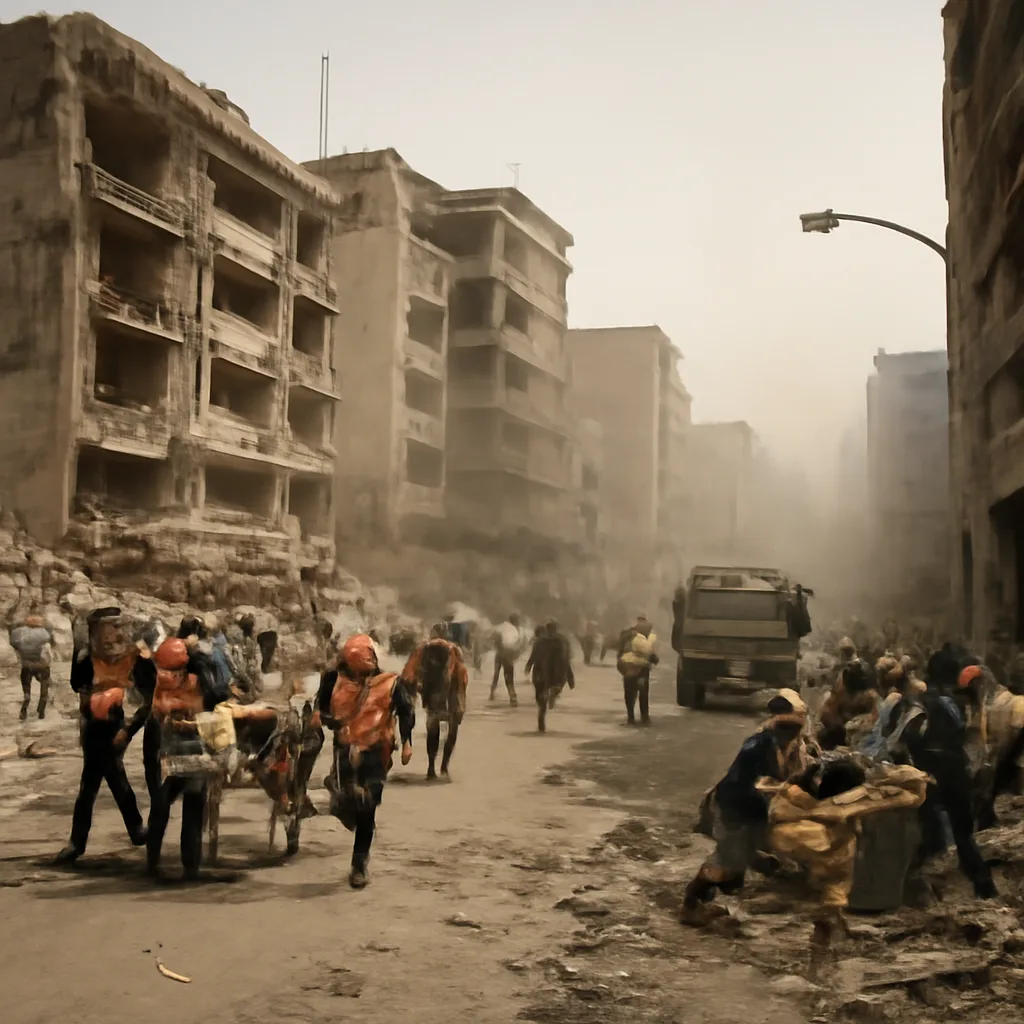
On the morning of September 19, 1985, a major earthquake with an epicenter off the Pacific coast of Mexico near the state of Oaxaca struck central Mexico. The quake generated intense shaking across a broad area, with Mexico City—built atop ancient lakebed sediments—experiencing particularly severe ground amplification. Over several days and weeks, collapsed residential and commercial buildings, fires, ruptured utilities and disrupted transportation networks produced a humanitarian and infrastructural crisis in the capital.
Magnitude and shaking
Seismological estimates of the earthquake’s magnitude have generally been placed around 8.0 on the moment magnitude scale (Mw), though different agencies and contemporaneous reports sometimes reported varying values. The earthquake’s energy release and the local geology combined to produce extremely strong and prolonged shaking in Mexico City despite the epicenter being hundreds of kilometers away. Soft, water-saturated lake sediments beneath much of the city amplified seismic waves and prolonged their duration, a key factor in the extent of structural damage.
Human toll and damage
Reliable casualty figures remain imprecise and were the subject of dispute in the months after the disaster. Government tallies and independent estimates differed; contemporary accounts commonly cite a death toll in the thousands, with many official reports placing the number between about 8,000 and 10,000 fatalities, while some non-governmental assessments suggested higher totals. Tens of thousands were injured, and hundreds of thousands were displaced as homes and apartment blocks collapsed or were rendered uninhabitable. Numerous hospitals, schools and office buildings were damaged or destroyed. Fires following damaged gas and electrical lines added to the destruction in several neighborhoods.
Rescue, response and civil society
Emergency response involved a mix of government agencies, military units, municipal services and an unprecedented wave of volunteer action. Citizens organized search-and-rescue teams, collected supplies and assisted survivors, often operating independently of official channels. The visible gaps in official emergency capacity and the scale of civilian mobilization had lasting political and social consequences, strengthening civic organizations and community-based networks.
Urban, regulatory and scientific consequences
The disaster exposed vulnerabilities in building practices, regulatory oversight and urban development—particularly the hazards of constructing heavy, multi-story structures on the city’s former lakebeds. In the years that followed, Mexico revised seismic design codes, improved building inspection procedures and expanded civil-protection planning. The earthquake also stimulated advances in seismology, earthquake engineering and risk mapping in Mexico, leading to better monitoring and public-warning systems.
Commemoration and legacy
September 19 has remained a date of national remembrance in Mexico. Annual drills, memorials and public discussions about disaster preparedness reflect the earthquake’s enduring imprint on Mexican society and policy. The event is widely cited as a turning point for disaster management in Mexico, influencing both governmental reforms and the growth of organized civil-society participation in emergencies.
Uncertainties and contested details
Some specifics remain contested or uncertain: precise casualty figures, exact magnitude values reported immediately after the event, and certain building-by-building loss assessments varied across sources and agencies. Where figures differ, researchers and historians note the range of estimates rather than a single definitive number.
Sources and verification
This summary synthesizes widely reported, verifiable aspects of the September 19, 1985 earthquake: its timing, the concentration of damage in Mexico City due to local soil conditions, the large-scale loss of life and property, the substantial role of volunteer rescuers, and the subsequent reforms in building codes and emergency management. For deeper archival details and primary-source accounts, consult contemporary newspaper archives, official Mexican government reports from the period and peer-reviewed research on the 1985 Mexico City earthquake and seismic risk in the region.