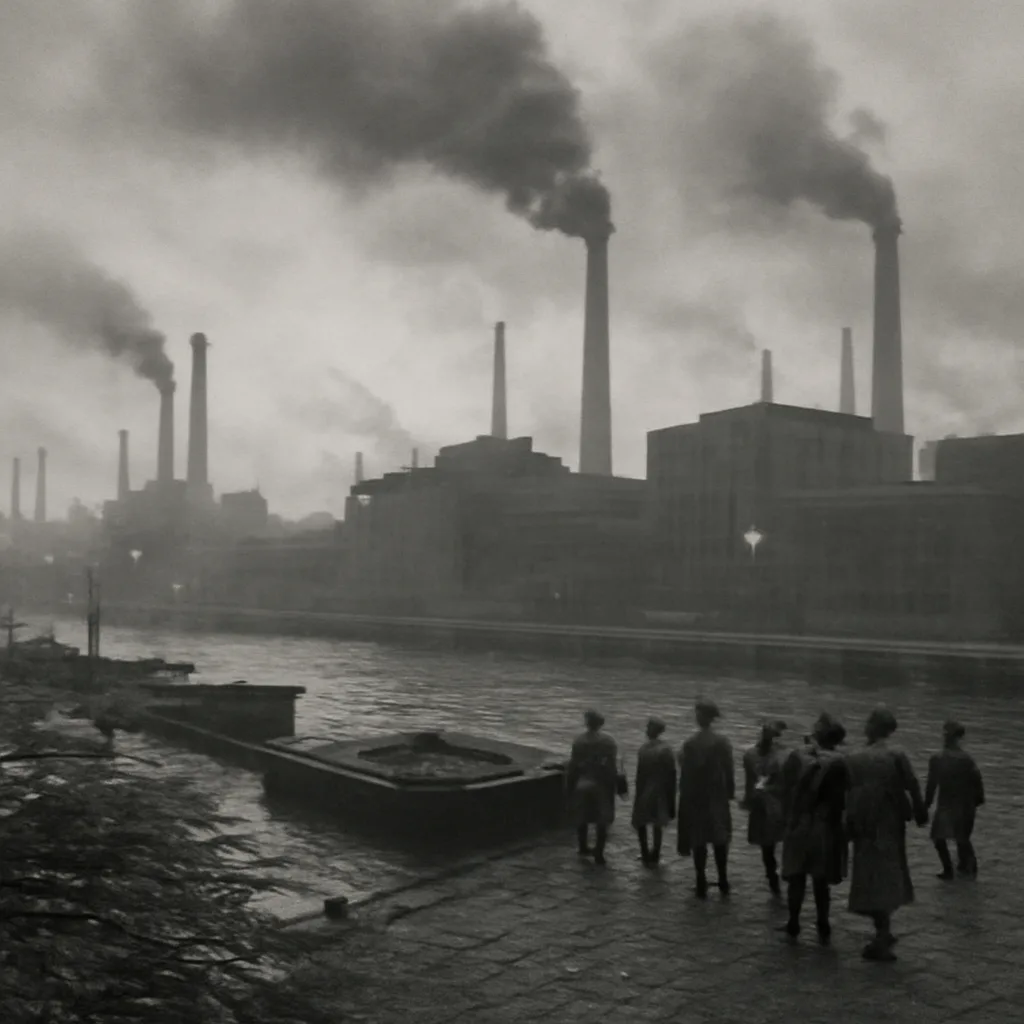
Historians and public health scholars identify the late 19th and early 20th centuries as the period when industrial pollution’s lethal effects became difficult to dismiss. By 1930, urbanization, heavy industry, and expanding chemical production had produced recurring episodes of air- and waterborne poisoning. References to a date around March 15, 1930, often mark a locally significant instance in which pollution was linked explicitly to deaths in contemporary reports, but the claim that this was the very first confirmed industrial-pollution deaths is not supported uniformly across sources. What is well documented is that earlier events had already established connections between industrial activities and mortality. Notable precedents include severe smog episodes in U.S. and British cities and poisonings from industrial contaminants in waterways. For example, London’s Great Smog of 1952 (later and far more lethal) became a landmark in public-policy response, but smaller, earlier smogs and documented occupational exposures in the late 19th and early 20th centuries led physicians and public-health officials to link industrial emissions to respiratory and systemic illnesses. Similarly, industrial contamination of drinking water and food supplies produced documented outbreaks of acute and chronic poisoning in multiple countries prior to 1930. The March 15, 1930 references most commonly point to a localized case or cluster—often in municipal or regional press and health reports—where investigators attributed several deaths to specific industrial discharges or airborne emissions. Such incidents typically involved: poorly regulated chemical plants, inadequate waste-treatment infrastructure, or large-scale combustion of coal and industrial byproducts in densely populated areas. Contemporary medical investigators relied on clinical patterns, environmental sampling (limited by then-current techniques), and occupational histories to make causal links, but standards of proof and record-keeping were more limited than modern epidemiology requires. Why the date appears in some modern summaries: secondary sources sometimes adopt a single date to illustrate a watershed moment in public perception or policy-making within a particular locality. Local inquiries, coroners’ inquests, and municipal ordinances that followed such events contributed to incremental changes in regulation and monitoring. These localized developments, when later summarized in environmental histories or exhibit texts, can be presented as emblematic “firsts” even when broader national or international records show earlier or concurrent pollution-linked fatalities. Uncertainties and disagreements: There is no universally agreed, single “first confirmed” industrial pollution death globally. Differences in medical diagnostic capability, reporting standards, and political incentives to acknowledge industrial culpability mean that many earlier deaths were under-recorded or attributed to other causes. Where March 15, 1930, appears in accounts, it is best treated as a significant local marker of recognition rather than an uncontested, global first. Legacy: Regardless of whether March 15, 1930, represents the absolute first confirmed case, the period around that date illustrates the shifting relationship among industry, public health, and regulation. Accumulating evidence from clinical reports, investigative journalism, and emerging public-health agencies gradually pushed governments to adopt pollution controls, occupational-safety rules, and environmental monitoring programs. These incremental responses laid groundwork for more systematic regulation later in the 20th century. For readers seeking more precise documentation, consult primary sources for the specific locality referenced (contemporary newspapers, coroner’s reports, municipal health board minutes) and scholarly histories of environmental health that discuss regional cases and the evolution of diagnostic and regulatory practices. Where claims of a single ‘‘first’’ death are encountered, expect them to reflect a particular local milestone rather than an uncontested global fact.