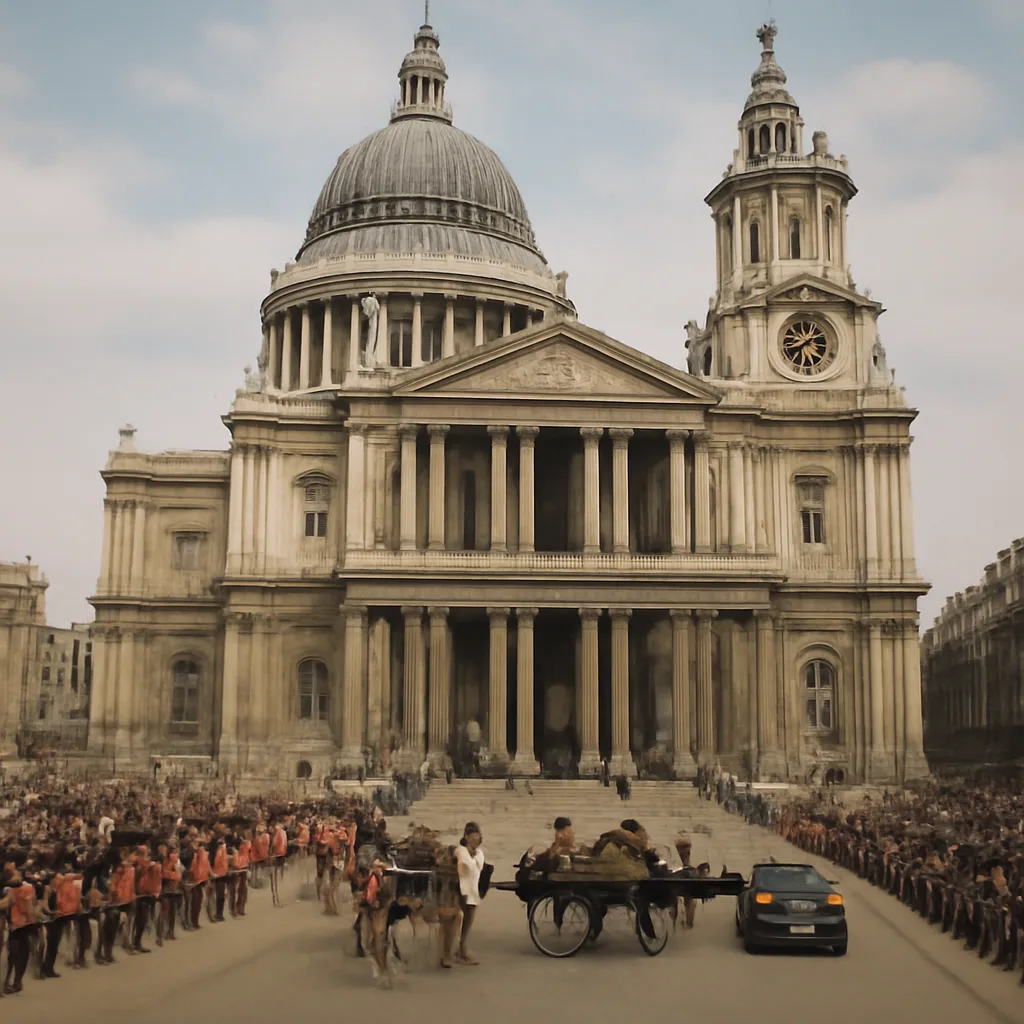
Diana Spencer, a young aristocrat and the daughter of John Spencer, 8th Earl Spencer, married Charles, Prince of Wales, in a widely publicized royal wedding at St. Paul’s Cathedral in London on 29 May. The exact year is not provided in the supplied information. The ceremony followed an engagement announced earlier and united the heir apparent to the British throne with a figure who would quickly become one of the most visible members of the royal family. St. Paul’s Cathedral, an Anglican cathedral designed by Sir Christopher Wren and long associated with state occasions, was chosen as the venue. The setting reinforced the religious and ceremonial dimensions of the marriage: a formal Church of England service attended by senior royals, political leaders, and international dignitaries. The wedding featured traditional elements of a royal marriage service, including prayers, hymns, and the exchange of vows and rings under the cathedral’s dome. The bride’s attire and arrival were focal points for attendees and media. Diana wore a formal bridal gown and was escorted in keeping with protocol; processional arrangements and pages of attendants reflected established court ceremonial. Observers noted the pageantry—military uniforms, formal dress, state vehicles, and ceremonial music—typical of high-level royal events. Large crowds gathered along processional routes in central London, and the event attracted extensive press coverage domestically and overseas. Beyond the ceremony itself, the wedding had broader cultural and political resonance. Royal weddings serve both as personal milestones and public rituals that reinforce the monarchy’s role in national life. This marriage, like other state and royal weddings, generated commentary about tradition, public interest, and the relationship between the royal family and the media. It also contributed to Diana’s subsequent public profile, as she became a central figure in public and philanthropic life. Precise details about subsequent private arrangements, personal conversations, or later developments in the couple’s relationship are outside the scope of this account. The date of 29 May for the wedding is given, but the supplied information does not include a year; if a specific year is required for historical verification, that should be provided or confirmed from primary sources. This summary focuses on verifiable public facts about the ceremony venue, its ceremonial character, and the immediate public and cultural significance of the marriage at St. Paul’s Cathedral.